TV in Motorhome: How to Watch TV on the Road in the UK
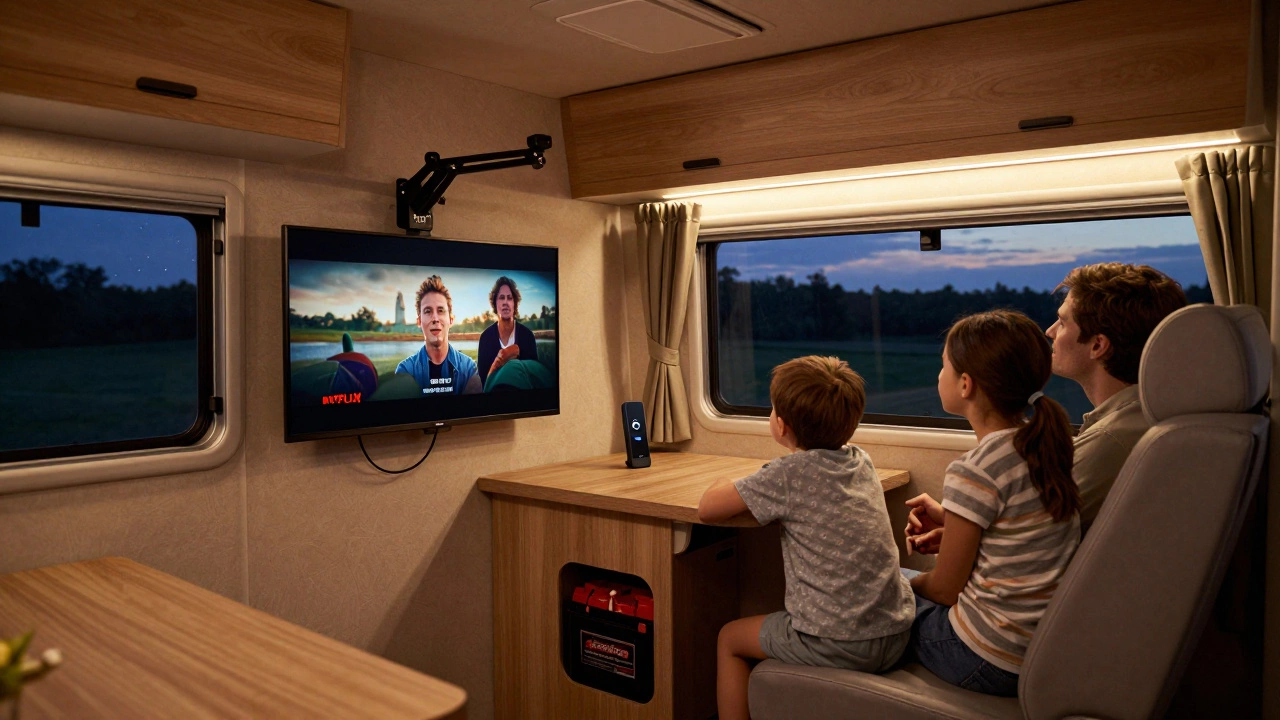
When you’re living on the road, a TV in motorhome, a standard entertainment system designed for mobile living. Also known as mobile TV setup, it’s not just about watching the news—it’s about keeping the kids quiet, catching up on your favorite shows, and making your motorhome feel like home, even when you’re parked on a hillside in the Lake District. The big question isn’t whether you can have one—it’s how to make it actually work without spending a fortune or dealing with endless buffering.
Most people assume you need a fancy satellite dish or a pricey subscription, but that’s not true. A simple digital TV aerial, a portable antenna designed to pick up Freeview signals while moving or parked. Also known as motorhome TV antenna, it works fine in towns and near cities. But if you’re parked in the Scottish Highlands or deep in the Brecon Beacons, you’ll need something stronger. That’s where satellite TV for motorhome, a portable satellite system that locks onto signals from space, even in remote areas. Also known as motorhome satellite dish, it comes in handy. Brands like SatSleeve or VisionSat are built for this—easy to set up, compact, and designed for UK weather. You don’t need to be a tech wizard to use them. Most auto-aligning models do the work for you in under five minutes.
But here’s the thing: you don’t always need live TV. Many motorhome owners skip the aerial and satellite entirely. They use portable TV for campers, a small screen powered by a tablet, laptop, or built-in media player. Also known as offline entertainment system, it loaded with downloaded shows, movies, and kids’ cartoons. Plug it into your motorhome’s USB port or power inverter, and you’ve got hours of entertainment without needing a signal. It’s cheaper, quieter, and way more reliable when you’re off-grid. Plus, you’re not stuck waiting for a weak signal to load a single episode.
And what about the rules? In the UK, there’s no law saying you can’t have a TV in your motorhome. But if you’re using it to watch live TV—whether through Freeview, satellite, or streaming—you do need a TV license. It’s the same rule as at home. Skip the license, and you’re breaking the law—even if you’re parked in a field in Cornwall. The good news? If you only watch downloaded content, you’re fine. No license needed. Just make sure your downloads are saved before you leave the Wi-Fi zone.
Power is another thing to think about. A small 24-inch LED TV pulls about 30 to 50 watts. That’s fine if you’re plugged into a campsite hook-up. But if you’re boondocking? You’ll need a decent battery setup. Most motorhome owners use a dual battery system or a solar panel to keep things running. Don’t forget to check your inverter’s capacity—it needs to handle the TV’s draw plus anything else you’re running, like a fridge or phone charger.
Some people swear by streaming apps like BBC iPlayer or ITVX, but those need strong, stable Wi-Fi. And let’s be honest—most campsites in the UK don’t offer that. Even if they do, five people trying to stream at once will slow everything to a crawl. That’s why downloaded content wins every time. Use a laptop or tablet to download episodes the night before, then plug into the TV via HDMI. Simple. Reliable. Zero buffering.
So whether you’re parked by the sea in Devon or tucked under the trees in the Peak District, your TV in motorhome doesn’t have to be a headache. You’ve got options: a basic aerial for towns, a satellite dish for the wilds, or just a tablet full of saved shows. Pick what fits your style, your budget, and your route. And if you’re wondering how others do it—check out the real stories below. People have cracked this. You can too.
-
 VIEW POST
Will a Normal TV Work in a Motorhome? Here's What You Really Need to Know
Dec, 7 2025|0 CommentsA normal TV won't work in a motorhome without a powerful inverter and strong battery. A 12V TV is the smart, efficient choice for off-grid entertainment. Learn what works, what doesn't, and how to set it up right.