Will a Normal TV Work in a Motorhome? Here's What You Really Need to Know
 Dec, 7 2025
Motorhome TV Runtime Calculator
Calculate Battery Runtime
Enter your motorhome battery capacity and TV power consumption to see how long your TV will run.
Estimated Runtime
Why 12V TVs are better
A standard TV (150W) would only last hours with an inverter.
Using a 12V TV (30W) saves energy and provides 8-10 hours of viewing on a 100Ah battery.
Comparison
| Device | Power Draw (W) | Runtime on 100Ah Battery |
|---|---|---|
| Standard TV | 150 | 1.5 hours |
| 12V TV | 30 | 8-10 hours |
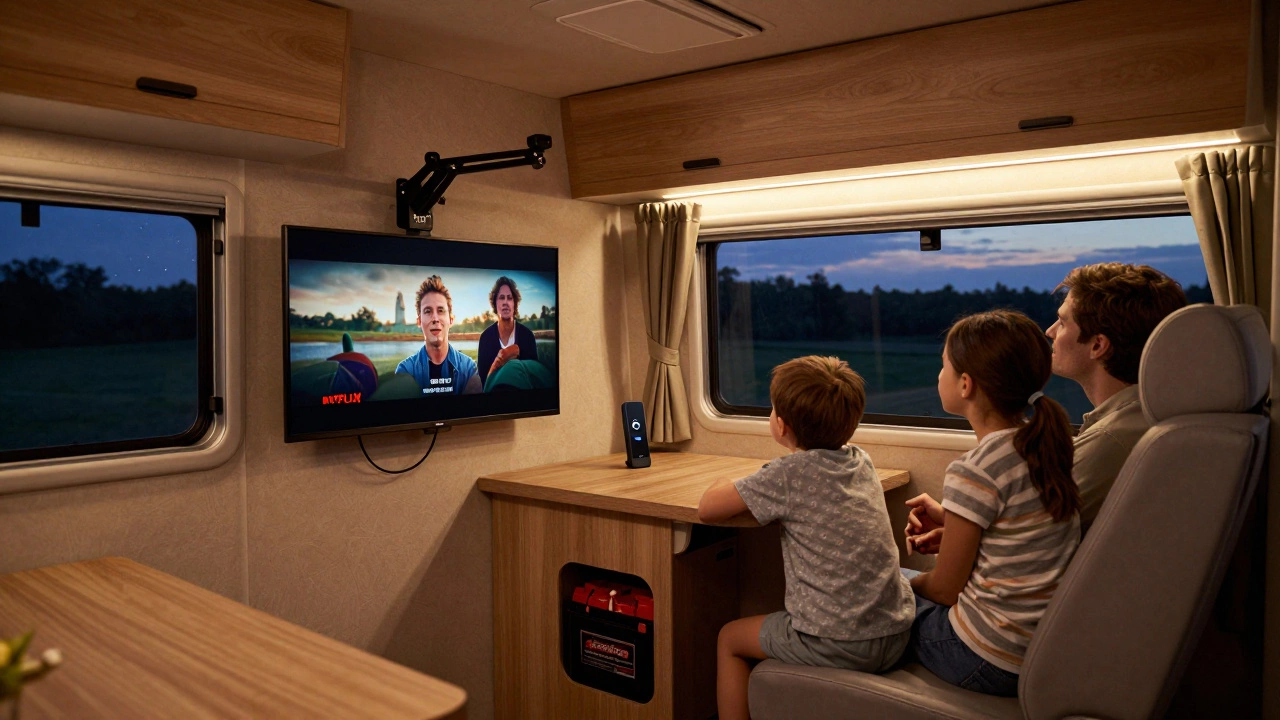
You just rented a motorhome for your road trip. The cabin feels cozy, the kitchen’s stocked, and you’re ready to unwind after a long day on the road. But when you plug in your regular flat-screen TV from home, nothing happens. No picture. No sound. Just silence. You’re not alone. Thousands of motorhome owners hit this same wall every year.
Why Your Normal TV Won’t Work Out of the Box
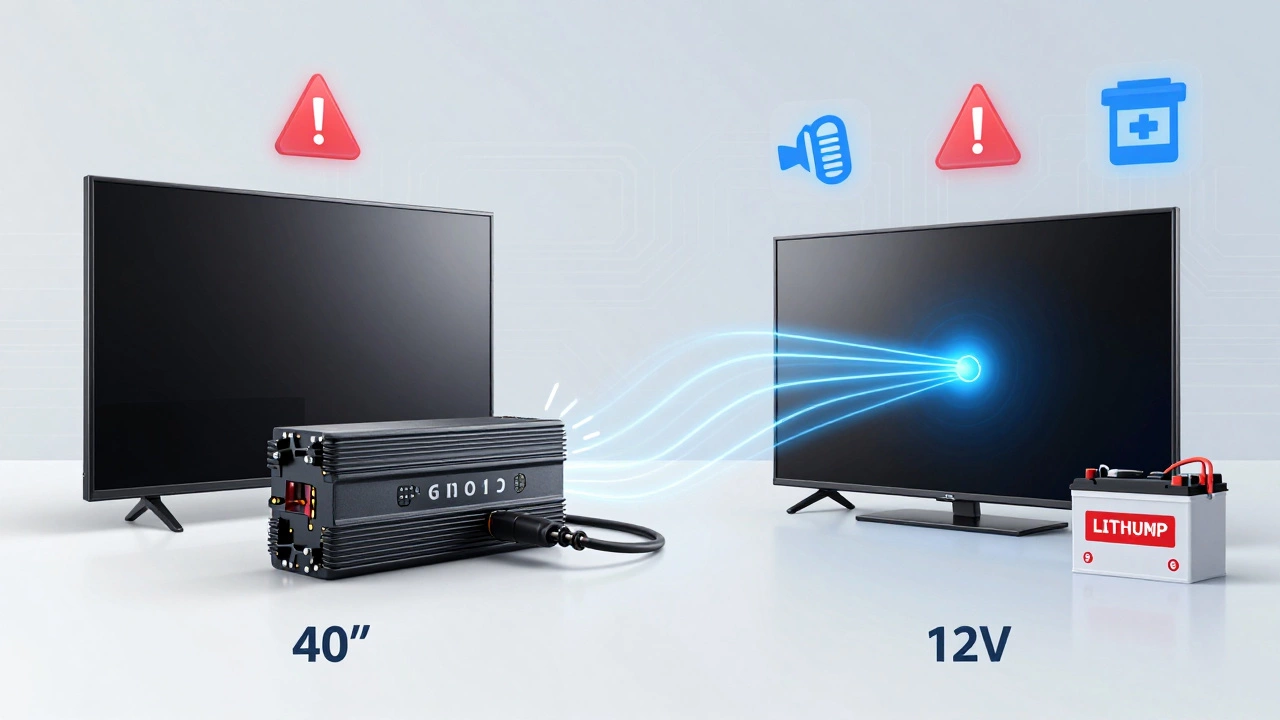
Most TVs sold in stores run on 110-240V AC power-the same kind you get from a wall outlet in your house. But motorhomes don’t run on that kind of power when they’re off-grid. They use 12V DC power from the battery, or sometimes 240V AC when hooked up to a campsite power point. Your standard TV doesn’t know how to handle 12V. It needs a full wall outlet to turn on.Even if your motorhome has a 240V inverter, plugging in a regular TV can cause problems. Many inverters can’t handle the startup surge of a TV’s power supply. That’s when you hear a pop, see a flash, or worse-your inverter shuts down completely. A 55-inch Samsung or LG TV can pull 100-200 watts just to start up. That’s more than most budget inverters can deliver safely.
What Actually Works in a Motorhome
There are two real options: a 12V TV or a TV with a proper inverter setup. Let’s break them down.12V TVs are built for vehicles. They’re designed to run directly off your motorhome’s battery system. Brands like 12V TVs are televisions specifically engineered to operate on 12-volt DC power systems found in motorhomes and caravans. Also known as RV TVs, they are commonly used in North America and Australia for off-grid entertainment. These models are smaller-usually 19 to 32 inches-and use far less power. A typical 12V TV draws only 20-40 watts. That’s about the same as a couple of LED lights. You can run one for 8-10 hours on a single deep-cycle battery without draining it.
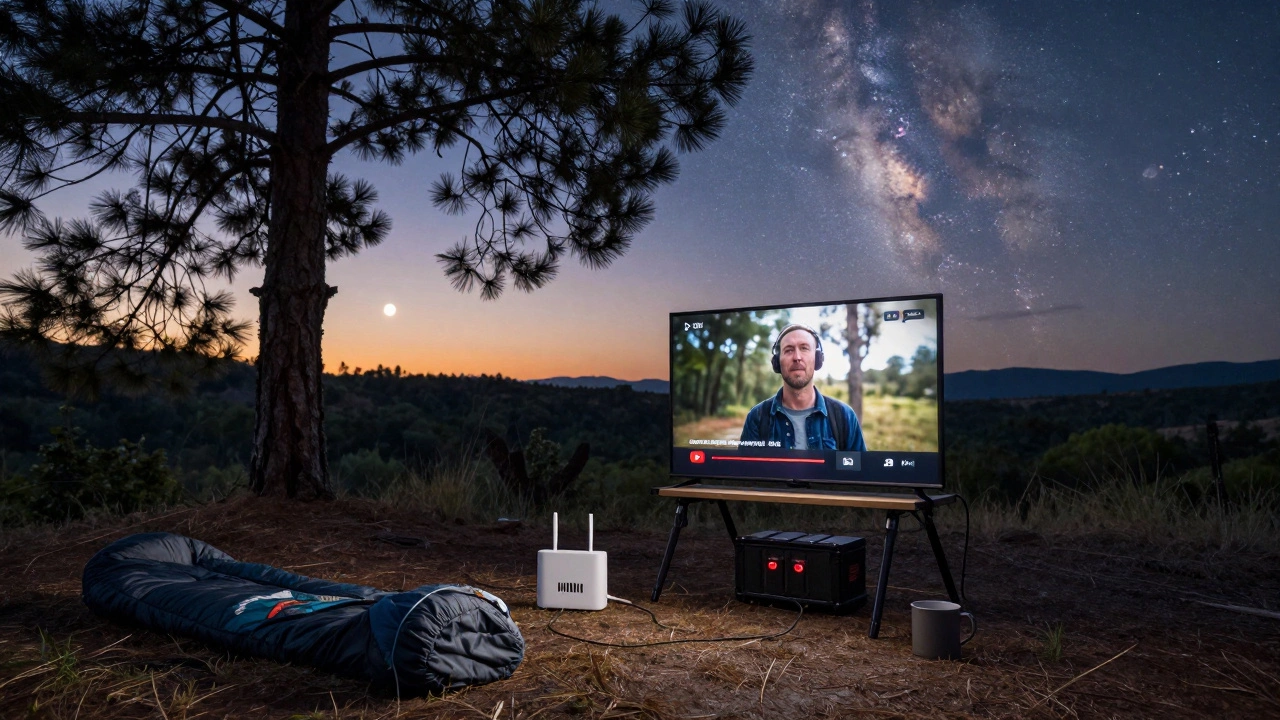
Portable TVs with built-in batteries are another option. Some models, like the TCL 32S325 is a compact LED TV designed for RV use with low power consumption and HDMI connectivity. have internal batteries and can run for a few hours without being plugged in at all. These are great for watching shows while parked under a tree, away from power points.
Then there’s the 12V inverter is a device that converts direct current (DC) from a motorhome battery into alternating current (AC) to power standard household electronics.. If you really want to use your home TV, you need a pure sine wave inverter rated for at least 300 watts. That’s expensive, heavy, and inefficient. You’ll lose about 15% of your battery power just converting the current. Plus, you’re still draining your battery faster than if you used a 12V TV.
Power Consumption Comparison
| Device | Power Draw (Watts) | Runtime on 100Ah Battery | Best For |
|---|---|---|---|
| Standard 40-inch TV (AC) | 150W | 1.5 hours (with inverter) | Hooked-up campsites only |
| 32-inch 12V TV | 30W | 8-10 hours | Off-grid, boondocking |
| Portable TV with battery | 15W (on battery) | 6-8 hours | Short stops, quick viewing |
Here’s the math: a 100Ah deep-cycle battery holds 1,200 watt-hours of energy (100Ah × 12V). A standard TV pulling 150W? That’s 8 hours of battery life if you could run it directly. But with an inverter? You’re down to 1.5 hours because of conversion losses. A 12V TV pulling 30W? You get over 8 hours. That’s the difference between watching your favorite show before bed or being stuck in the dark by 9 p.m.
Signal Reception: Do You Even Get TV in the Middle of Nowhere?
Even if you solve the power issue, you still need a signal. Over-the-air TV broadcasts are fading fast. Many rural areas in Australia, the U.S., and Europe no longer have strong signals. You might get one or two channels if you’re near a town, but that’s it.That’s why most motorhome owners rely on streaming. But streaming needs Wi-Fi or mobile data. A 12V TV with built-in Wi-Fi and Android TV lets you load Netflix, YouTube, or Disney+ directly. You can download shows offline before you leave, or use a mobile hotspot. A good 4G or 5G data plan with 50GB/month is enough for 15-20 hours of HD streaming.
Some 12V TVs come with built-in DVB-T2 tuners for European signals or ATSC for North America. If you’re traveling internationally, check what broadcast standard your TV supports. In Australia, it’s DVB-T2. If your TV doesn’t have it, you’ll need a separate digital tuner box.
Mounting and Setup Tips
A 12V TV isn’t much bigger than a tablet, but it still needs a secure mount. Most motorhomes have a cabinet or wall space near the dinette or bed. Use a swivel mount so you can angle the screen toward the couch or bed. Avoid sticking it to the ceiling-viewing angles are terrible, and it’s a safety hazard if the motorhome hits a bump.Wiring is simple. Most 12V TVs come with a cigarette lighter plug or a direct wiring kit. If you’re not comfortable running wires through your motorhome’s panels, go with the plug-in version. Just make sure it’s fused properly. A 3-amp fuse is usually enough.
Don’t forget the remote. Many 12V TVs have IR remotes that don’t work through cabinet doors. If your TV’s behind a door, get one with Bluetooth or RF remote control. Some even work with smartphone apps.
What Not to Do
Don’t try to plug your home TV into a 12V outlet. You’ll fry the power supply. No exceptions.Don’t use a cheap modified sine wave inverter. They can damage electronics over time. Stick with pure sine wave if you must go that route.
Don’t assume your motorhome’s battery can handle your TV. Most factory-installed batteries are designed for lights and fridge, not entertainment systems. If you plan to use a TV regularly, upgrade to a lithium battery. They last longer, charge faster, and don’t lose capacity when drained below 50%.
Real-World Example: A 7-Day Trip
Last summer, a family rented a motorhome in Perth and planned a week-long trip through the Nullarbor. They brought their 55-inch Samsung TV. On day two, the inverter died. They spent $300 replacing it and still couldn’t get more than 45 minutes of TV before the battery dropped to 20%. They ended up watching downloaded movies on a tablet.They bought a 32-inch 12V TV on day four. It cost $280. It ran all night, every night, without touching the inverter. They had power left for lights, the fridge, and charging phones. They never missed a single episode of their show.
Final Answer: Should You Use a Normal TV?
No. A normal TV won’t work reliably in a motorhome unless you’re always plugged into shore power. Even then, it’s a risky, inefficient use of energy.Buy a 12V TV. They’re affordable, quiet, energy-efficient, and built for the job. You’ll save money on inverters, avoid battery drain, and actually enjoy your trips without worrying about power.
If you’re renting a motorhome, ask the company if they include a TV. Many newer models come with one already installed. If not, bring your own 12V model. It’s one of the smartest upgrades you can make for comfort on the road.
Can I use my smart TV in a motorhome?
You can, but only if you have a pure sine wave inverter and a strong battery system. Most smart TVs need 100-200 watts to run, which drains a standard motorhome battery in under 2 hours. A 12V TV is a better, cheaper, and safer option.
Do I need a special antenna for TV in a motorhome?
If you’re using over-the-air signals, yes. A portable digital TV antenna like the Winegard SensarPro works well on roofs or windows. But most people now use streaming apps over mobile data instead. Download shows before you leave for the best experience.
How long will a 12V TV run on a car battery?
A typical 32-inch 12V TV draws about 30 watts. On a 100Ah deep-cycle battery, that’s 8-10 hours of continuous use. On a standard car battery, it’s only 2-3 hours-car batteries aren’t designed for deep discharges. Always use a deep-cycle or lithium battery for extended use.
Can I use a Roku or Fire Stick with a 12V TV?
Yes, if the TV has HDMI ports. Many 12V TVs include HDMI inputs. Plug in a Roku, Fire Stick, or Chromecast and stream directly. Just make sure your mobile hotspot has enough data. A 12V TV with built-in Android TV is even better-it has the apps built in.
Is it worth buying a 12V TV if I only rent motorhomes?
Absolutely. A 12V TV costs less than $300 and lasts for years. You can take it with you on every trip, whether you’re renting or owning. It’s a one-time purchase that improves comfort every time you hit the road. Many rental companies even let you bring your own TV if it fits.
What to Do Next
If you’re renting a motorhome this week, call the company and ask: "Do you have a 12V TV installed?" If not, bring your own. Look for a 32-inch model with HDMI, Wi-Fi, and a low power draw under 35 watts. You’ll thank yourself when you’re relaxing under the stars with your favorite show on screen.Don’t waste your time trying to force a home TV into a motorhome. The power system isn’t built for it. Go with the right tool for the job-and enjoy your trip without the stress.