RV Refrigerator While Driving: How It Works and What You Need to Know
When you're on the road in your motorhome, your RV refrigerator while driving, a specialized cooling system designed for mobile use that runs on electricity, propane, or both. Also known as a 3-way fridge, it's built to keep food cold whether you're plugged into shore power, running on your vehicle's battery, or using propane. But here’s the real question: does it actually work while you’re moving? The answer isn’t as simple as yes or no—it depends on your setup, your fridge model, and how you use it.
Most modern RV fridges are absorption refrigerators, a type of cooling system that uses heat (from electricity or propane) to drive the cooling cycle, not a compressor like your home fridge. They don’t have moving parts like fans or pumps that could break from bumps, which is why they’re popular in motorhomes. But they do rely on being level to work properly. If your RV is tilted too much while driving—say, going up a steep hill or taking a sharp turn—the coolant inside can flow unevenly, reducing efficiency or even causing damage over time. That’s why some owners turn off their propane while driving: not because the fridge stops working, but because of fire risk from fuel lines shifting.
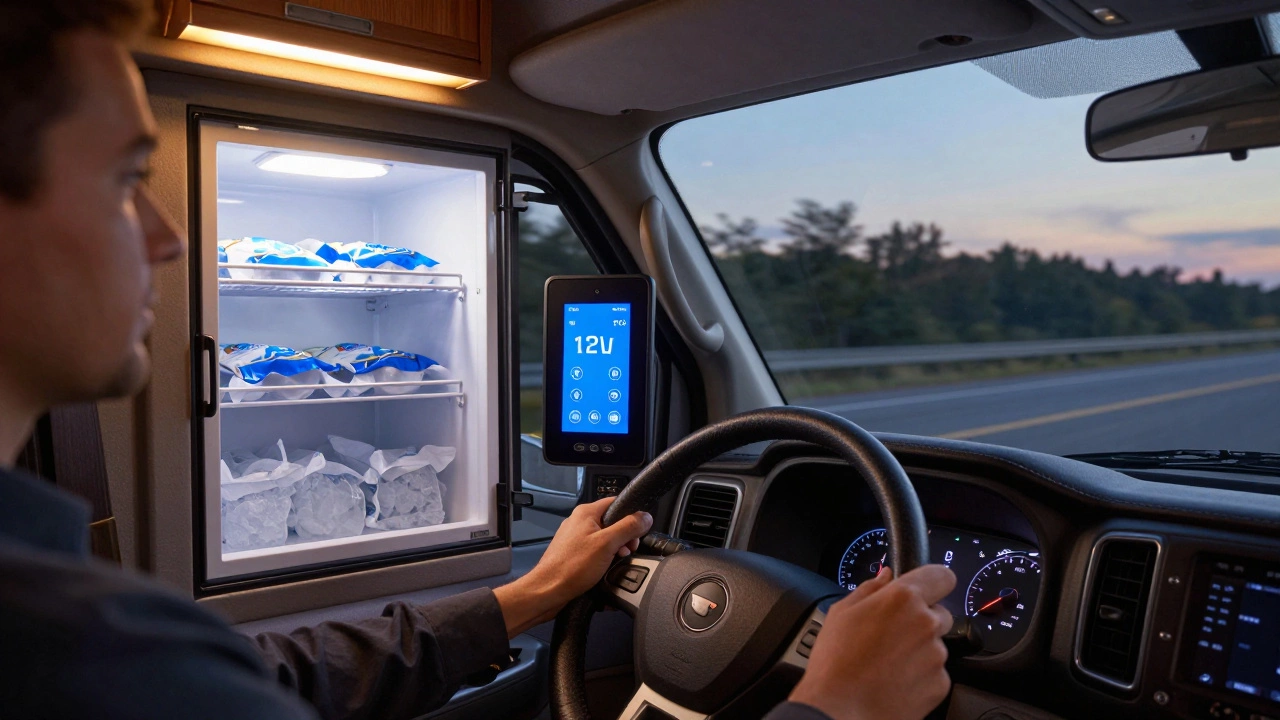
Many people assume their fridge runs on battery power while driving, but that’s not always true. Most RVs use the engine’s alternator to charge the house battery, and if your fridge is set to run on 12V, it’ll pull from that. But 12V operation is slower and less efficient than propane or shore power. If you’re driving for hours, especially in hot weather, your fridge might struggle to stay cold. That’s why some campers switch to propane before hitting the road—assuming it’s legal in your state and your RV is properly ventilated. Others use a 12V compressor fridge, a newer type of RV fridge that works like a car fridge, using a real compressor and running efficiently on battery power. These are pricier but handle motion better and don’t need propane at all.
What you shouldn’t do is ignore it. A warm fridge means spoiled food, wasted money, and maybe a nasty cleanup. Check your manual. Know if your model runs on 12V, propane, or both. Test it before you leave—put a thermometer inside and see how long it takes to cool after switching modes. And if you’re driving through hot states like Arizona or Texas in July, don’t assume it’ll keep up without help. Some people use battery-powered fans inside the fridge compartment to improve airflow, or pre-chill everything before hitting the road.
There’s no one-size-fits-all answer, but the key is understanding your system. Whether you’re using a classic absorption fridge or a modern compressor unit, knowing how it behaves while driving helps you avoid surprises. You’ll find posts below that cover real-world experiences—like how to tell if your fridge is cooling properly on the move, what to do if it stops working, and why some RVers swear by turning off propane while driving. You’ll also see what others do to keep food safe on long trips, from packing strategies to backup cooling options. This isn’t about theory. It’s about what actually works when you’re on the road, miles from the nearest store, with a hungry family waiting for lunch.
-
 VIEW POST
Can You Run Your RV Refrigerator While Driving? Safety, Laws, and Practical Tips
Dec, 1 2025|0 CommentsRunning your RV fridge on propane while driving is dangerous and illegal in many places. Learn safe alternatives, legal rules, and how to keep food cold without risking fire or fines.