Can You Run Your RV Refrigerator While Driving? Safety, Laws, and Practical Tips
 Dec, 1 2025
RV Fridge Safety Calculator
Is Your RV Fridge Safe While Driving?
Based on your input, this tool calculates safety risks, legal compliance, and cooling alternatives. Note: Propane use while driving is illegal in most regions and extremely dangerous.
Ever pulled onto the highway with a cold soda in hand, only to wonder if your RV fridge is still keeping things chilly? You’re not alone. Many people assume their refrigerator just keeps working while on the road-but that’s not always true. And more importantly, it’s not always safe.
How RV Refrigerators Work
Most RV fridges aren’t like the one in your kitchen. They’re absorption fridges, which means they don’t use a compressor. Instead, they rely on heat-either from electricity (120V AC or 12V DC) or propane gas-to create cooling through a chemical process involving ammonia, water, and hydrogen gas.
This design lets them run on multiple power sources, which is great for off-grid living. But it also means they behave differently than household fridges. When you’re driving, the fridge usually switches to propane mode if you’ve set it that way. But here’s the catch: running propane while moving isn’t just risky-it’s illegal in many places.
Why Running Propane While Driving Is Dangerous
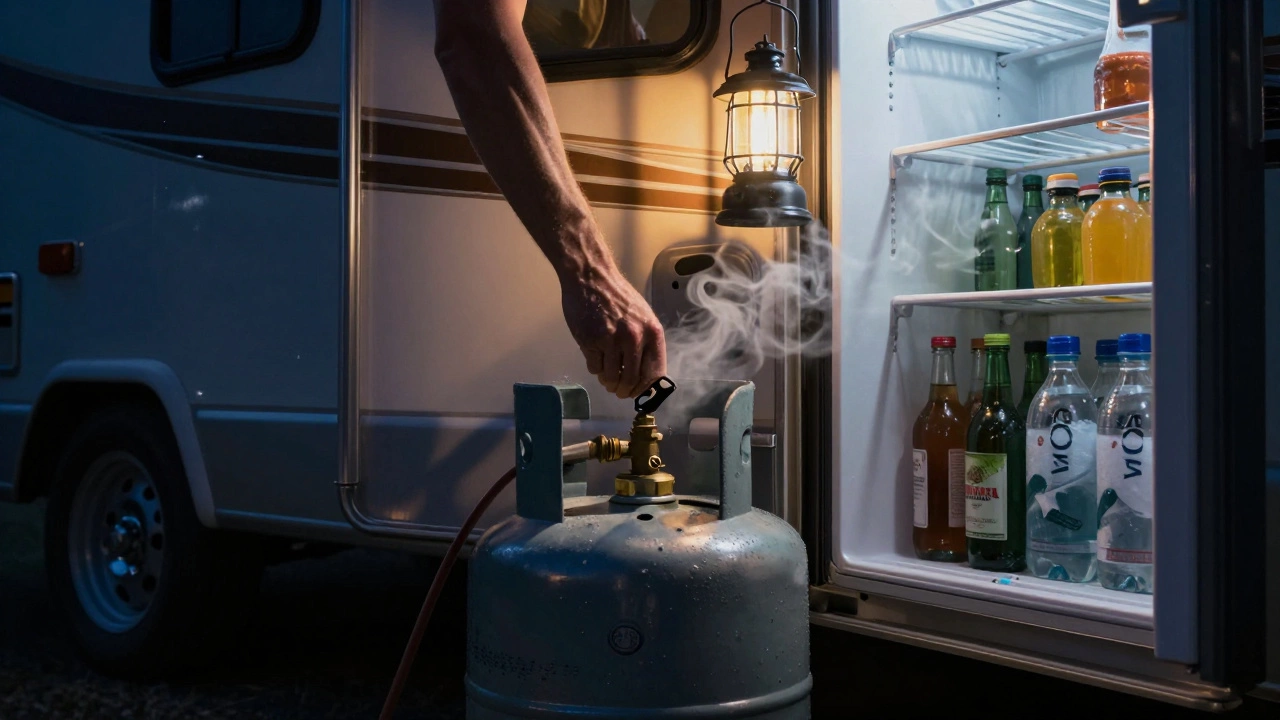
Propane is highly flammable. A leak, a sudden jolt from a pothole, or even a loose connection can cause gas to escape. If that gas finds a spark-like from your fridge’s ignition system, a cigarette lighter, or even static electricity-it can ignite.
According to the National Fire Protection Association (NFPA), over 1,200 RV fires each year are linked to propane systems. Many of those happen while the vehicle is in motion. The risk isn’t theoretical. In 2023, a family in Oregon lost their motorhome to a propane fire after the fridge’s gas line came loose during a sharp turn.
Even if your system looks fine, vibrations from the road can loosen fittings over time. And if you’re driving through a tunnel, a gas leak could build up in a confined space with nowhere to escape. That’s why most states and provinces in North America, and many countries in Europe and Australia, ban propane use while driving.
What the Law Says
In the United States, federal law doesn’t explicitly ban propane use while driving, but most state DOTs do. For example:
- California prohibits propane operation while the vehicle is moving.
- Colorado requires all propane appliances to be turned off during transit.
- Florida bans the use of propane while on the highway unless the system is certified for mobile use.
In Australia, where most motorhomes are driven on public roads, the Australian Road Rules require all flammable gas appliances to be switched off while the vehicle is in motion. This applies to fridges, stoves, and heaters. Police can issue fines up to $1,000 for non-compliance.
Many RV rental companies include a checklist in their handover that explicitly tells you to turn off propane before driving. If you ignore it, you’re not just breaking the law-you’re voiding your rental agreement.
What Happens If You Keep It On?
Some people swear they’ve run their fridge on propane while driving for years with no issues. And maybe they have. But that’s not luck-it’s playing Russian roulette with your safety.
Even if nothing goes wrong, you’re still exposing yourself to unnecessary risk. And if you’re involved in an accident, insurance companies may deny your claim if they find you were using propane while moving. One couple in Queensland had their claim rejected after their RV caught fire during a crash. The insurer cited propane use while driving as a violation of safety standards.
Also, running propane while driving doesn’t even save you much. Modern RV fridges cool down quickly once powered on. If you turn the fridge off before you leave, it’ll stay cold for 6-8 hours, even in 30°C heat. That’s plenty of time for most day trips.
Best Practices for Keeping Food Cold While Driving
You don’t need propane to keep your food cold on the road. Here’s what actually works:
- Pre-cool your fridge at least 6-8 hours before you leave. Set it to its coldest setting and let it run on shore power or battery.
- Use ice packs or frozen water bottles. Place them on top of perishables-they sink as they melt, keeping everything cold.
- Limit how often you open the door. Every time you open it, cold air escapes. Plan your snacks and meals ahead of time.
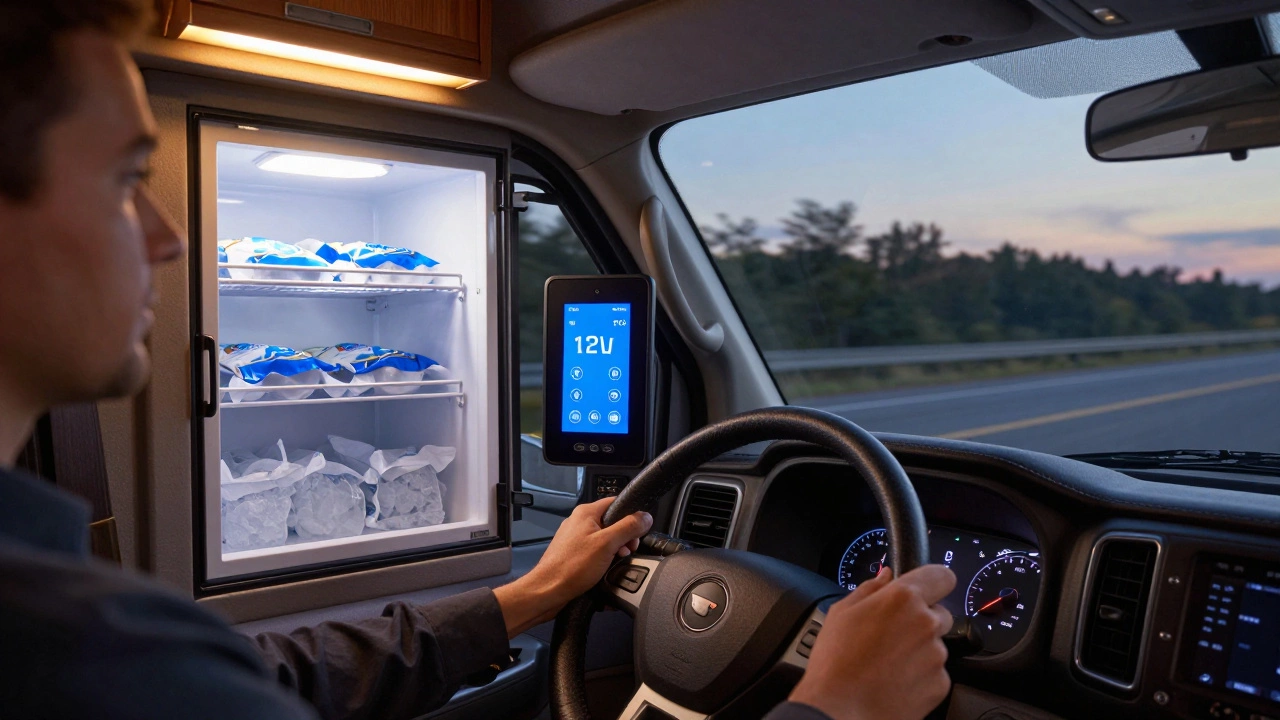
- Switch to 12V DC power if your fridge supports it. Most modern RV fridges can run on your vehicle’s battery while driving. Just make sure your alternator can handle the load. A typical RV fridge draws 5-8 amps. Most vehicles can handle that without issue, but check your owner’s manual.
- Insulate your fridge compartment. Add reflective insulation or foam panels to the walls. Even a simple towel draped over the door helps.
One family in Western Australia drove from Perth to Broome (2,200 km) without turning on their propane. They pre-cooled the fridge, used six frozen water bottles, and kept the door shut. Their food stayed cold the whole trip-even the cheese didn’t sweat.
What About Battery Drain?
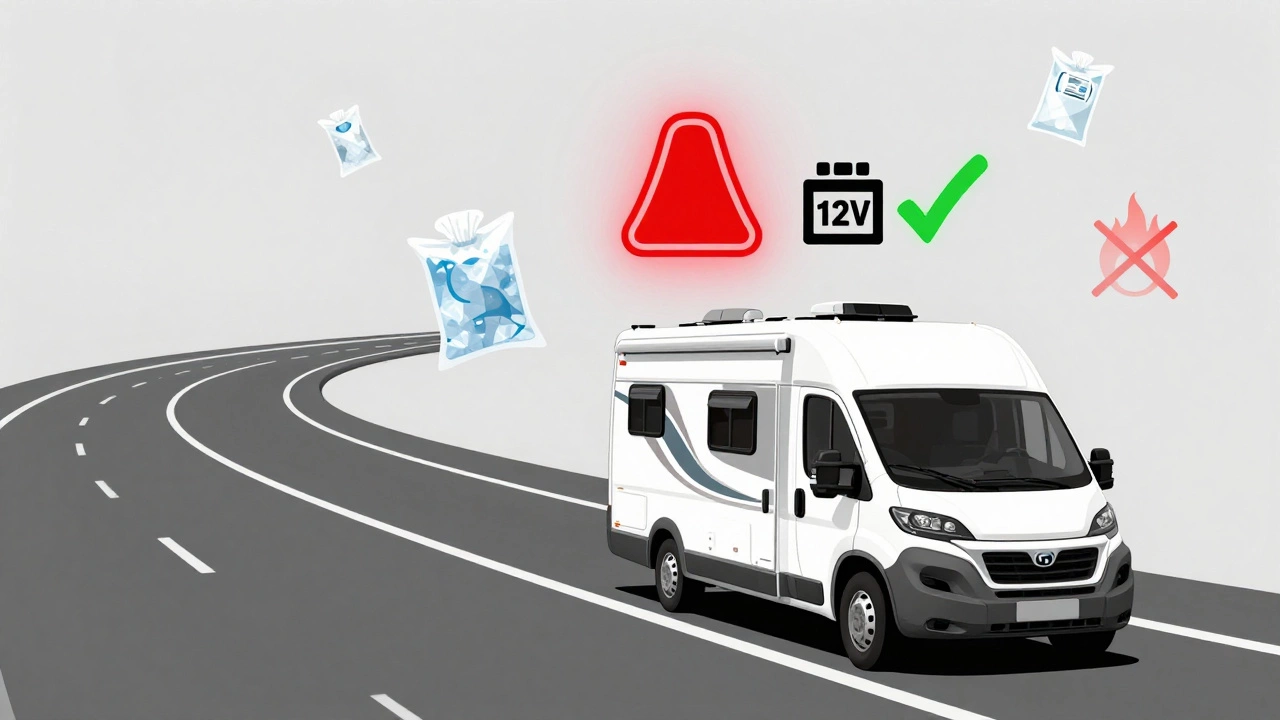
Running your fridge on 12V DC while driving won’t kill your battery if your vehicle’s alternator is working properly. The alternator charges your house battery while you drive, and the fridge draws power from that.
But if you’re planning a long stop after driving-say, overnight at a rest area-you should switch back to shore power or propane after you’ve parked. Never switch modes while moving.
Some newer RVs have automatic transfer switches that flip from propane to 12V DC when the engine starts. If yours does, you’re good to go. But don’t assume. Check your manual. If you don’t have one, look up your fridge model online. Dometic, Norcold, and Atwood are the most common brands.
What to Do If You’re Renting an RV
If you’re hiring a motorhome, the rental company should give you a safety briefing. Pay attention. If they don’t mention propane rules, ask. A reputable company will show you where the propane shutoff valve is and how to use it.
Many rental RVs now come with digital control panels that auto-disable propane when the engine is on. But not all. Always confirm.
And if you’re unsure? Turn it off. Better safe than sorry.
Final Checklist Before You Hit the Road
- Turn off propane at the tank valve before driving.
- Set fridge to 12V DC mode if available.
- Pre-cool fridge at least 6 hours before departure.
- Fill fridge with cold items before leaving.
- Use ice packs or frozen bottles as backup.
- Keep the door closed as much as possible.
- Check your rental agreement for propane rules.
Running your RV fridge on propane while driving isn’t worth the risk. It’s illegal in most places, dangerous if something goes wrong, and unnecessary if you plan ahead. The best fridge is the one that keeps your food cold without putting your life on the line.
Can I run my RV fridge on battery while driving?
Yes, if your RV fridge supports 12V DC operation. Most modern models do. The vehicle’s alternator charges the house battery while driving, which powers the fridge. Just make sure your system is wired correctly and your battery isn’t already low. Avoid running it on battery alone if you’re parked overnight-use shore power or propane instead.
Is it legal to drive with propane on in Australia?
No. Under the Australian Road Rules, all flammable gas appliances-including fridges, stoves, and heaters-must be turned off while the vehicle is in motion. Violating this rule can result in fines up to $1,000 and may void your insurance in case of an accident.
How long will my RV fridge stay cold without power?
A well-prepped RV fridge can stay cold for 6-8 hours without power, even in 30°C weather. Pre-cooling it before departure and using ice packs can extend that to 12 hours. Avoid opening the door, and keep it shaded from direct sunlight.
What if my RV fridge only runs on propane?
If your fridge is an older model that only works on propane, you’ll need to turn it off while driving. Use ice packs and minimize door openings. Consider upgrading to a modern 12V DC-compatible fridge-many are affordable and can be retrofitted. The cost of a new unit is far less than a potential fire or fine.
Can I use a portable cooler instead?
Absolutely. A good quality cooler with ice packs is often more reliable than an RV fridge while driving. It doesn’t need power, can’t leak gas, and won’t break down. Many travelers use a small cooler for drinks and snacks, and keep the main fridge off during transit.