RV Power While Driving: How to Keep Your Battery Charged on the Road
When you're driving your RV power while driving, the system that keeps lights, fridge, and chargers running while you move. Also known as motorhome electrical system, it’s not just about the engine—it’s about how your battery, alternator, and inverter work together to keep your life running smoothly on the road. Most people assume that as long as the engine is on, everything just works. But that’s not true. If your setup isn’t right, you could wake up in a dark, cold RV with a dead battery—even after driving all day.
Your RV battery, the deep-cycle unit that powers your fridge, lights, and water pump when you're not plugged in charges from the engine’s alternator while driving, but only if your system is wired correctly. Many factory setups skip the crucial link between the engine battery and the house battery. That means your fridge might run for a few hours, then shut off, even though you’re on the highway. A inverter for RV, a device that turns DC power from your battery into AC power for outlets and appliances helps you use regular plugs, but it eats up power fast. If you’re running a microwave or coffee maker while driving, you’re draining the battery faster than the alternator can recharge it.
It’s not just about the hardware—it’s about habits. Running the fridge on 12V while driving is fine, but if you’ve got LED lights, a fan, and a phone charger all going at once, the load adds up. People who boondock often forget that driving isn’t the same as being plugged in. You need to know your battery’s capacity, how much each device pulls, and how long your alternator can realistically keep up. A 100Ah battery might sound like a lot, but it can vanish in under four hours if you’re not careful.
Some RVs come with solar panels or generators, but those are add-ons, not solutions. The core issue? Most drivers don’t check their system until it fails. You don’t need a degree in electrical engineering—just a multimeter, a basic understanding of your setup, and the right connections. A battery isolator or a DC-to-DC charger can make the difference between a smooth trip and a stranded night.
What you’ll find below are real stories and fixes from people who’ve been there—how one camper solved his fridge dying after two hours of driving, why a simple fuse swap saved a family’s weekend, and what gear actually works when you’re on the move. No theory. No fluff. Just what keeps your lights on, your food cold, and your phone charged while you’re chasing the next view.
-
 VIEW POST
Can You Run Your RV Refrigerator While Driving? Safety, Laws, and Practical Tips
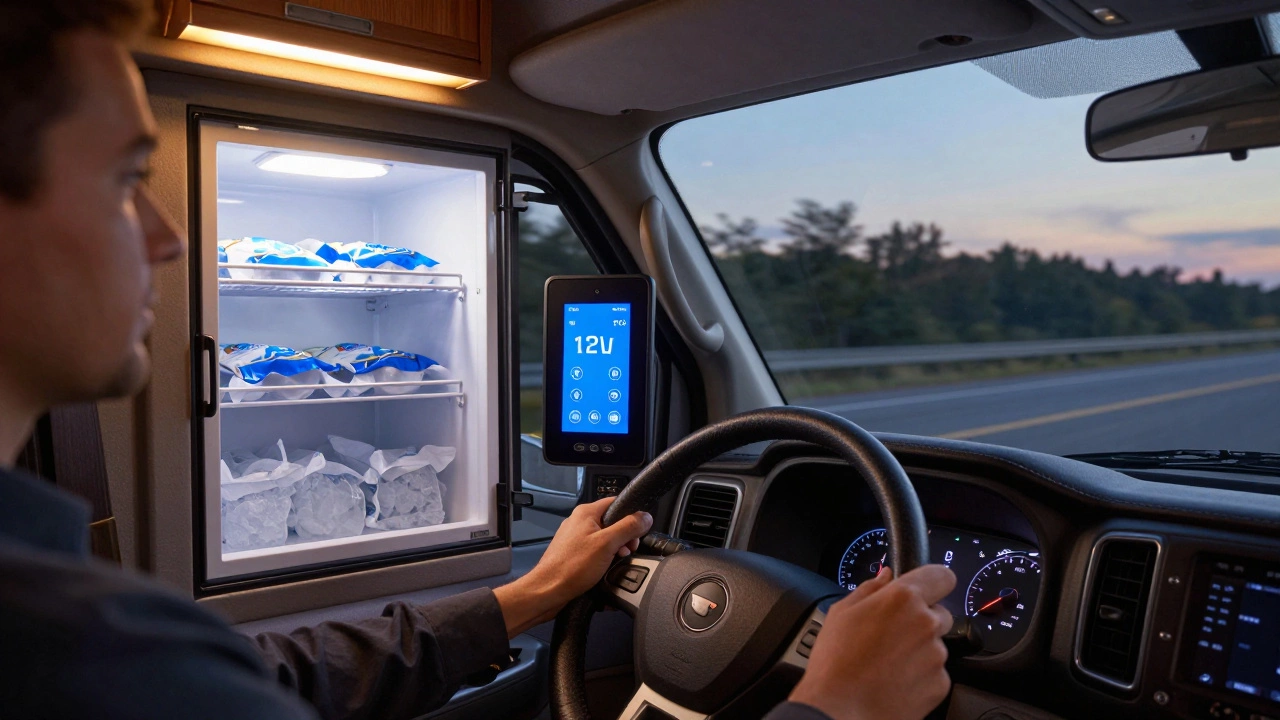
Dec, 1 2025|0 CommentsRunning your RV fridge on propane while driving is dangerous and illegal in many places. Learn safe alternatives, legal rules, and how to keep food cold without risking fire or fines.