Motorhome Fridge Tips: Keep Food Fresh on the Road
When you're on the road in a motorhome fridge, a specialized cooling system designed for mobile living that runs on electricity, propane, or both. Also known as RV fridge, it's one of the most important appliances in your home on wheels—yet most people treat it like a regular kitchen fridge and pay the price. A broken fridge isn't just inconvenient; it means spoiled food, wasted cash, and a ruined trip. The good news? Most motorhome fridge problems are preventable with simple, smart habits.
One of the biggest mistakes? Running the fridge on battery power all day. Motorhome power usage, how much electricity your appliances draw while off-grid, especially when using a 12V system is limited. Your fridge can drain your batteries in hours if it's not set up right. Always switch to propane when parked and the engine is off—it’s cheaper, quieter, and uses almost no battery. And don’t forget to level your motorhome. A fridge that’s tilted even a little won’t cool properly. It’s not just a suggestion—it’s how the cooling system works. If your motorhome isn’t level, the ammonia solution inside won’t flow correctly, and your food will start to warm up.
Then there’s RV fridge maintenance, the routine checks and cleaning needed to keep your fridge running smoothly for years. Most owners never clean the vents, which get clogged with dust, lint, and bugs. That traps heat and forces the fridge to work harder. Do this every few months: unplug the fridge, wipe down the back and sides, and vacuum the air intake near the bottom. Also, check the door seals. A loose seal lets cold air escape. Test it by closing a dollar bill in the door—if you can pull it out easily, it’s time for a new seal. And never put hot food straight in. Let it cool first. That extra step saves your fridge from overworking.
What you pack matters too. Camping fridge hacks, practical tricks to maximize cooling efficiency and reduce power drain during outdoor trips aren’t just for show. Pre-chill your fridge overnight before you leave. Fill empty spaces with water bottles—they act as cold sinks and help maintain temperature when the door opens. Keep the fridge about 80% full. Too empty? Cold air escapes too fast. Too full? Air can’t circulate. And always keep a thermometer inside. You can’t trust the dial—many motorhome fridges are off by 10 degrees. Aim for 35°F to 38°F. Anything above 40°F is risky.
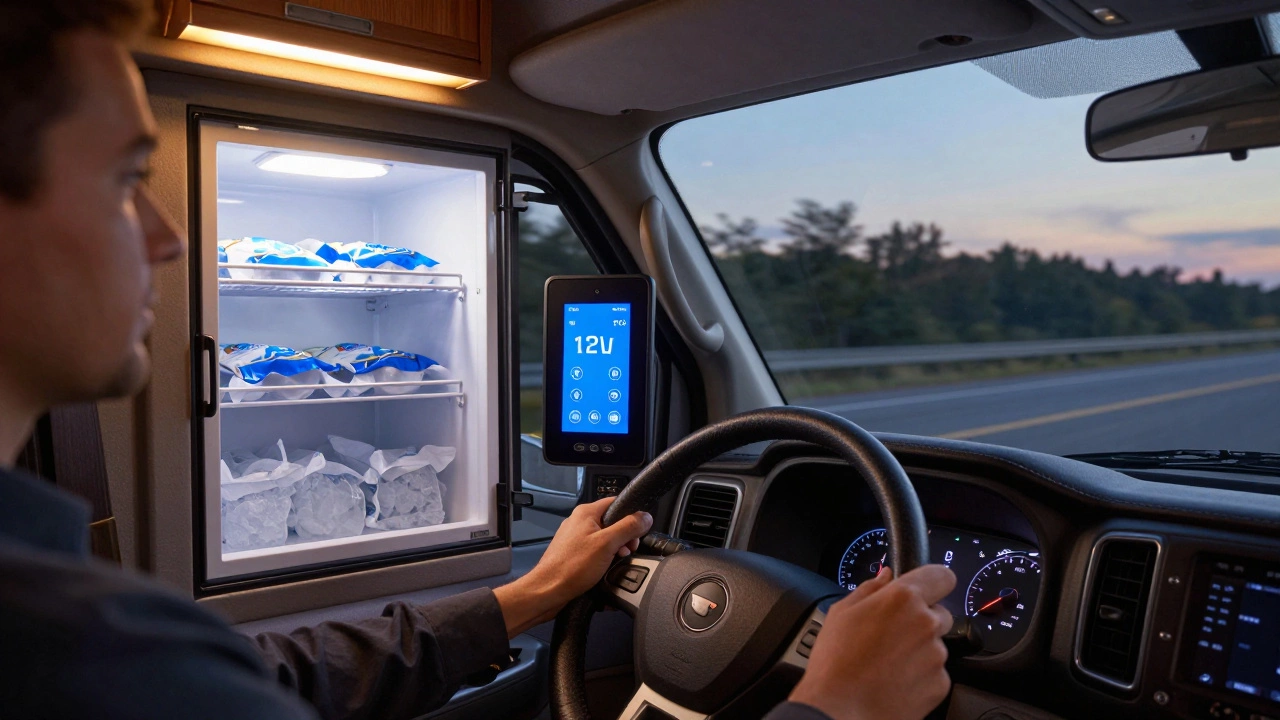
And don’t ignore the basics. Clean spills right away. Sticky residue attracts bugs and smells worse over time. Run the fridge on 12V only when driving—never while parked unless you’re hooked to shore power. If you’re boondocking, plan your power use. Use LED lights, charge phones during the day, and turn off everything non-essential at night. A motorhome fridge isn’t magic—it’s a machine that needs respect. Treat it right, and it’ll keep your food cold for years. Skip the steps, and you’ll be eating warm sandwiches and wondering why your trip went downhill.
Below, you’ll find real advice from people who’ve been there—how to fix a fridge that won’t cool, what to do when propane fails, and the one thing most campers get wrong about their motorhome fridge. These aren’t theory tips. These are fixes that work on the side of a mountain, in a rainstorm, or at 2 a.m. after a long drive. Read them. Use them. Keep your food fresh.
-
 VIEW POST
Can You Run Your RV Refrigerator While Driving? Safety, Laws, and Practical Tips
Dec, 1 2025|0 CommentsRunning your RV fridge on propane while driving is dangerous and illegal in many places. Learn safe alternatives, legal rules, and how to keep food cold without risking fire or fines.