Legal Camping in Florida: Where You Can Sleep Legally and Where You Can't
When it comes to legal camping in Florida, the right to sleep overnight on public or private land under specific conditions. Also known as wild camping, it’s not as simple as pulling off the road and pitching a tent—Florida has strict rules, hidden restrictions, and surprising loopholes. Many people assume Florida’s wide-open spaces mean free camping is everywhere, but that’s not true. Unlike some western states, Florida doesn’t allow random roadside stops or beachside naps without permission. The state’s dense population, sensitive ecosystems, and high tourism mean local laws are tight—and enforcement is real.
You can’t just park your RV near a state park entrance and call it a night. But you can legally camp in national forests, federally managed lands where dispersed camping is allowed under certain rules, like the Apalachicola or Ocala National Forests. These spots let you boondock for free, but you must stay at least 150 feet from water sources, pack out all trash, and never stay longer than 14 days in the same spot. Then there’s Bureau of Land Management (BLM) land, public land managed for multiple uses including camping—but Florida has almost none. So your real options are state forests, some county parks, and a few sanctioned rest areas. And yes, Walmart parking lots are often tolerated—but they’re not legal. You’re there at the store’s discretion, and if they ask you to leave, you go.
What about beaches? Sleeping on the sand is almost always illegal unless you’re in a designated campsite. Fines can hit $500 or more. Even if no one’s around, rangers patrol popular spots, especially during spring break and summer. And don’t assume private land is fair game. Trespassing laws are strict, and even if the property looks abandoned, it’s still owned by someone—and they can call the cops.
So where does that leave you? If you want to camp legally in Florida, you need to plan ahead. Know your boundaries. Use apps that show approved dispersed camping zones. Check county websites for rules on public land use. And remember: just because you saw someone else doing it doesn’t make it okay. The state doesn’t care how many people broke the rule—you’re responsible for following it.
Below, you’ll find real, tested advice on where to camp for free in Florida, what gear you need to stay safe in the heat and humidity, and how to avoid the traps that catch most first-time boondockers. Whether you’re in a motorhome, camper van, or tent, this collection gives you the facts—not the hype.
-
 VIEW POST
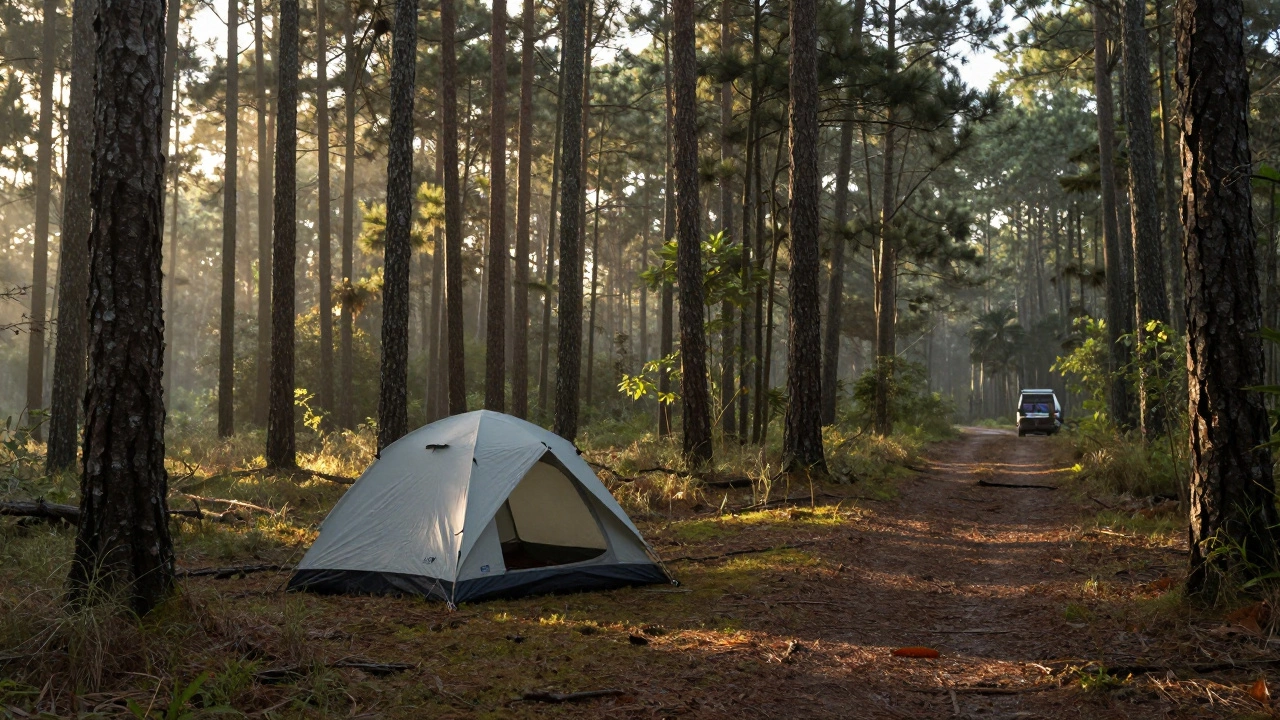
Is It Legal to Camp in the Woods in Florida? Here's What You Need to Know
Dec, 1 2025|0 CommentsIs it legal to camp in the woods in Florida? The answer isn't yes or no-it depends on where you are. Learn where you can camp legally, where you can't, and how to avoid fines while enjoying Florida's forests.