Caravan TV: What You Need to Know About TVs for Motorhomes and Campers
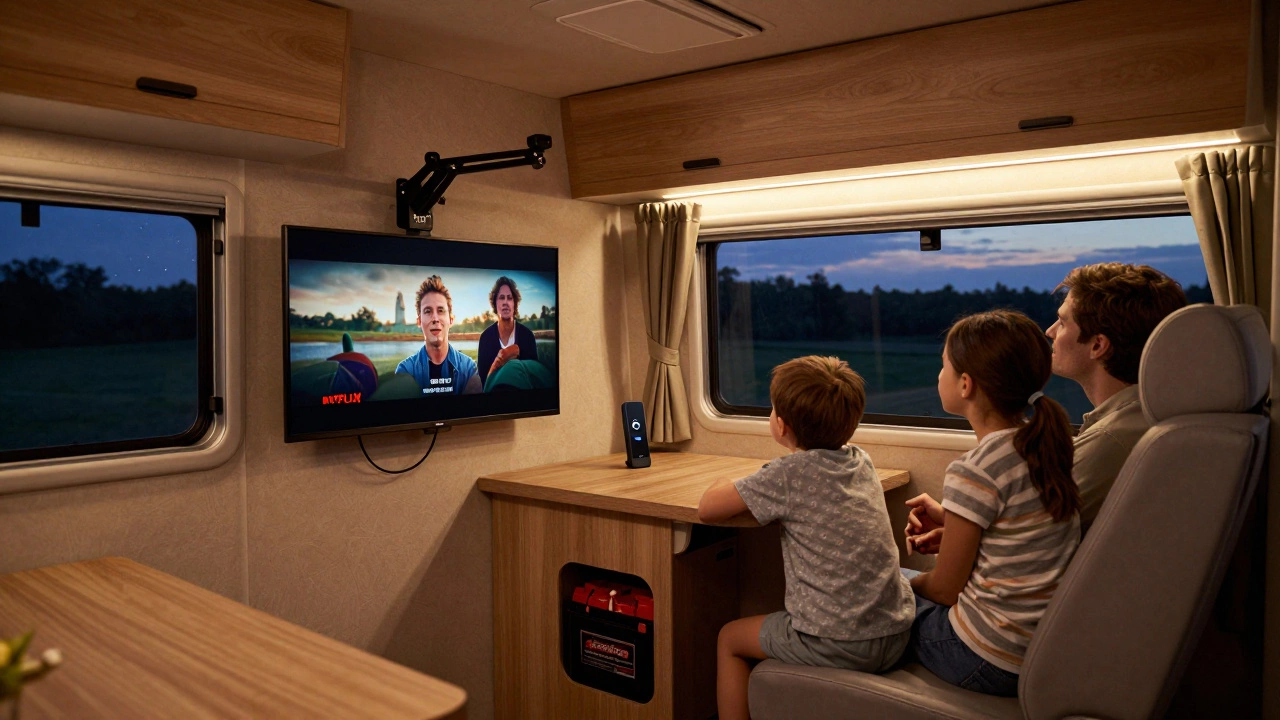
When you’re parked under the stars with a hot cup of tea and the quiet hum of the fridge, a good caravan TV, a television designed to work reliably in mobile homes and campers, often powered by 12V or 24V systems. Also known as camper TV, it’s not just about watching the news—it’s about turning a long drive into a cozy night in. But not every TV you buy at the store will survive the bumps, power swings, and weather changes of life on the road.
A 12V TV, a television built to run directly off your motorhome’s battery system without needing an inverter is the smart pick for most campers. You don’t want to drain your battery running a standard 240V model through an inverter—those things sip power like a thirsty camper at a tap. And if you’re planning to boondock or stay off-grid, that’s a quick way to end up in the dark. Then there’s the antenna, the device that pulls in free-to-air TV signals when you’re far from cable or Wi-Fi. A good digital antenna can pick up channels even in remote parts of the UK, but it needs to be mounted right—on the roof, not tucked behind a curtain.
Some folks swear by streaming apps on tablets, but that only works if you’ve got solid mobile data. And let’s be honest—half the campsites in the Lake District have more sheep than signal. So if you want to catch the latest episode of your favorite show or watch the football on a rainy Tuesday, you’re better off with a built-in TV and a decent antenna. Don’t forget the mount. A shaky, wobbly TV isn’t just annoying—it’s dangerous when you’re on a twisty road. Look for ones with shock absorption and secure latches.
You’ll also find that not all TVs handle cold well. If you’ve ever woken up to a frozen screen in a winter campsite, you know what we mean. Some models just shut down below 5°C. Check the operating temperature range before you buy. And while you’re at it, skip the fancy 4K screens. You’re not watching movies on a cinema wall—you’re sitting three feet away on a tiny dinette. A 19 or 22-inch HD screen is plenty. More screen just means more weight, more power, and more chances to break.
And what about sound? Most caravan TVs have tinny speakers that sound like they’re shouting through a tin can. If you care about audio, think about adding a small Bluetooth speaker or a soundbar. Some newer models even let you pair them with your phone so you can play music from your playlist while the TV’s off.
There’s a reason people spend hours reading forums about caravan TV setups. It’s not just about the box on the wall—it’s about the whole system: power source, signal, mount, speaker, and weather resistance. Get one wrong, and you’ll be staring at a black screen while your friends laugh over their own working setup. But get it right, and you’ve got a little slice of home on wheels—whether you’re parked by the sea in Cornwall or tucked into a quiet woodland in the Peak District.
The posts below cover everything from how to install a TV without blowing a fuse, to the best antennas for UK countryside signals, to why some campers ditch the TV altogether and go old-school with books and board games. You’ll find real stories from people who’ve tried it all—and what actually worked.
-
 VIEW POST
Will a Normal TV Work in a Motorhome? Here's What You Really Need to Know
Dec, 7 2025|0 CommentsA normal TV won't work in a motorhome without a powerful inverter and strong battery. A 12V TV is the smart, efficient choice for off-grid entertainment. Learn what works, what doesn't, and how to set it up right.