12V TV: What You Need to Know for Motorhome TV Setup
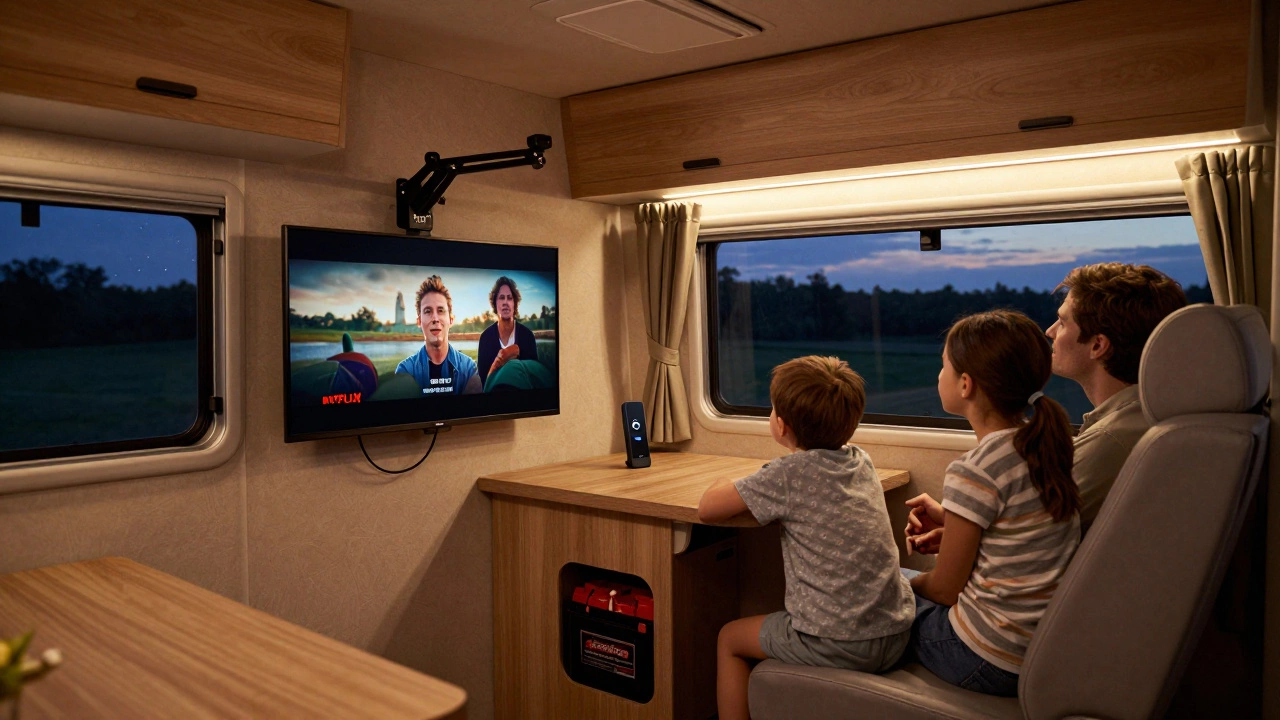
When you’re on the road in a motorhome, having a 12V TV, a television designed to run directly off a 12-volt DC power system like the one in your vehicle. Also known as RV TV, it lets you watch shows, news, or movies without needing an inverter or wall outlet—perfect for when you’re parked off-grid. Most standard TVs need 240V AC power, which means you’d need an inverter to convert your motorhome’s battery power. That’s inefficient, drains your battery faster, and adds cost. A true 12V TV skips the middleman and runs straight from your leisure battery or vehicle system.
But a 12V TV, a television designed to run directly off a 12-volt DC power system like the one in your vehicle. Also known as RV TV, it lets you watch shows, news, or movies without needing an inverter or wall outlet—perfect for when you’re parked off-grid. isn’t just about power. It’s about space, durability, and simplicity. These TVs are built smaller, tougher, and often come with shock-resistant mounts. They’re made to handle bumps on gravel roads, temperature swings from freezing nights to hot midday sun, and the limited space inside a campervan. You’ll find them paired with digital antennas, satellite receivers, or even USB ports for streaming from external drives. Some even have built-in DVD players or Bluetooth for speakers.
What you really need to know is how this fits into your setup. A 12V TV, a television designed to run directly off a 12-volt DC power system like the one in your vehicle. Also known as RV TV, it lets you watch shows, news, or movies without needing an inverter or wall outlet—perfect for when you’re parked off-grid. isn’t magic—it draws power from your battery bank. If you’ve got a small battery and no solar panels, running it for hours might leave you stranded. Pair it with a decent solar setup or a dual battery system, and you’re golden. You’ll also want to check signal strength. In remote UK spots like the Lake District or the Scottish Highlands, over-the-air TV signals can be weak. A good external antenna or a portable satellite dish makes a huge difference.
And let’s not forget the basics: mounting. You don’t want your TV sliding off the dash during a sharp turn. Most 12V TVs come with VESA mounts or suction cups designed for RV use. Look for ones with tilt and swivel options so you can adjust the angle from the bed, the dinette, or even the driver’s seat. Some models even have anti-glare screens—critical when the sun hits your windshield at 5 p.m.
It’s not just about entertainment. For families, it’s a way to keep kids calm during long drives or rainy afternoons. For solo travelers, it’s a connection to the world outside the road. But it’s not just a gadget—it’s part of your power strategy. A 12V TV might use only 30-60 watts, while a regular TV on an inverter could use 150+ watts. That’s a big difference when your battery only holds 100Ah.
What you’ll find in the posts below are real-world experiences from people who’ve installed these TVs in everything from tiny campervans to large motorhomes. You’ll see what models actually work, what to avoid, how to wire them safely, and how to get a signal in the middle of nowhere. Whether you’re new to motorhome life or upgrading your setup, this collection gives you the no-fluff, practical info you need to make the right call—without blowing your budget or your battery.
-
 VIEW POST
Will a Normal TV Work in a Motorhome? Here's What You Really Need to Know
Dec, 7 2025|0 CommentsA normal TV won't work in a motorhome without a powerful inverter and strong battery. A 12V TV is the smart, efficient choice for off-grid entertainment. Learn what works, what doesn't, and how to set it up right.