Why Is It Illegal to Camp in the UK? The Real Rules Behind Wild Camping
 Mar, 15 2026
Many people assume that camping in the UK is just like in other countries-pitch a tent, find a quiet spot, and enjoy the night under the stars. But in England and Wales, that’s not true. In fact, wild camping is illegal in most places. You won’t find signs saying "No Camping" on every hillside or forest path, but that doesn’t mean it’s allowed. The truth is more complicated than a simple yes or no.
What Does "Illegal" Actually Mean Here?
It’s not that you’ll get arrested for setting up a tent in the Lake District. You won’t. But if a landowner asks you to leave and you refuse, you could be charged with trespassing. That’s a civil offense, not a criminal one. Still, trespassing means you have no legal right to be there. And in the UK, almost all land is privately owned. Even land that looks empty-rolling hills, moorland, forests-is owned by someone: a farmer, a private estate, a conservation trust, or the Crown.
Scotland is the exception. Since 2005, the Land Reform (Scotland) Act has given people the right to access most land for recreation, including camping. But even there, you must follow the Scottish Outdoor Access Code: camp small groups, stay no more than two or three nights in one spot, remove all trash, and avoid private gardens or farm buildings. In England and Wales? No such law exists.
Why Is the Law So Strict?
The reason goes back centuries. After the Enclosure Acts of the 17th and 18th centuries, common land-areas where people could graze animals, gather firewood, or sleep overnight-was taken over by wealthy landowners. What was once shared land became private property. By the time modern camping became popular in the 1900s, the legal framework was already locked in. No public right to camp was ever written into law.
Landowners aren’t necessarily against campers. Many are fine with quiet, responsible visitors. But they don’t want liability. A single fire, a broken fence, or a littered field could lead to costly repairs or environmental damage. Insurance companies also discourage landowners from allowing camping because of the risk. So instead of making rules, many just say "no" by default.
Where Can You Actually Camp?
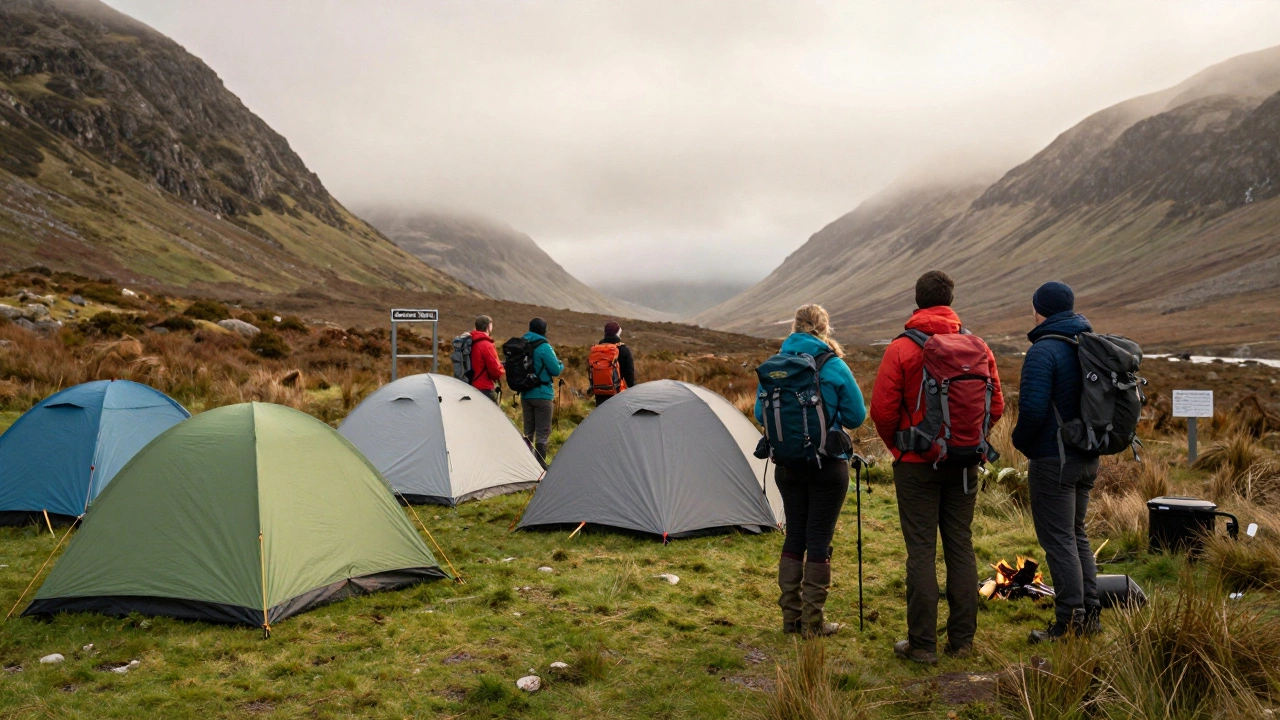
There are legal places to camp in England and Wales-but you have to know where to look.
- Designated campsites: These are the safest bet. Managed by organizations like the Camping and Caravanning Club or the Caravan and Motorhome Club, they offer toilets, water, and waste disposal. Fees range from £10 to £30 per night.
- Official wild camping spots: A few areas allow it with permission. Dartmoor National Park permits wild camping in certain zones if you follow strict rules: no fires, no group sizes over six, no staying more than two nights. The same goes for parts of the Brecon Beacons and the Lake District, but only if you’re with a licensed guide or have written permission from the landowner.
- Membership sites: Some farms and private estates allow campers through membership programs. The Wild Campers Network connects people with landowners who permit overnight stays. It’s not free, but it’s legal.
Don’t assume that "no sign" means "allowed." In the UK, it’s the opposite: if there’s no clear sign saying "Camping Permitted," assume it’s forbidden.
What Happens If You Get Caught?
If you’re asked to leave and you don’t, the landowner can call the police. Officers won’t arrest you, but they can issue a notice requiring you to leave. Refuse again, and you could face a fine or even a court summons for trespassing. Some people have been fined up to £500 for repeated offenses.
There’s also the social cost. A few irresponsible campers can ruin access for everyone. Litter, broken trees, human waste near water sources, or loud parties make landowners more likely to ban all camping. That’s why many wild campers in England quietly follow Leave No Trace principles-not because they have to, but because they want to keep the option alive.
Is There Any Hope for Change?
Yes. Groups like the Ramblers Association and the Campaign for National Parks have been pushing for a right to wild camp in England and Wales. They point to Scotland’s success and countries like Sweden and Norway, where "everyman’s right" lets people camp almost anywhere. In 2023, a parliamentary petition gathered over 100,000 signatures. It didn’t change the law-but it forced a debate.
Some local councils are quietly allowing it in low-impact areas. In 2025, the Peak District National Park Authority began a pilot program: if you register online, pay a small fee, and follow strict guidelines, you can camp in three remote valleys. It’s not national, but it’s a start.
What Should You Do If You Want to Camp?
Here’s the simple rule: ask first.
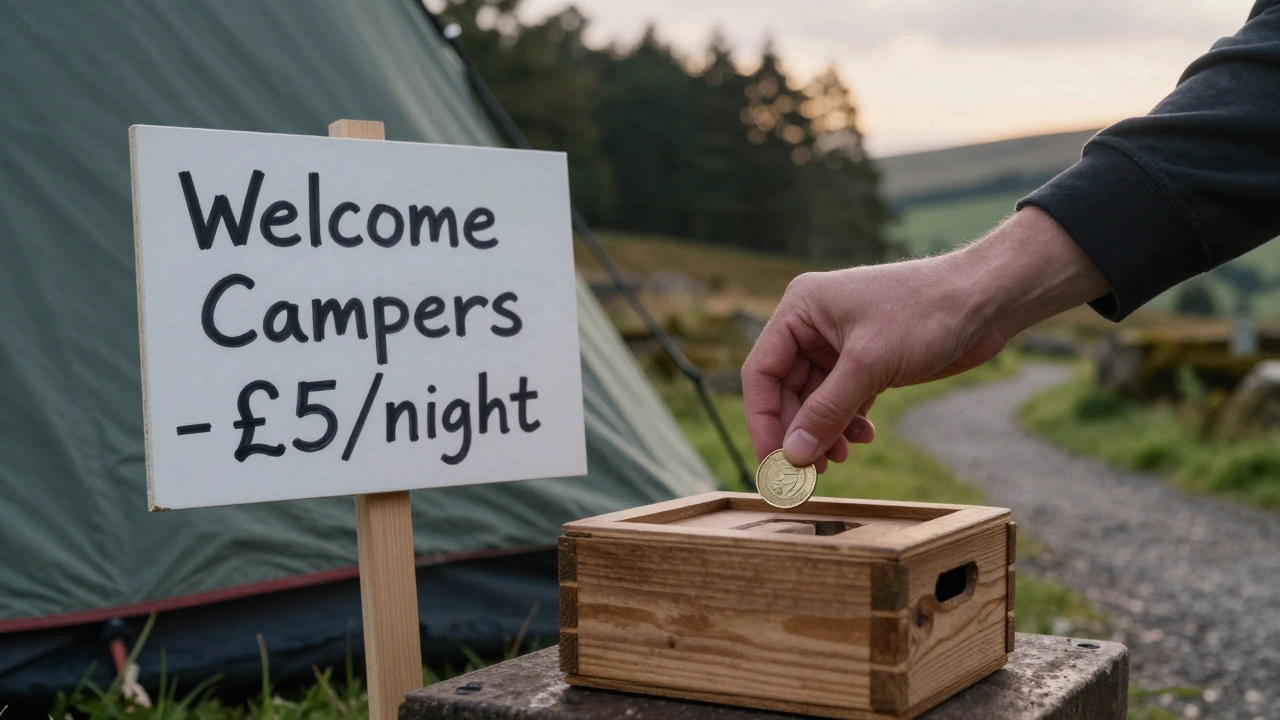
- If you’re near a farm, call the landowner. Many are happy to let you camp for £5 a night.
- Use apps like Camperstop or Wild Camp to find legal spots. They’re updated by users and verified by local groups.
- Join the British Mountaineering Council. They offer free access to over 200 legal wild camping locations across England.
- If you’re in Scotland, you’re free to go-but still follow the code.
Don’t risk it by guessing. The UK isn’t trying to stop you from enjoying nature. It’s just trying to stop the chaos that comes with unmanaged access. Be responsible, and you’ll find plenty of places to sleep under the stars.
Is it illegal to camp anywhere in the UK?
No, it’s not illegal everywhere. Wild camping is legal in Scotland under the Land Reform Act. In England and Wales, it’s only legal on land where you have permission-like designated campsites, certain national park zones, or private landowners who allow it. Most public land, including forests, hills, and moors, is private property, so camping there without permission is trespassing.
Can I camp on the beach in the UK?
It depends. Some beaches in Cornwall, Wales, and Scotland allow wild camping if you’re away from lifeguard zones, private property, and protected dunes. But in most places, coastal land is owned by local councils or private estates. Always check local bylaws. In England, camping on a beach without permission is trespassing-even if no one is around.
Why is wild camping legal in Scotland but not in England?
Scotland passed the Land Reform (Scotland) Act in 2003, which gave everyone the right to access most land for recreation, including camping. England never passed a similar law. English land law is based on centuries of private ownership, and there’s been little political will to change it. Scotland’s approach was built on trust and responsibility; England’s remains rooted in property rights.
What’s the difference between wild camping and staying at a campsite?
Wild camping means pitching your tent on land without facilities-no toilets, no water, no fees. A campsite is a managed area with services like showers, electricity, and waste bins. Wild camping is usually free (if legal), while campsites charge per night. The key difference is legality: campsites are approved; wild camping is only legal if you have permission or are in Scotland.
Can I camp in a national park in England?
Only in specific areas and under strict conditions. Dartmoor allows wild camping in designated zones if you follow rules: no fires, no group sizes over six, and no more than two nights. The Lake District and Peak District have limited pilot programs. Most national parks in England still ban wild camping unless you’re on an official campsite. Always check the park’s official website before you go.