Where is Wild Camping Allowed in the UK? Complete Legal Guide
 Aug, 20 2026
UK Wild Camping Legal Risk Checker
Select your destination and check off the behaviors you plan to follow to see your estimated legal risk profile.
Step 1: Location & Conditions
Step 2: Responsible Behavior Checklist
Check the boxes that apply to your planned trip. These factors significantly impact how well-received you are.
Your Risk Assessment
Loading...Key Considerations for Your Trip:
Most people think wild camping is illegal everywhere in the UK. They’re wrong. The reality is a patchwork of laws that varies wildly depending on whether you’re in Scotland, England, Wales, or Northern Ireland. Getting this wrong can mean a fine, a towed car, or a very awkward conversation with a farmer at dawn. But get it right, and you have access to some of the most beautiful landscapes on Earth without booking a single pitch.
This guide breaks down exactly where you can pitch your tent under the stars legally, what the risks are in other areas, and how to read the signs before you set up camp. We’ll look at the specific rules for each nation, because "UK" is not a single legal entity when it comes to outdoor recreation.
The Short Answer: Where You Can Actually Camp
If you want zero legal risk, there is only one place in the UK where wild camping is explicitly protected by law: Scotland. Under the Scottish Outdoor Access Code, which operates under the Land Reform (Scotland) Act 2003, every person has a statutory right to access land and water for recreation, including overnight stays, provided they do so responsibly.
In England and Wales, wild camping is technically trespassing on private land. However, it is often tolerated if you ask permission first. In Northern Ireland, it is generally prohibited unless you have explicit permission from the landowner, as there is no equivalent to the Scottish right of access.
| Region | Legal Status | Key Requirement | Risk Level |
|---|---|---|---|
| Scotland | Legal (Statutory Right) | Follow Outdoor Access Code | Low |
| England | Trespass (Tolerated) | Landowner Permission | Medium |
| Wales | Trespass (Tolerated) | Landowner Permission | Medium |
| Northern Ireland | Illegal (Generally) | Explicit Written Permission | High |
Scotland: The Golden Rule of Responsible Access
Scotland is the only part of the UK where you don’t need to knock on a door to ask if you can sleep outside. This right isn’t absolute; it’s conditional. The core principle is "responsibility." If you act like a guest in someone’s home, you usually won’t cause problems.
Here is how to stay on the right side of the law in Scotland:
- Keep groups small: Aim for fewer than 10 people. Large groups scare livestock and wear out paths quickly.
- Avoid farmland: Stay away from crops, orchards, and grazing fields. Look for rough ground, moorland, or forest edges.
- Leave no trace: Pack out all rubbish. Use a portable toilet if necessary, or dig a cathole at least 60 meters from water sources.
- Move on after three nights: While not strictly written in stone, staying more than three nights in one spot increases the chance of being asked to move by a landowner.
- Cook carefully: Use a stove rather than open fires, especially during dry summers. Open fires are banned in many areas due to wildfire risks.
Popular spots include the Highlands, the Cairngorms National Park, and the islands like Skye and Mull. Even in these remote areas, check for local signage. Some estates have specific rules about where you can park your vehicle versus where you can pitch your tent.
England and Wales: The Permission Game
In England and Wales, the law is simpler but less forgiving. There is no right of access. If you step onto private land without permission, you are a trespasser. Does that mean you’ll be arrested? Unlikely. Most farmers and landowners prefer quiet tolerance over court battles.
However, "tolerated" does not mean "safe." You could be told to leave at any time. If you refuse, you can be evicted by police or bailiffs. Here is how to maximize your chances of a peaceful stay:
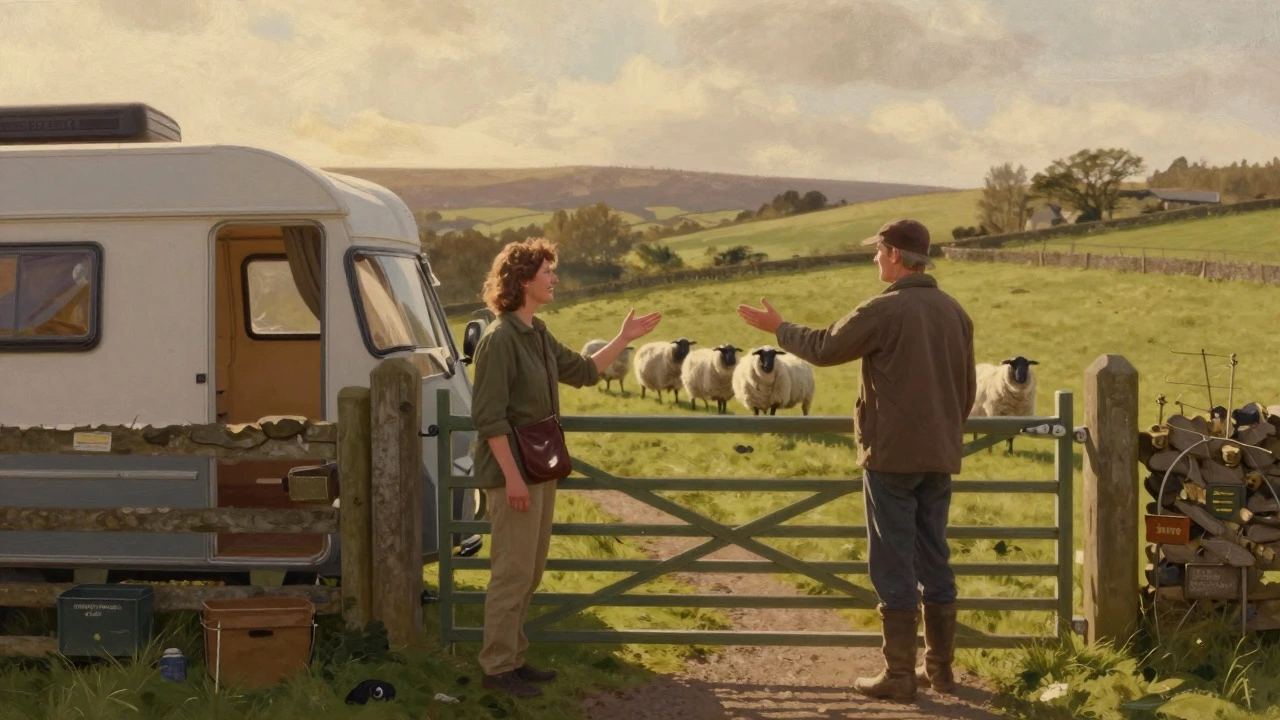
- Ask first: Find the nearest farm or house. A friendly smile and a question go a long way. Many farmers will say yes, especially if you promise to keep dogs off the sheep.
- Look for signs: "No Trespassing" means exactly that. Don’t gamble. "Private Property" is a warning, not necessarily a ban, but it signals caution.
- Stay near public rights of way: Being visible makes you seem less threatening. Hiding in a dense thicket might make a landowner suspicious.
- Avoid sensitive times: Try not to camp during lambing season (spring) or harvest time (late summer/autumn) in agricultural areas.
Some national parks in England, like the Peak District or Lake District, have stricter enforcement. Rangers actively patrol to protect fragile ecosystems. In these areas, wild camping is often discouraged even if it’s not explicitly criminalized. Check the specific national park website before heading out.
Northern Ireland: Stick to Designated Sites
Northern Ireland has the strictest rules. Without a specific agreement with a landowner, wild camping is effectively illegal. Unlike Scotland, there is no blanket right of access. This doesn’t mean it never happens, but the risk of being asked to leave-or worse-is significantly higher.
Your best bet in Northern Ireland is to use licensed campsites or B&Bs. If you are determined to wild camp, focus on coastal areas where land ownership is less fragmented, but still seek permission. The Antrim Coast and the Mourne Mountains are popular for day hikes, but overnight stays require extra diligence.
Common Pitfalls That Get Campers in Trouble
Even in places where wild camping is legal or tolerated, certain behaviors turn welcome guests into unwelcome ones. Avoid these mistakes:
- Parking on gates: Blocking a farm gate is an invitation for a confrontation. Park well back from entrances.
- Letting dogs roam: Off-leash dogs are a major source of conflict with livestock. Keep them on a lead, especially around sheep and cattle.
- Making noise at night: Loud music or late-night parties annoy neighbors. Keep it quiet after dark.
- Ignoring weather warnings: Flash floods are common in valleys. Never camp in a riverbed, even if it looks safe during the day.
- Assuming "no sign" means "yes": Absence of evidence is not evidence of absence. Just because you haven’t seen a "No Camping" sign doesn’t mean you have permission.
What to Do If You’re Asked to Move
It happens. Even in Scotland, you might be asked to relocate. Usually, it’s because you’re too close to a house, field, or other campers. Here is how to handle it gracefully:
- Listen first: Don’t argue immediately. Ask why they want you to move. It might be a simple misunderstanding.
- Agree to move: If the request is reasonable, pack up quickly. Arguing creates bad blood that can follow you to the next site.
- Find alternatives: Use apps like Pitchup! or AllTrails to find nearby designated sites. Or drive further until you find a more isolated spot.
- Know your rights: In Scotland, if you are following the code, they can’t force you to leave without a valid reason. But in England/Wales, they can.
Equipment Tips for Legal Wild Camping
Your gear should support your goal of leaving no trace. Heavy, bulky tents are harder to set up and take down quickly if you need to move. Consider these options:
- Lightweight tents: A 2-person ultralight tent is easier to carry and set up on uneven ground.
- Ground sheets: Protect the soil and prevent mud from getting into your tent. Choose biodegradable materials if possible.
- Portable toilets: Essential for longer trips or areas with limited privacy. Compact options exist that fit in a backpack.
- Headlamps with red light: Red light preserves night vision and is less disruptive to wildlife and other campers.
- Water purification: Natural water sources may contain bacteria. Carry a filter or purification tablets.
Remember, the goal is to blend in. The less impact you have, the more likely you are to be welcomed back next time.
Is wild camping allowed in National Parks?
In Scotland, yes, provided you follow the Outdoor Access Code. In England and Wales, it depends on the specific park's rules. Some, like the Lake District, discourage it, while others tolerate it in remote areas. Always check the local authority's guidelines.
Can I have a fire when wild camping?
In Scotland, open fires are often banned in moorland and forest areas due to wildfire risk. In England and Wales, it depends on the landowner. Generally, a gas stove is safer, cleaner, and less likely to cause trouble.
How long can I stay in one spot in Scotland?
There is no legal limit, but the convention is three nights. Staying longer increases the likelihood of being asked to move. If you plan to stay longer, consider finding a different location or a designated campsite.
Do I need insurance for wild camping?
Yes. Standard travel insurance often excludes activities like hiking or camping. Look for a policy that covers emergency medical evacuation and repatriation, especially if you are venturing into remote highlands.
What is the difference between wild camping and bushwalking?
Bushwalking usually refers to day hiking. Wild camping specifically involves sleeping overnight in the wild. The legal implications differ significantly, as overnight stays trigger different rights and responsibilities regarding land access.