What Is the Rule of 6 in Wales? Wild Camping Rules Explained
 Mar, 8 2026
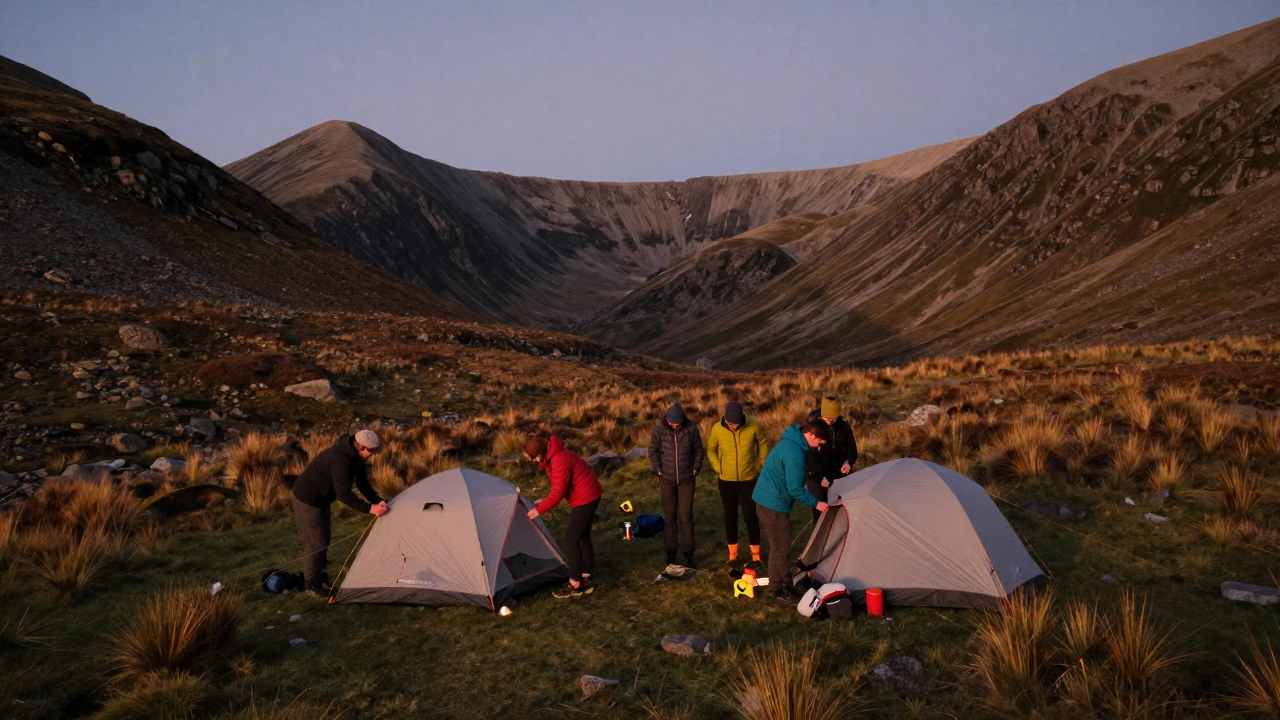
When you hear "rule of 6" in Wales, it’s not about party limits or social gatherings. It’s about the quiet, often misunderstood law that lets you camp wild in the countryside - if you follow it. This rule isn’t written in a big government handbook. It’s a practical guideline that’s been shaped by decades of land access debates, outdoor ethics, and local enforcement. If you’re planning to pitch a tent on a mountainside in Snowdonia or sleep under the stars near Lake Bala, this is the one thing you need to know.
What the Rule of 6 Actually Means
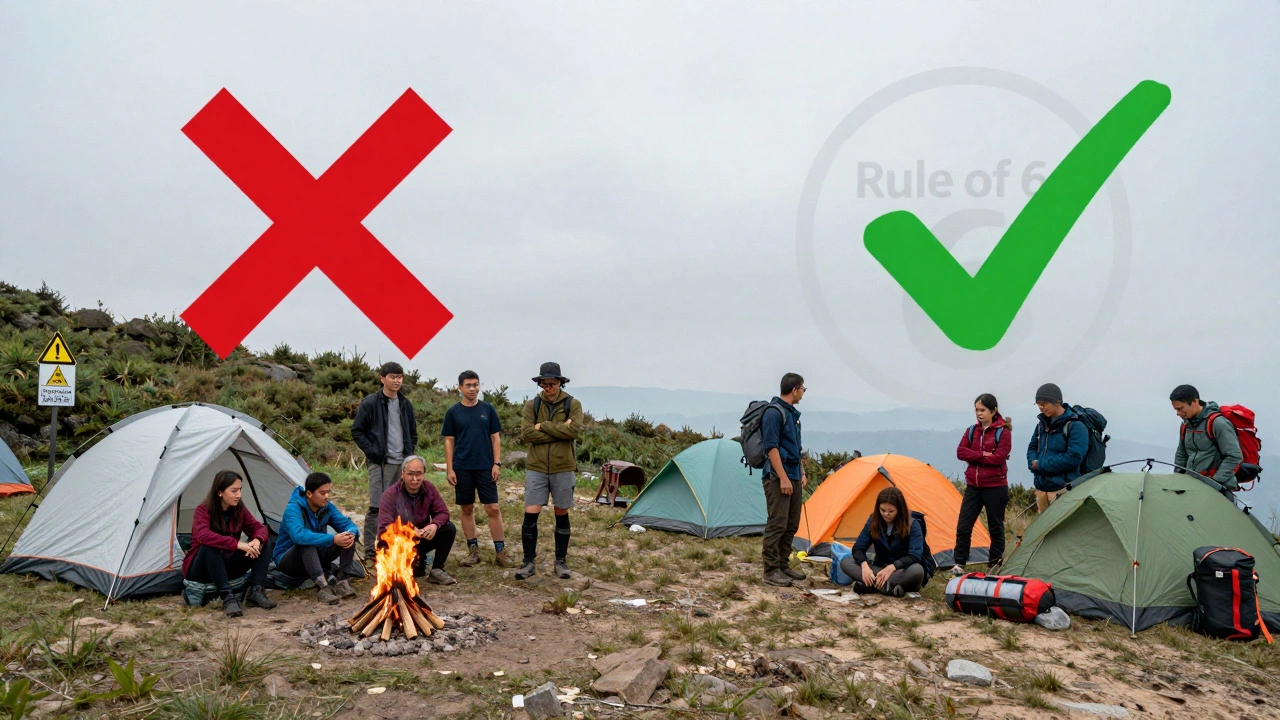
The rule of 6 in Wales says: you can camp wild on open land if you’re in a group of six people or fewer. That’s it. No permits. No fees. No official signposts telling you where you can or can’t go. But here’s the catch - it only applies to small, temporary, low-impact camping. This isn’t a free pass to bring your whole family, two dogs, a campfire, and a 10-person tent for a weekend party.
The rule comes from the Land Reform (Scotland) Act 2003 influence, which spread south into Wales. While Scotland has clear statutory access rights, Wales doesn’t. Instead, it relies on the Countryside and Rights of Way Act 2000 and long-standing informal agreements between landowners and walkers. The number six emerged as a practical threshold: large groups cause damage, noise, and litter. Small groups? They’re barely noticeable.
Where Does It Apply?
The rule doesn’t cover all of Wales. You can’t just camp anywhere. It only works on land that’s classified as open access land - which includes mountains, moorland, heath, and some coastal areas. These are marked on Ordnance Survey maps with a yellow dashed line. You can find them online through Natural Resources Wales or the Ramblers Association.
Here’s what’s off-limits:
- Private gardens or farmland with crops or livestock
- Areas within 200 meters of a dwelling (houses, cottages, farmsteads)
- National parks’ designated camping zones (like in the Brecon Beacons, where official sites exist)
- Protected sites like SSSIs (Sites of Special Scientific Interest) or nature reserves
- Any land marked with "No Camping" signs - even if they look old or faded
Most of the wild camping that works under the rule of 6 happens in the uplands: the Cambrian Mountains, the Berwyn Range, and the northern slopes of Snowdon. These areas are remote, rarely patrolled, and have few people. That’s why they’re the go-to spots for those following the rule.
What Counts as "Low Impact"?
The rule of 6 isn’t just about group size. It’s about behavior. If you break any of these, you’re no longer following the rule - and you risk being asked to leave, fined, or even prosecuted.
- Stay one night only - no multi-day stays. You’re a visitor, not a resident.
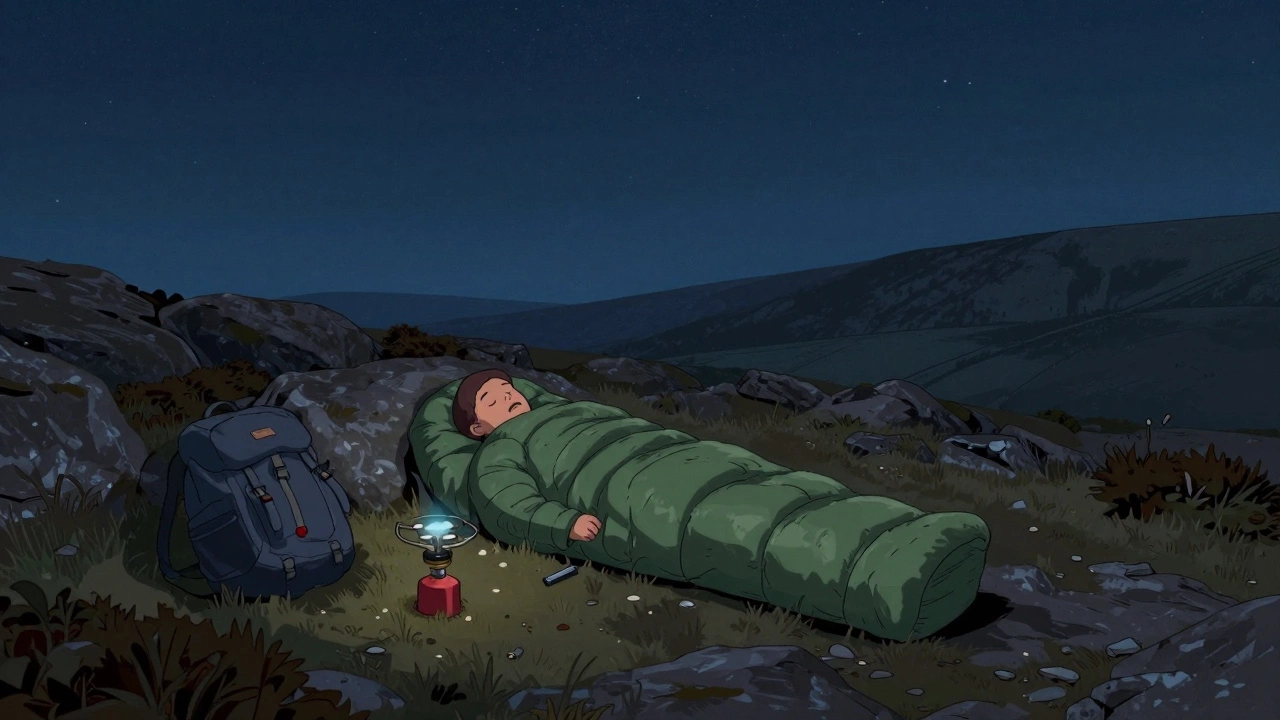
- No fires - even small ones. Use a gas stove. The risk of wildfire, especially in dry spring conditions, is too high.
- No tents larger than 2-person - a single dome tent or small bivy sack is fine. A 6-person family tent? That’s a red flag.
- Take everything with you - including toilet paper, food scraps, and wet wipes. Pack out what you pack in.
- Don’t camp near water sources - stay at least 50 meters from streams, rivers, or lakes to avoid contamination.
- No dogs off-leash - even well-behaved dogs can scare livestock. Keep them leashed and under control.
These aren’t suggestions. They’re the unspoken contract between walkers and landowners. Break them, and you’re not just breaking the rule - you’re making it harder for everyone else to keep camping wild in Wales.
What Happens If You Get Caught?
Most of the time, nothing. Landowners and rangers don’t patrol these areas every day. But if you’re noisy, leave trash, or camp in a group of eight, you might get a visit.
Typical outcomes:
- A friendly chat with a park ranger - they’ll ask you to move on. No fine.
- A warning letter from Natural Resources Wales - if you’ve been reported multiple times.
- A £100 fixed penalty notice - if you’re camping in a protected area or after being told to leave.
- Police involvement - if you’re causing public nuisance, damaging property, or ignoring repeated warnings.
There’s no official "rule of 6" law. That’s why enforcement is patchy. But the more people break the unwritten rules, the more likely it is that Wales will pass a strict ban - like England has in the Lake District.
How It Compares to Other Parts of the UK
Wales is one of the few places in the UK where wild camping is still quietly tolerated. Here’s how it stacks up:
| Region | Legal? | Group Size Limit | Overnight Stay Allowed? | Fire Allowed? |
|---|---|---|---|---|
| Wales | Conditionally legal | 6 or fewer | Yes, one night | No |
| Scotland | Legal (with responsibility) | No limit | Yes, multiple nights | Yes, with care |
| England | Illegal (except Dartmoor) | N/A | No | No |
| Northern Ireland | Illegal | N/A | No | No |
Scotland is the gold standard - you can camp almost anywhere if you’re responsible. Wales is the middle ground - tolerated, but fragile. England? Forget it, unless you’re on Dartmoor. Northern Ireland? No chance.
Why This Rule Exists
The rule of 6 isn’t arbitrary. It’s based on real environmental data. A 2023 study by Cardiff University tracked soil erosion and wildlife disturbance in 12 upland areas over two years. Groups of 7+ people caused 3.5 times more damage than groups of 6 or fewer. The damage wasn’t just from tents - it was from foot traffic, noise, and litter.
Landowners aren’t trying to shut people out. They want to keep the countryside accessible. But they also need to protect grazing land, nesting birds, and water quality. The rule of 6 is the compromise. It says: "You can enjoy this land - but don’t treat it like your backyard."
What You Should Do Before You Go
If you’re planning a wild camping trip in Wales:
- Check Natural Resources Wales for open access maps - don’t rely on apps alone.
- Use a small, lightweight tent - one that fits two people max.
- Bring a gas stove. Leave the campfire gear at home.
- Arrive after dark and leave before sunrise. Fewer people see you, fewer complaints get made.
- Never camp near a trailhead or popular viewpoint. Go deeper into the hills.
- Leave no trace. That includes biodegradable soap. Use it 50 meters from water.
And if you’re with more than six people? Split up. Camp in different spots. It’s not cheating - it’s respecting the system.
What’s Next for Wild Camping in Wales?
The rule of 6 is under pressure. More people are discovering wild camping. Social media is full of photos from hidden valleys - and some of those campers are ignoring the rules. In 2025, Natural Resources Wales began pilot patrols in Snowdonia and the Brecon Beacons. They’re not there to ticket people - they’re there to educate.
But if misuse keeps growing, the Welsh government may follow England’s lead and ban wild camping outright. Or worse - they might require permits, fees, and designated zones. That would kill the spirit of wild camping in Wales.
For now, the rule of 6 still holds. But it’s not a right. It’s a privilege. And like all privileges, it depends on how you use it.
Is wild camping legal in Wales?
Wild camping is not officially legal in Wales, but it’s tolerated if you follow the unwritten "rule of 6" - camping in groups of six or fewer, staying one night, and leaving no trace. It only applies to open access land, not private property or protected areas.
Can I camp on the beach in Wales?
No. Beaches in Wales are usually part of private land or protected coastal zones. Even remote beaches often have livestock, nesting birds, or tidal restrictions. Camping on the beach is not allowed under the rule of 6 and can lead to fines.
Do I need permission from the landowner?
Legally, yes - but in practice, most wild campers don’t ask. The rule of 6 relies on trust and discretion. If you’re quiet, small, and clean, you’re unlikely to be challenged. However, if you’re on private land with signs or livestock, you should always seek permission.
What if I’m with 7 people?
You’re breaking the rule. Even if you’re quiet and clean, a group of 7 is considered too large under the informal guidelines. You risk being asked to leave, especially if you’re near a trail, viewpoint, or popular hiking route. Split into two smaller groups to stay compliant.
Can I use a hammock instead of a tent?
Yes - if you’re alone or with one other person. Hammocks are considered low-impact and are often overlooked by land managers. But make sure your lines don’t damage trees, and you’re not camping in a protected area. Always follow the one-night rule.