What Is the Downside of Owning an RV? Real Costs and Hidden Hassles
 Feb, 23 2026
RV Ownership Cost Calculator
Calculate Your RV Costs
Results
Everyone dreams of hitting the open road in an RV-waking up to mountain views, driving to the beach on a whim, sleeping under the stars. But if you’re thinking about buying one, here’s the truth most brochures won’t tell you: owning an RV isn’t just freedom. It’s a full-time job with a huge price tag.
You’re Buying a House That Drives
An RV isn’t a car. It’s a mobile home. And homes cost money to keep up. Think about your house: roof repairs, HVAC filters, plumbing leaks, pest control. Now imagine all of that, but on wheels, with a generator, propane tanks, black water tanks, and slide-outs that get stuck. The average RV owner spends $3,000 to $7,000 a year just on maintenance. That’s not counting tires-yes, RV tires wear out faster than your car’s, even if you drive 5,000 miles a year. A single set of RV tires can cost $1,200. And they need replacing every 5-7 years, regardless of tread.
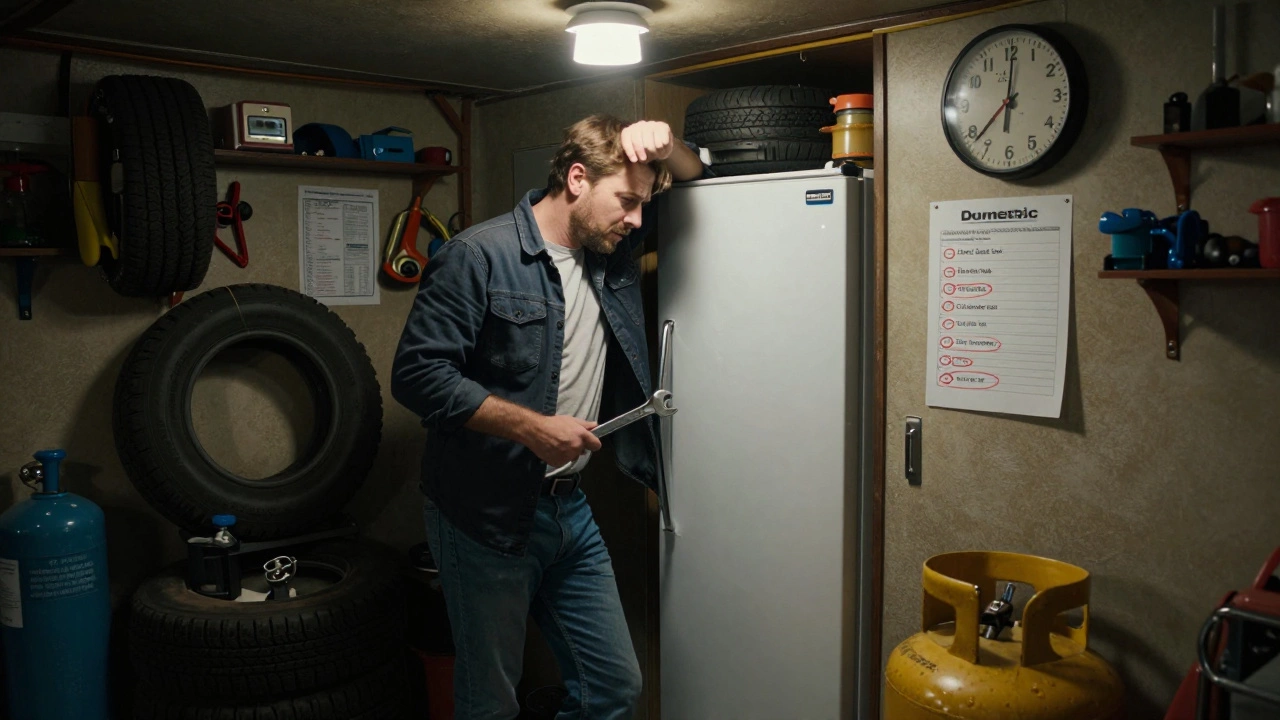
And don’t forget the big stuff. A water heater fails. The AC stops cooling. The awning tears. These aren’t Amazon fixes. You need a specialist. Most mechanics won’t touch an RV. You’ll end up driving hours to find someone who knows how to fix a Dometic fridge or a Norcold cooling unit. And when they do, expect to pay $120 an hour.
Storage Is a Nightmare
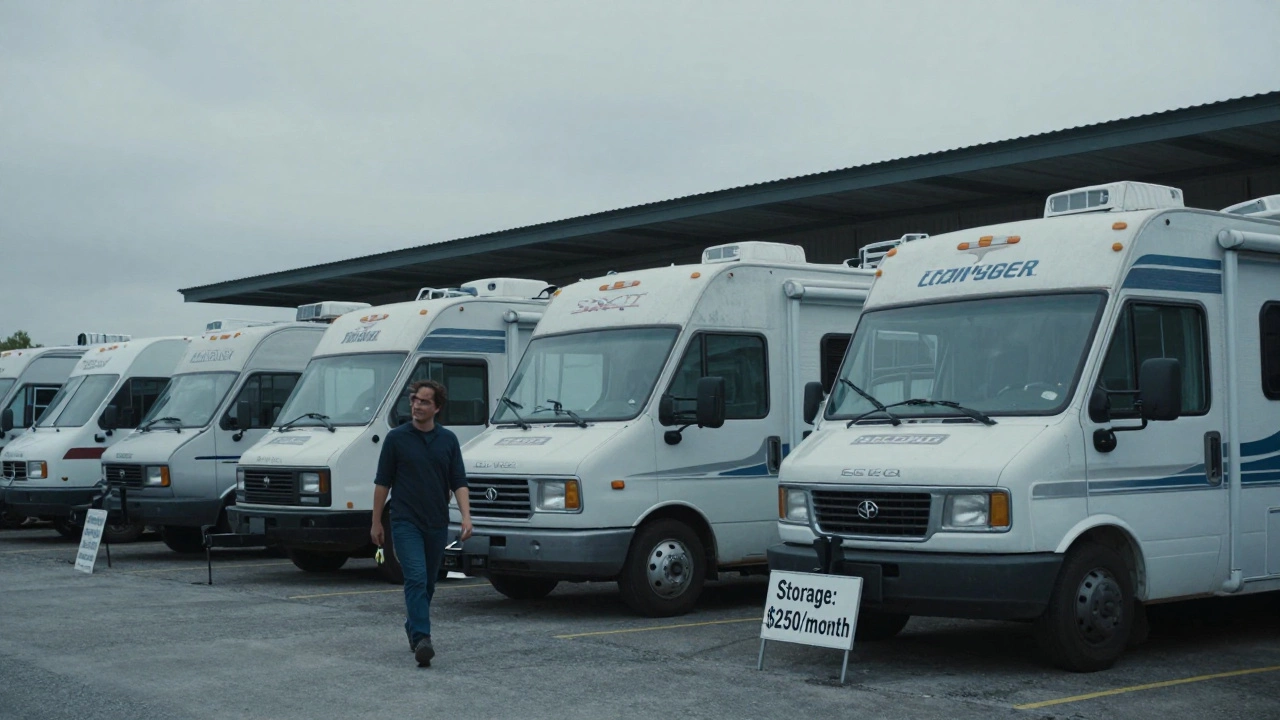
Where do you put it when you’re not using it? Most people don’t have room in their driveway. RVs are long. Heavy. And they don’t fit under carports. If you live in a city, your HOA might ban it. If you live in the suburbs, your neighbor will complain. So you rent storage.
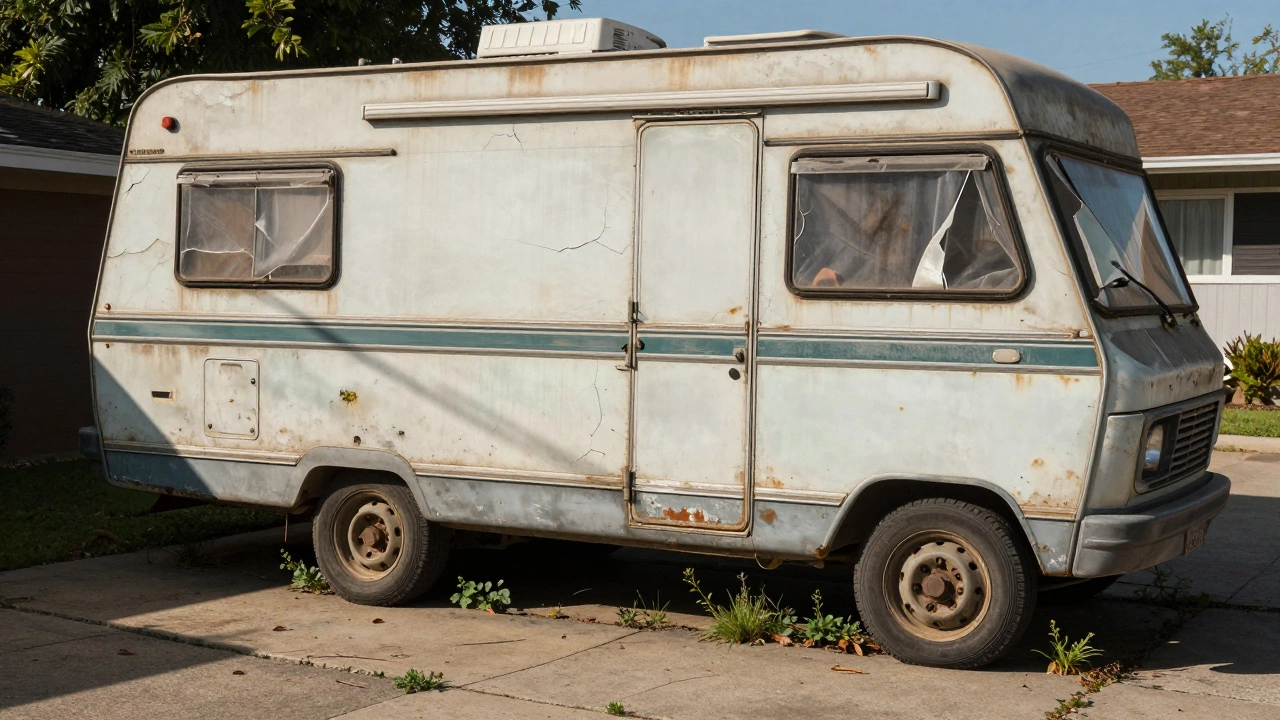
Storage fees vary, but in Australia, expect to pay $150 to $300 a month for a covered, secure space. That’s $1,800 to $3,600 a year. And that’s just to keep it dry. If you skip storage and leave it outside, you’re looking at UV damage to the roof, cracked seals, and mold inside. One owner in Perth told me his 2019 motorhome lost $15,000 in value just because he left it parked on concrete for two winters without a cover.
Depreciation Hits Hard
A new RV loses 20% the moment you drive it off the lot. After five years, it’s worth half what you paid. Compare that to a car, which holds its value better, or even a house, which usually appreciates. RVs are like boats: they’re luxury items with no resale upside. If you bought a $120,000 Class C motorhome in 2023, it’s worth maybe $70,000 today. And that’s if it’s been well-maintained. If you’ve used it for two long trips and didn’t winterize it? You’re looking at $50,000.
Why? Because the market is flooded. People buy them for a dream, then realize how much work they are. They sell. And when you’re trying to sell, you’re competing with dozens of others-most in worse shape than yours.
Insurance and Registration Are Surprisingly High
RV insurance isn’t like car insurance. It’s more like home insurance with extra layers. You need liability, comprehensive, collision, and sometimes even emergency roadside coverage for your awning and generator. In Australia, annual premiums for a mid-range motorhome range from $1,200 to $2,500. That’s more than most people pay for their car.
Registration is worse. In Western Australia, a motorhome over 4.5 tonnes gets taxed like a commercial vehicle. You pay $800 just to register it. Plus, you need a special license if it’s over 4.5 tonnes. If you’ve got a heavy-duty Class A, you might need a Class C or even a heavy vehicle license. That means extra training, extra time, extra cost.
You Can’t Just Hop In and Go
Remember that spontaneous weekend trip? It’s not so spontaneous anymore. Before you leave, you’ve got to:
- Check the propane levels
- Empty the black and gray water tanks
- Inspect the tires for dry rot
- Test the battery and inverter
- Make sure the slide-outs move smoothly
- Confirm the awning isn’t torn
- Fill fresh water tanks
- Charge the batteries
- Check the fridge is running on gas or electric
That’s a two-hour checklist before you even pull out of the driveway. And if you forget one thing? You could end up stranded. I know someone who left without checking the water pump. Three hours into their trip, they had no running water. No showers. No toilet. No coffee. Just a very angry family and a broken pump.
It’s Not as Easy to Use as You Think
Most people think they’ll use their RV every weekend. Reality? The average RV owner uses it 18-25 days a year. That’s less than once a month. And a lot of that time is spent finding a dump station, waiting in line for showers, or dealing with a malfunctioning heater in the middle of winter.
When you rent an RV, you get a clean, ready-to-go unit. No maintenance. No storage fees. No depreciation. You show up, drive off, and drop it off. No stress. No surprises. And you can pick a different model every time-maybe a smaller one for solo trips, a bigger one for the kids.
What You’re Really Paying For
Owning an RV sounds like freedom. But what you’re really buying is responsibility. You’re buying a big, expensive, high-maintenance machine that sits idle most of the year, loses value fast, and costs more to keep than most people expect. It’s not a lifestyle upgrade. It’s a lifestyle burden.
There’s nothing wrong with wanting to travel. But you don’t need to own an RV to do it. Renting gives you the same experience-without the headaches, the costs, or the guilt when it sits unused for six months.
If you’re still thinking about buying, ask yourself: Are you ready to be the owner of a $100,000 project that never stops needing attention?
Is it cheaper to own an RV or rent one?
For most people, renting is cheaper. Owning an RV costs $5,000-$10,000 a year in maintenance, storage, insurance, and depreciation. Renting a similar unit for 20 days a year costs around $3,000-$4,000. If you use it less than 30 days annually, renting saves you thousands.
Can you live in an RV full-time to save money?
It’s possible, but not for most people. Full-time RV living requires careful planning: finding free or low-cost campsites, managing waste, dealing with extreme weather, and handling repairs on the road. Many who try it end up spending more on fuel, storage, and emergency fixes than they saved on rent. It works for some-but it’s not the easy lifestyle it’s sold as.
Do RVs need special licenses to drive?
In Australia, if your RV weighs more than 4.5 tonnes, you need a Class C license. Most Class A motorhomes and large fifth wheels exceed that. A standard car license won’t cut it. You’ll need to take a test, which adds time and cost. Smaller Class C models under 4.5 tonnes are fine with a regular license.
Are RVs safe in bad weather?
Not always. High winds can make large RVs unstable. Heavy rain can cause leaks in older models. Snow and ice can freeze pipes and damage tanks. Many RV parks close during winter. If you’re not prepared, you could end up stuck, cold, or worse. Insurance doesn’t cover everything.
What’s the biggest mistake new RV owners make?
Buying too big. People think they need space for the whole family, but they forget how hard it is to drive, park, and maintain a 35-foot motorhome. Most end up using only a fraction of the space. A smaller unit is easier to handle, cheaper to run, and more likely to get used.