What Is the 33/38 Rule for Camping in the UK?
 Mar, 22 2026
33/38 Rule Checker
Check Your Camping Location
This tool checks if your proposed campsite meets the UK's unofficial 33/38 rule for responsible wild camping. Enter your distance to the nearest road and dwelling to see if you're following best practices.
Enter your distances above to check if your campsite location meets the 33/38 rule.
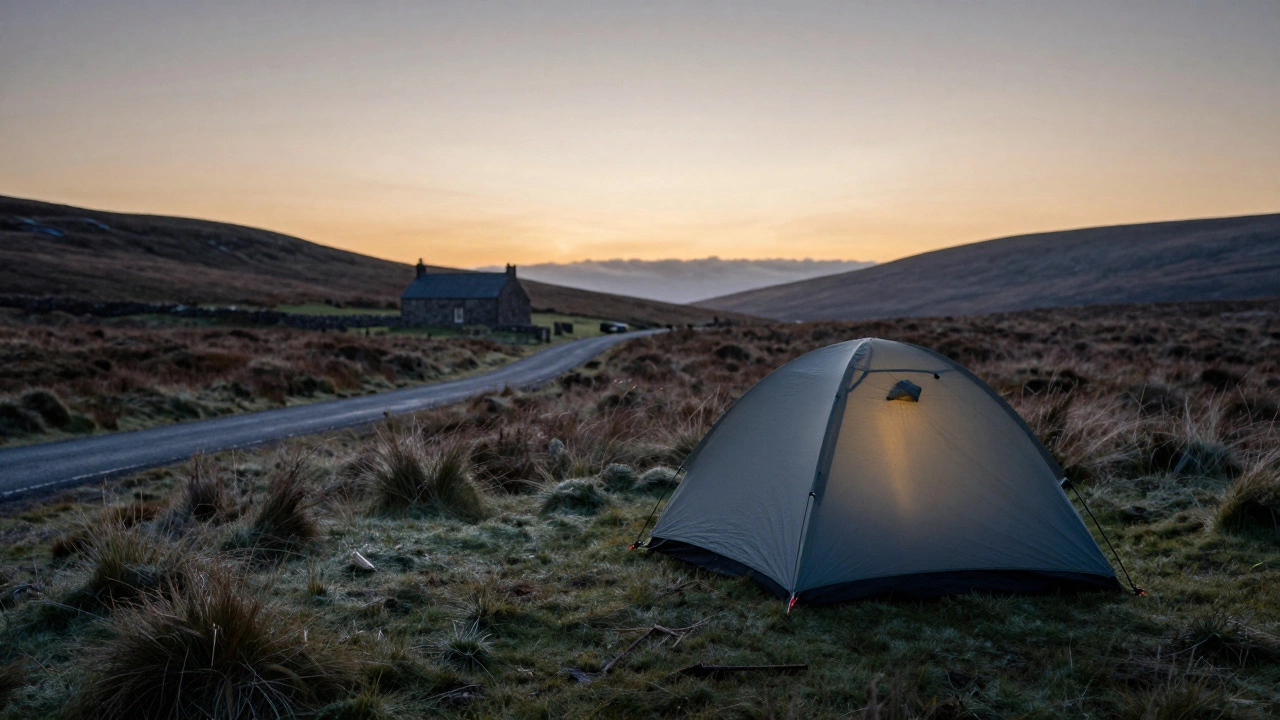
If you’ve ever pitched a tent on the edge of a moor in Scotland or tucked your caravan into a quiet lane in Wales, you’ve probably heard whispers about the 33/38 rule. It’s not a law written in stone, but it’s the unofficial guideline that keeps thousands of wild campers out of trouble across the UK. And if you’re planning to sleep under the stars without booking a site, this rule matters more than you think.
What Exactly Is the 33/38 Rule?
The 33/38 rule is a simple guideline used by wild campers and landowners alike to avoid conflict. It says: if you’re camping on private land without permission, you should be at least 33 metres from any road and 38 metres from any dwelling. That’s roughly the length of a double-decker bus for each distance. These numbers aren’t legally binding, but they’ve become the standard measure for what’s considered reasonable, low-impact wild camping.
The rule doesn’t come from an act of Parliament. It emerged from decades of informal negotiation between campers and landowners-especially in Scotland, where the Land Reform (Scotland) Act 2003 gave people a legal right to roam, as long as they act responsibly. In England and Wales, the situation is different. There’s no blanket right to wild camp, so the 33/38 rule acts as a practical buffer zone to reduce complaints.
Why These Numbers? The Logic Behind the Distances
Why 33 and 38? The numbers aren’t random. They’re based on real-world observations of how far noise, light, and human presence can travel without disturbing others.
- 33 metres from a road ensures you’re not visible from passing traffic, reducing the chance of being reported for illegal parking or littering. It also keeps you away from vehicle exhaust, road noise, and the risk of someone accidentally driving onto your site.
- 38 metres from a dwelling is roughly the distance where a dog’s bark won’t carry to a house, where campfire smoke won’t drift into a window, and where voices won’t be heard at night. It’s also the minimum distance recommended by the UK’s Countryside Code for minimizing impact on rural residents.
These distances are also practical for campers. If you’re carrying gear, 33 metres is about a 5-minute walk from a parking spot-enough to feel remote, but not so far that you’re struggling to set up in the dark.
Where Does the Rule Apply?
The 33/38 rule is most commonly followed in Scotland, where wild camping is legal under the Scottish Outdoor Access Code. Here, it’s not just a suggestion-it’s part of the culture. Rangers, landowners, and outdoor clubs all reference it when teaching new campers.
In England and Wales, the rule isn’t law. But it’s still used as a de facto standard by landowners and police when deciding whether to intervene. For example, if a group of campers is found 20 metres from a farmhouse, they’re far more likely to be asked to move than if they’re 50 metres away. Local councils and police forces often use these distances as a benchmark in informal warnings.
Some areas, like Dartmoor and the Lake District, have specific bylaws that allow limited wild camping, but even there, the 33/38 rule is a good rule of thumb to avoid trouble. In national parks, rangers may not enforce it strictly-but they will if they receive complaints from nearby residents.
What Happens If You Break It?
Technically, wild camping without permission is trespassing in England and Wales. That’s a civil offence, not a criminal one-so you won’t get arrested. But you can be asked to leave, and if you refuse, the landowner can call the police. In practice, most landowners just want you gone quietly.
If you’re camping within 30 metres of a house, near a farmyard, or right beside a public footpath, you’re asking for trouble. People report these sites. One farmer in Northumberland told me he gets 2-3 calls a week from neighbors about campers too close to their gardens. He doesn’t call the police unless people leave trash, start fires, or block access.
Scotland is different. There, you can camp legally as long as you follow the Leave No Trace principles. But even there, if you pitch within 10 metres of a road or 20 metres of a house, you’re breaking the spirit of the code. Rangers may give you a friendly warning, but repeat offenders can be banned from certain areas.
How to Apply the Rule in Practice
Here’s how to use the 33/38 rule when you’re out there:
- Check your location before you pitch. Use a map app like OS Maps or ViewRanger to find the nearest road or building. Zoom in-sometimes a single cottage or barn counts as a “dwelling.”
- Choose higher ground. A small rise gives you privacy and keeps you away from drainage paths or livestock.
- Arrive late, leave early. Pitch after 8 PM and break camp before 8 AM. This reduces the chance of being seen.
- Don’t camp in groups. Two tents are fine. Ten tents look like a festival. Landowners notice.
- Never camp near livestock. Even if you’re 40 metres from a house, if you’re next to a field with sheep or cows, you’re asking for trouble.
Many experienced wild campers use a simple trick: if you can’t see a building from your tent, and no car has passed in the last 15 minutes, you’re probably okay. But if you hear a dog bark, a tractor start, or a door slam, move.
Alternatives to Wild Camping
If the 33/38 rule feels too vague-or if you’re in a place where wild camping is outright banned-there are better options:
- Official wild camping sites like those run by the Scottish Mountaineering Club or the Outdoor Access Trust. These are legal, free, and often have basic facilities like toilets or water.
- Permitted spots in Dartmoor, the Brecon Beacons, or parts of the Lake District. These are marked on OS maps and often have signs.
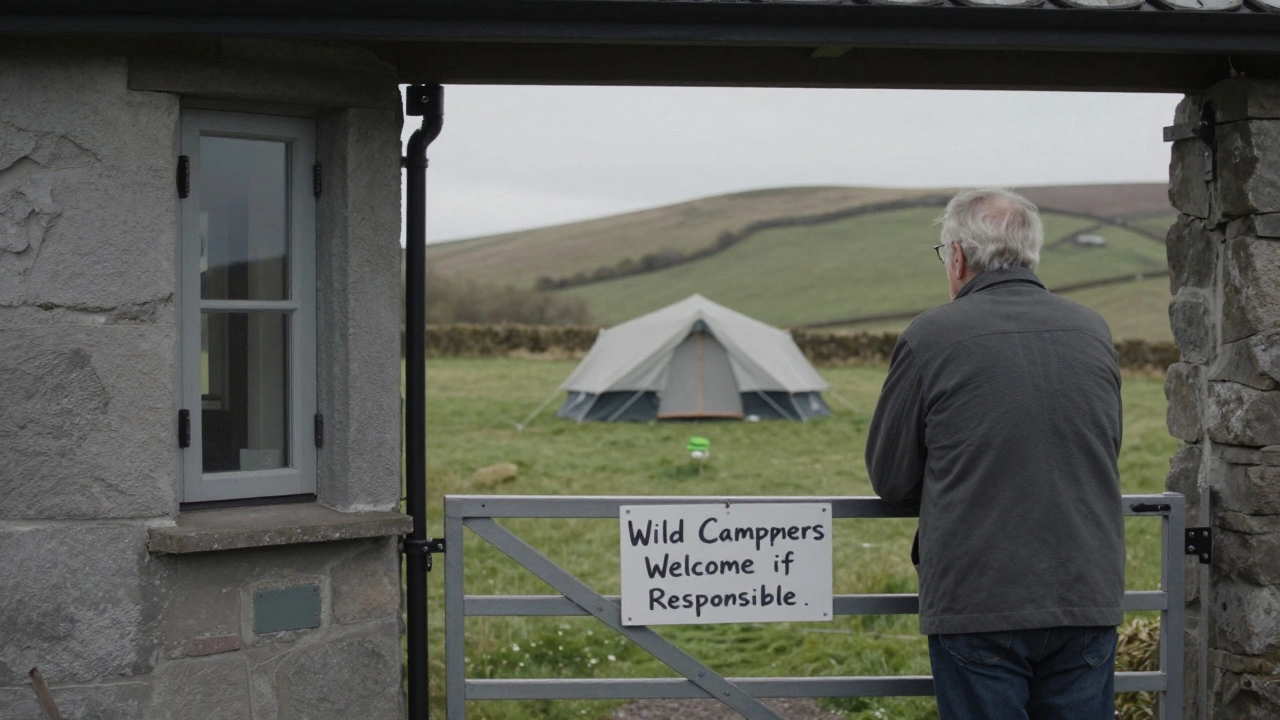
- Quiet B&Bs or farm stays that let you pitch a tent for £5-£10. Many farmers are happy to host campers if you ask politely.
- Motorhome stops on public land. Some councils allow overnight parking for motorhomes if you don’t use facilities. Check local council websites.
These options give you peace of mind-and they’re often cleaner and quieter than trying to sneak in on private land.
Why This Rule Still Matters in 2026
Wild camping is more popular than ever. In 2025, over 1.2 million people in the UK tried wild camping for the first time. Many came from cities and didn’t know the rules. As a result, complaints from landowners rose by 47% in the last two years.
The 33/38 rule is the middle ground. It’s not perfect, but it’s the only thing keeping wild camping from being banned outright in England and Wales. Landowners aren’t against campers-they’re against noise, litter, and disrespect. If you follow this rule, you’re showing you care about the land and the people who live on it.
And honestly? It makes for a better experience. You’re not just avoiding trouble-you’re finding real solitude. The quietest nights I’ve ever had were on a hillside 45 metres from the nearest road and 50 metres from a farmhouse. No lights. No sounds. Just stars.
Final Thoughts
The 33/38 rule isn’t magic. It’s common sense wrapped in numbers. It’s not a license to camp anywhere-it’s a tool to help you camp responsibly. If you’re heading out into the hills, don’t just pack your tent. Pack awareness. Know your surroundings. Respect the space. And if you’re ever unsure? Ask. Most landowners will say yes if you’re polite.
Wild camping is a gift. The 33/38 rule helps us keep it.
Is the 33/38 rule a law in the UK?
No, the 33/38 rule is not a law. It’s an informal guideline used by wild campers and landowners to avoid conflict. In Scotland, wild camping is legal under the Scottish Outdoor Access Code, as long as you follow responsible practices. In England and Wales, wild camping without permission is trespassing, and the 33/38 rule is used by police and landowners as a practical measure to decide whether to intervene.
Can I camp anywhere in Scotland as long as I follow the 33/38 rule?
Not exactly. While wild camping is legal in Scotland, you still need to follow the Scottish Outdoor Access Code. This includes camping in small groups, staying no more than two or three nights in one spot, taking all your rubbish, and avoiding areas like farmland, golf courses, or private gardens. The 33/38 rule helps you stay within these guidelines, but it doesn’t override other restrictions.
What if I camp 35 metres from a house but right next to a public footpath?
You’re still at risk. Even if you’re beyond 33/38 metres, being directly on a public footpath or near a gate can block access or cause safety issues. Landowners and authorities often consider footpaths as part of the "dwelling zone" because they’re used daily by residents. Always camp away from paths, gates, and livestock crossings.
Do I need permission to camp on public land?
It depends. In Scotland, public land (like most hills and moors) is open for wild camping under the access code. In England and Wales, public land like national parks or forested areas often has restrictions. Some areas, like Dartmoor, allow limited camping, but others-like parts of the Lake District-require permits. Always check local council or National Trust rules before you go.
How do I measure 33 or 38 metres without a tape?
Use your pace. The average adult step is about 0.76 metres. So 33 metres is roughly 43 steps, and 38 metres is about 50 steps. You can also use apps like OS Maps or Gaia GPS, which have distance measurement tools. If you’re using a car, park at least 33 metres from the road and walk in. Most people can estimate this distance after a few tries.