What Happens If You Get Caught Wild Camping in England?
 Dec, 22 2025
Wild Camping Legality Checker
Check Wild Camping Regulations in England
Enter your planned location to see if wild camping is legal or tolerated, along with potential consequences if you camp illegally.
Key Areas
Click any area below for specific rules
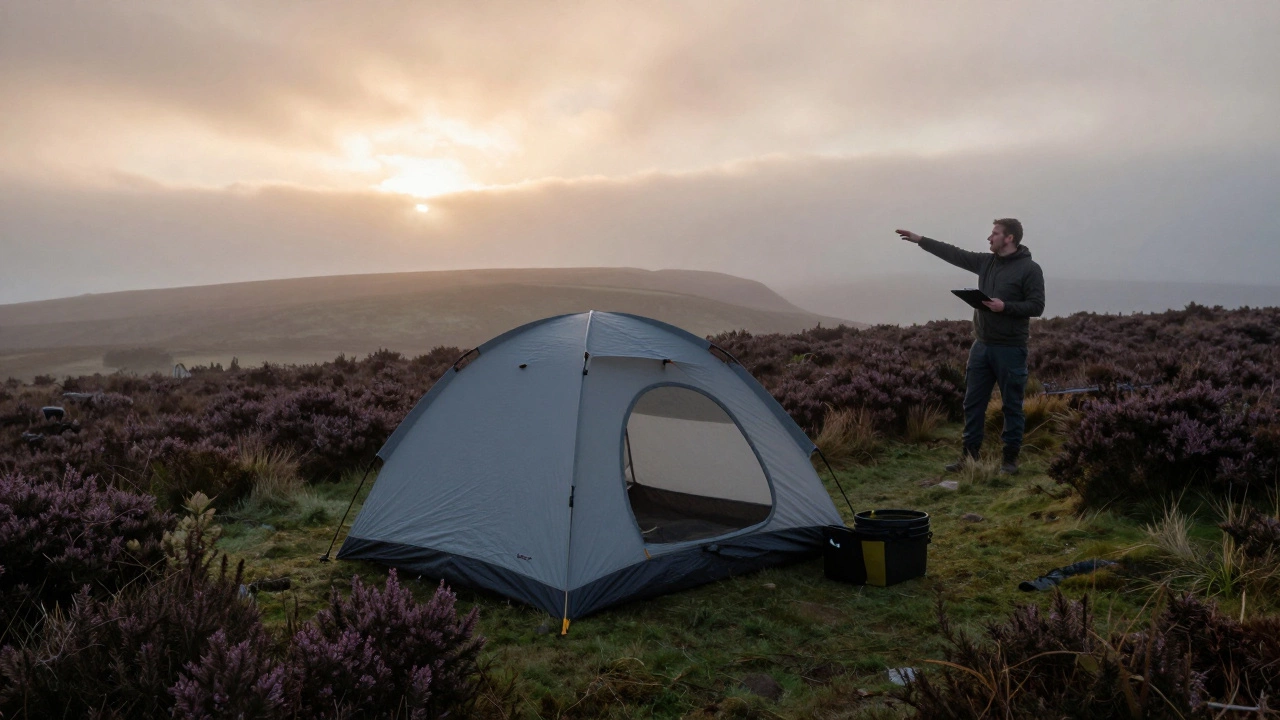
Wild camping in England isn’t illegal everywhere-but getting caught can still cost you time, money, and peace of mind. Unlike Scotland, where wild camping is protected under the Land Reform Act, England has no blanket right to camp on open land. If you pitch your tent without permission, you’re technically trespassing. And while many people do it without trouble, the rules are clear: wild camping without landowner consent is not allowed under English law.
What counts as wild camping?
Wild camping means setting up camp outside of designated campsites-on moors, hillsides, forests, or beside lakes. It’s usually done with minimal gear: a tent, sleeping bag, stove, and food. No hookups, no toilets, no bins. You leave no trace. That’s the ideal. But legality doesn’t care about how clean you are. Even if you’re quiet, pack everything out, and leave no sign you were there, you still need permission from the landowner.
Most land in England is privately owned-farms, estates, woodland, even public footpaths cross private property. You might think a hilltop or a quiet lake is "empty" or "public," but legally, it’s not yours to use. The only exception? The Lake District’s Borrowdale Valley and parts of the Peak District, where some landowners quietly tolerate it. But that’s tolerance, not permission.
What happens if you’re caught?
Most of the time, nothing. Rangers, farmers, or police might show up and ask you to move on. In many cases, that’s it. You pack up, walk away, and no one files a report. But sometimes, things escalate.
If you refuse to leave, or if you’ve camped in a sensitive area-like a nature reserve, near livestock, or a protected archaeological site-you could face a formal warning. Local councils or landowners may issue a notice under Section 61 of the Criminal Justice and Public Order Act 1994. This allows police to direct people to leave land if they believe two or more people are camping without permission and causing damage, intimidation, or obstruction.
If you still don’t leave after being told, police can seize your vehicle or equipment. That’s rare, but it’s happened. In 2023, a group of 12 campers near the Pennines had their tents and bikes confiscated after refusing to move from a private moorland. They were fined £200 each for trespassing and obstruction.
Fines and penalties
There’s no fixed fine for wild camping in England because it’s not a criminal offense on its own-it’s trespass, which is civil. But if you’re charged under Section 61, you could face a fine of up to £2,500. That’s rare, but possible. Most penalties are much smaller: £50 to £200 for a warning or a fixed penalty notice.
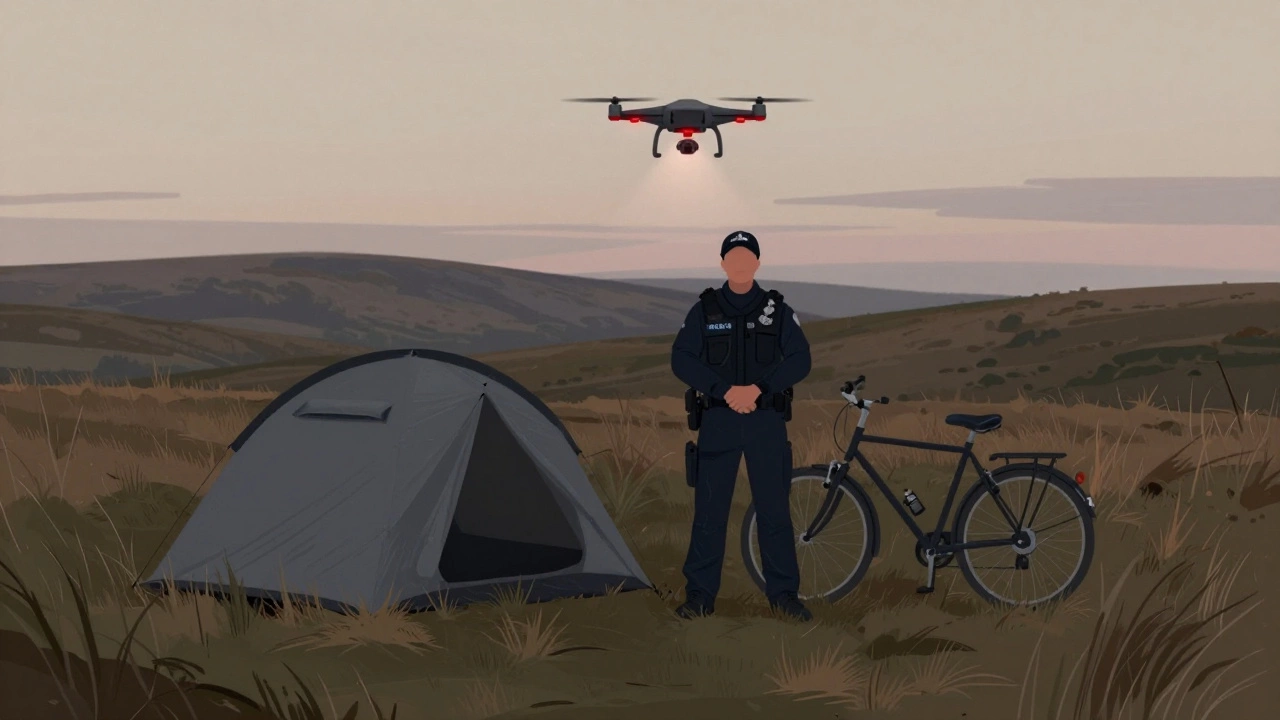
Some councils, like those in the Lake District or Dartmoor, have started issuing £100 fines for repeat offenders. Dartmoor National Park Authority now uses drones to spot unauthorized campsites. In 2024, they issued 87 fines to people who camped in restricted zones.
Don’t think you’re safe just because you’re alone. One person camping without permission is still trespassing. Police don’t need to see a group to act.
Where wild camping is tolerated (but still not legal)
Some areas have unofficial tolerance. These aren’t legal rights-they’re social agreements.
- Dartmoor National Park: You can camp on the open moor if you’re more than 100 meters from roads, buildings, or livestock. But you must leave by 9 AM the next day. No fires. No tents on archaeological sites. This is a long-standing practice, not law.
- The Lake District: Many hikers camp overnight on high ground, especially around Helvellyn or Scafell Pike. Landowners mostly look the other way-but if you camp near a farm or a popular trail, you’ll get asked to leave.
- North York Moors: Similar to Dartmoor. Tolerance exists, but enforcement is increasing.
Don’t mistake tolerance for permission. If a landowner complains, or if you’re seen as disruptive, the rules change fast. In 2023, a couple camping near Buttermere were asked to leave after a local resident reported them for leaving food scraps. Even though they cleaned up, they were told to go-and they did.
What you can do instead
If you want to camp legally and freely, here’s what works:
- Book a pitch at a campsite: Thousands of affordable sites exist across England. Many cost less than £15 a night. Look for sites with wild access-some are right on the edge of national parks.
- Use the Camping and Caravanning Club: Their network includes over 1,000 sites, many with low fees and quiet locations.
- Try wild camping on a farm: Sites like Wild Camp or Farm Stay let you pitch on private land with permission. You pay a small fee, and the landowner gets income. It’s legal, ethical, and growing fast.
- Go to Scotland or Wales: In Scotland, wild camping is legal almost everywhere (except a few protected zones). In Wales, it’s tolerated in some national parks if you follow Leave No Trace rules.
What not to do
Don’t camp:
- On private farmland with livestock-cows and sheep don’t like strangers.
- Within 100 meters of a public road or building.
- On protected land like Sites of Special Scientific Interest (SSSIs).
- With a fire-open flames are banned in most wild areas, even if you think it’s safe.
- After dark in national parks unless you have a permit.
Also, don’t assume that because you saw someone else camping, it’s okay. That person might’ve been asked to leave the day before. Or they might’ve paid for permission.
What to do if you’re approached
If someone-farmer, ranger, police-asks you to leave:
- Stay calm. Don’t argue.
- Pack up immediately.
- Don’t say you "didn’t know"-ignorance isn’t a legal defense.
- Ask if you can camp elsewhere nearby. Sometimes they’ll point you to a legal spot.
- If they threaten to seize gear, don’t resist. Record the interaction if you can.
Most officers just want you gone. They don’t want to write reports. Cooperate, and you’ll walk away with no record.
Is wild camping worth the risk?
For many, yes. The feeling of sleeping under stars on a mountain ridge is unmatched. But in England, it’s a gamble. You’re betting that no one will notice, that no one will care, that you won’t get unlucky.
There’s a better way: support landowners who allow camping. Pay a small fee. Respect the rules. Use apps like Campercontact or Wild Camp to find legal spots. These platforms connect campers with farmers and estate owners who want to share their land. It’s growing fast. In 2024, over 1,200 landowners in England signed up to host wild campers legally.
Wild camping isn’t about breaking rules. It’s about respecting land, people, and nature. Do it right, and you’ll never need to hide.
Can you get arrested for wild camping in England?
You won’t be arrested for simply camping without permission-that’s trespass, not a crime. But if you refuse to leave after being ordered to by police under Section 61 of the Criminal Justice and Public Order Act 1994, you can be arrested for obstruction. Arrests are rare but possible, especially if you’re part of a group or have damaged land.
Is wild camping legal anywhere in England?
No, not officially. There’s no legal right to wild camp anywhere in England. Some areas, like Dartmoor, have long-standing tolerance, but that’s not law. The only way to camp legally is with landowner permission or on a registered campsite.
What’s the difference between Dartmoor and the rest of England?
Dartmoor has a unique tradition: the public has used its open moorland for camping for over a century. While not written into law, the National Park Authority accepts it as long as you follow rules: no fires, no tents near livestock or paths, and leave by 9 AM. This is an exception, not a model for the rest of England.
Can police take your tent or car?
Yes, under Section 61, if you’re part of a group camping without permission and causing disruption, police can seize your vehicle or equipment. This is rare and usually only happens after repeated warnings or if you refuse to leave. Most officers prefer to just ask you to go.
How can I camp legally in the countryside?
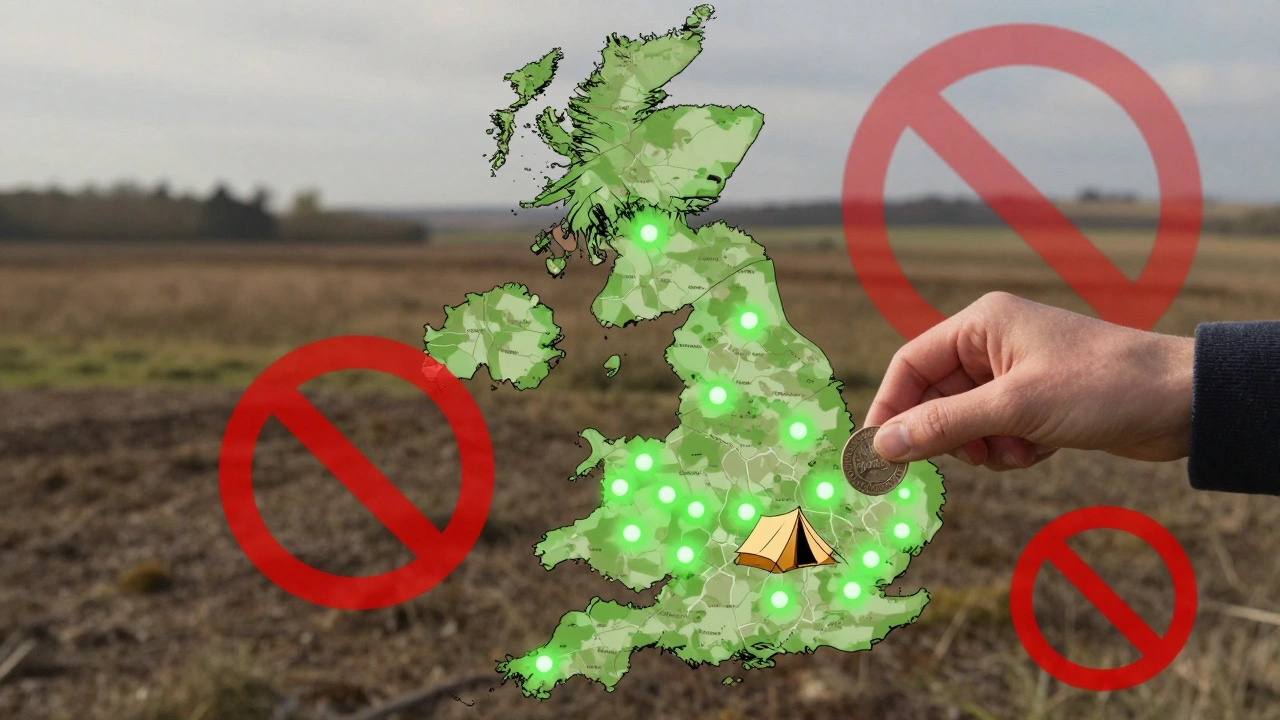
Use apps like Wild Camp or Campercontact to find farms and estates that allow overnight stays for a small fee. Book a pitch at a low-cost campsite. Or head to Scotland, where wild camping is legal under the Land Reform Act. There are over 1,200 legal wild camping spots in England now-just not on public land.
Next steps if you want to camp in England
Start by downloading the Wild Camp app. It shows you exactly where landowners are allowing overnight stays. Check local council websites for bylaws-some areas have strict rules. Talk to rangers at national park visitor centers. They often know quiet, legal spots.
If you’re serious about wild camping, join the British Mountaineering Council or the Camping and Caravanning Club. They give you access to legal sites and advice on how to camp responsibly.
Don’t risk fines or conflict. The best wild camping experiences come from respect-not rebellion.