What Do People Do With Their Dogs While Camping? Practical Tips for Dog-Friendly Outings
 Jan, 25 2026
Dog Camping Safety Checklist
Before You Hit the Trail
Check these items to ensure your dog stays safe and happy during your camping trip.
Safety Assessment
Summary
Bringing your dog on a camping trip isn’t just about letting them tag along-it’s about making sure they’re safe, happy, and part of the experience. Millions of dog owners in Australia and beyond now treat their pets as full camping partners. But what do people actually do with their dogs while camping? It’s more than just letting them run free. It’s about planning, reading the signs, and knowing what works-and what doesn’t.
Stick to Designated Dog Areas
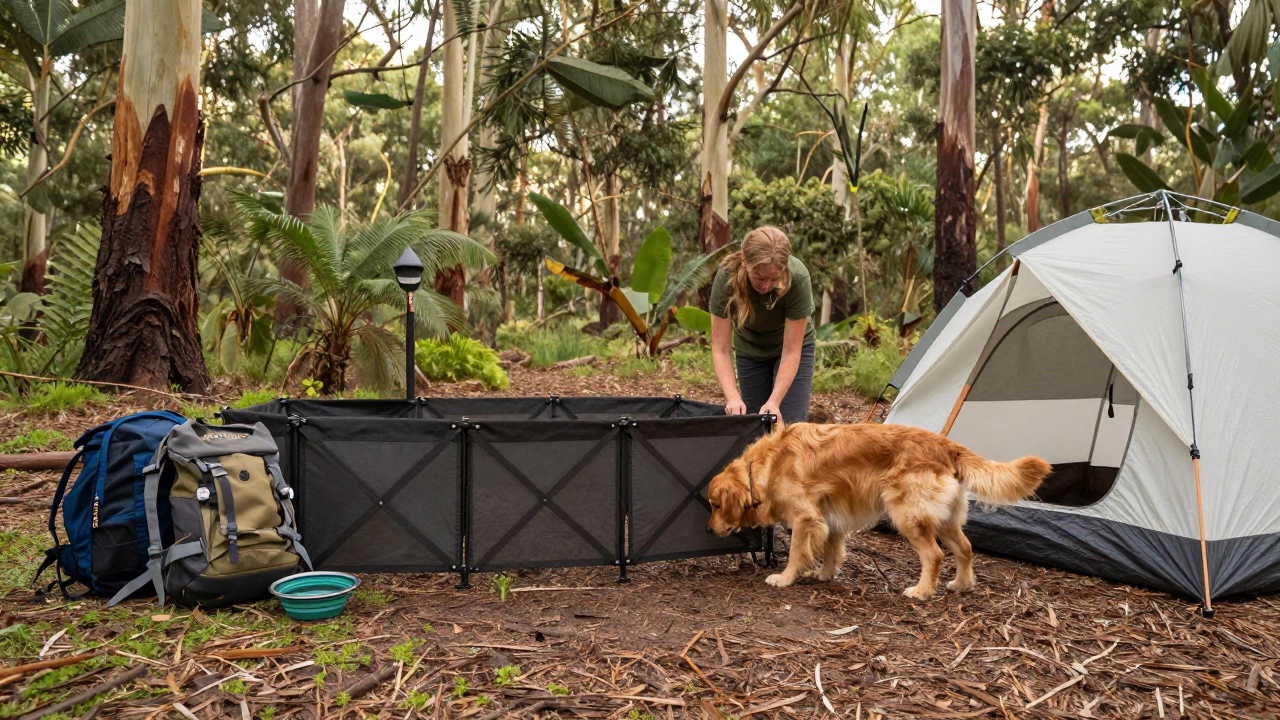
Not every part of a campsite is open to dogs. Even at dog-friendly campsites, there are often rules: no dogs near kitchen areas, no dogs on sandy beaches after 8 a.m., or leash-only zones near water sources. Most well-managed campsites in Australia, like those in the Grampians or Wilsons Promontory, clearly mark dog zones. People who plan ahead check these rules before they pack their gear. They don’t assume ‘dog-friendly’ means ‘dog-free-for-all’.One camper in Victoria told me she brings a small portable fence to create a safe play area near her tent. It keeps her dog from wandering into other people’s spaces or chasing wildlife. That’s the kind of detail that makes a trip smooth for everyone.
Keep Them on a Leash-Even When They’re Well-Trained
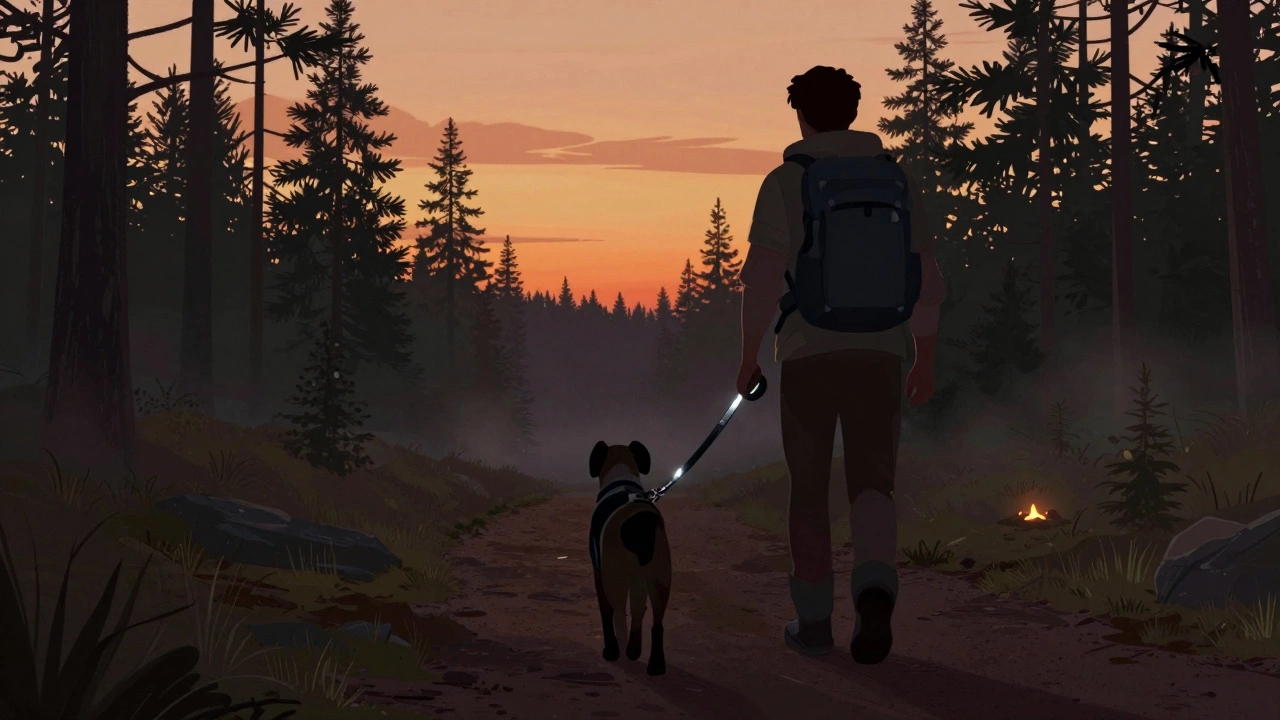
You might think your dog knows every command, but the woods don’t care. A squirrel, a kangaroo, or a sudden noise can trigger a chase. Even the calmest dog can lose focus in the wild. Most campgrounds require leashes for a reason: to protect wildlife, other campers, and your dog.People who camp regularly with their dogs use lightweight, 6-foot nylon leashes. They’re easy to carry, don’t tangle, and give the dog enough room to explore without risking a runaway. Some even use harnesses with reflective stitching-especially for early morning walks or evening fireside time when visibility is low.
Bring Their Own Food, Water, and Bowl
Dogs don’t eat campfire leftovers. And they shouldn’t. Their digestive systems are different from ours. People who camp with dogs always pack their pet’s regular food in sealed containers. They avoid giving them scraps-even if the dog looks cute begging. One bad meal can mean a vet visit halfway through your trip.Water is even more critical. Dogs need more water than you think, especially after hiking or running in the sun. People bring at least 2 liters per dog per day, plus extra. They use collapsible silicone bowls that fold flat in their pack. Some even bring a small water filter that attaches to their dog’s bowl-useful if you’re near a stream and want to be extra safe.
Plan Dog-Friendly Hikes and Walks
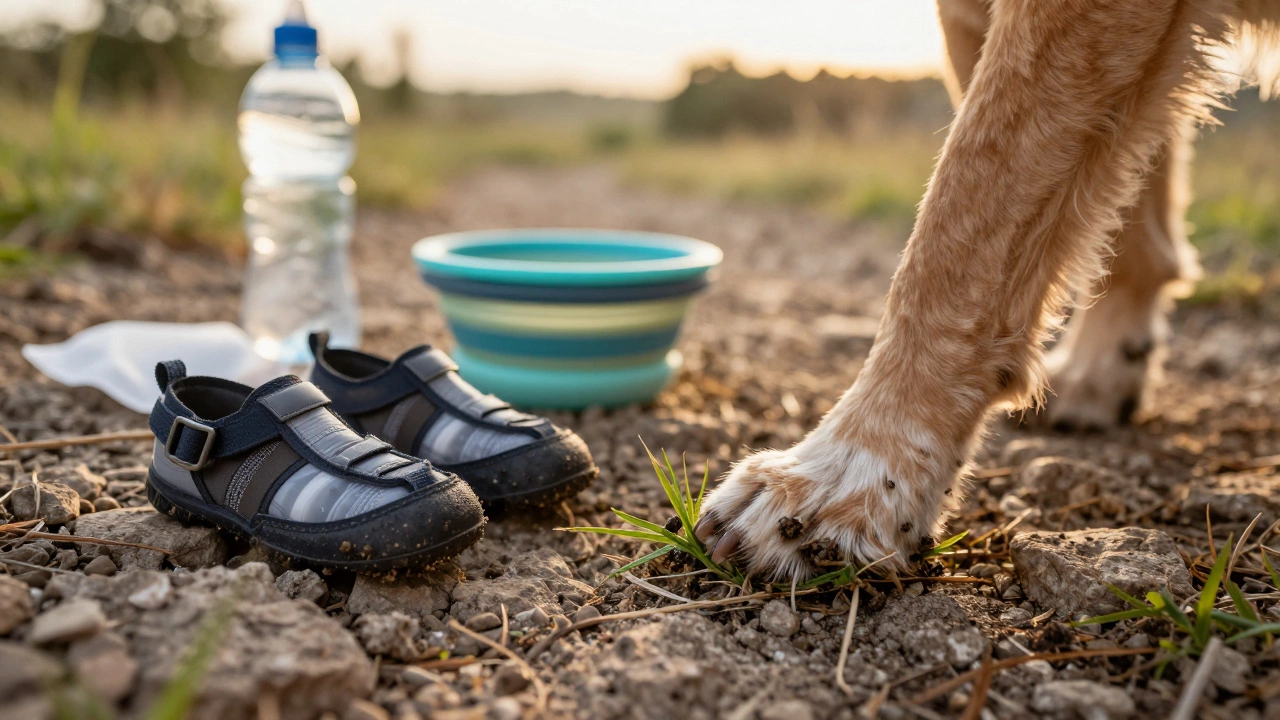
One of the biggest reasons people take dogs camping is for the hikes. But not all trails are open to dogs. In New South Wales, the Blue Mountains have dozens of dog-friendly walking tracks, while others in the Dandenongs are strictly off-limits. People check park websites before heading out. They look for trails labeled ‘dogs on leash allowed’ or ‘dogs permitted’.They also time their walks. Early morning or late afternoon is best-avoid midday heat. A 40-degree day on a rocky trail can burn a dog’s paw pads in minutes. People carry a small towel and wet wipes to clean paws after walks. Some even buy dog booties for rocky or hot terrain. It sounds extreme, but it’s saved more than one trip.
Watch for Wildlife-Especially Snakes and Toads
Australia’s bush is full of creatures that can hurt your dog. Brown snakes, tiger snakes, and even the infamous cane toad are common in camping areas. People who camp with dogs learn the signs: a dog suddenly stopping, pawing at the ground, or acting unusually still could mean it’s encountered something dangerous.Many carry a snake bite kit and know the nearest vet clinic. They keep dogs close on trails and avoid tall grass where snakes hide. Some even train their dogs to respond to a ‘leave it’ command with high-value treats. It’s not a guarantee, but it’s a layer of protection.
And cane toads? They’re deadly. If your dog licks or bites one, it can be fatal. People who camp in Queensland or northern NSW keep their dogs on leash after dusk. They carry a flashlight to spot toads near tents or fire pits. One simple trick: if you see a toad, make noise. Most will hop away before your dog gets close.
Set Up a Dog-Safe Sleeping Spot
Your dog doesn’t need a luxury bed, but they do need a dry, quiet place to rest. Most people bring a dog bed or an old blanket that smells like home. It helps them feel secure in unfamiliar surroundings.They avoid letting dogs sleep right next to the fire pit. Even a low flame can spark and burn fur. They also don’t let them sleep under the tent fly-condensation can drip, and it gets cold at night. A spot just inside the tent entrance, away from foot traffic, is ideal. Some use a dog crate for extra security, especially if they’re in a busy campground.
Prepare for the Unexpected
Dogs get lost. They get sick. They get scared. People who camp with dogs always carry a recent photo, a collar with an ID tag, and a microchip number written on a waterproof card. They know the campground’s emergency number and the nearest 24-hour vet.They pack a basic pet first-aid kit: antiseptic wipes, gauze, tweezers for ticks, and a muzzle (yes, even gentle dogs can bite when in pain). Some bring a small bottle of Benadryl-but only if their vet has approved it for allergic reactions.
One camper in Tasmania lost her dog for 20 minutes when a wallaby startled him. She had a GPS tracker on his collar. Found him within 10 minutes. She said it was the best $80 she ever spent.
Leave No Trace-For Your Dog Too
This isn’t just about you. Dogs leave waste. And if you don’t pick it up, you’re not just being rude-you’re breaking rules at most campsites. People carry biodegradable poop bags and always clean up. Some even bring a small shovel for burying waste if bags aren’t allowed.They also avoid letting dogs dig in protected areas. Even a small hole can damage native plants or disturb animal burrows. Dogs are part of nature, but they’re visitors. Responsible owners make sure their pets don’t leave a mark.
It’s Not Just About Fun-It’s About Responsibility
Camping with your dog isn’t just a fun outing. It’s a commitment. It means planning, packing extra gear, watching for danger, and cleaning up after them. But it also means more shared sunsets, more quiet moments by the fire, and more trust built between you and your dog.People who do it right don’t just take their dogs camping. They bring them into the experience. They learn the trails, respect the rules, and treat their dog like a true partner-not a burden. And that’s what makes these trips unforgettable-for both of you.