Walmart Boondocking Tips: Where to Camp Free and How to Do It Right
When you're traveling in a motorhome or campervan, boondocking, camping without hookups on public or private land without paying. Also known as wild camping, it's one of the most popular ways to stretch your travel budget and stay close to the road. Many RVers swear by Walmart parking lots, large retail parking areas that often allow overnight stays for RVs as a safe, free place to rest. It’s not a law—it’s a policy that varies by store, but thousands of people do it every night across the U.S. and Canada. The key isn’t just finding a spot—it’s knowing how to behave so you don’t get banned or cause problems for others.
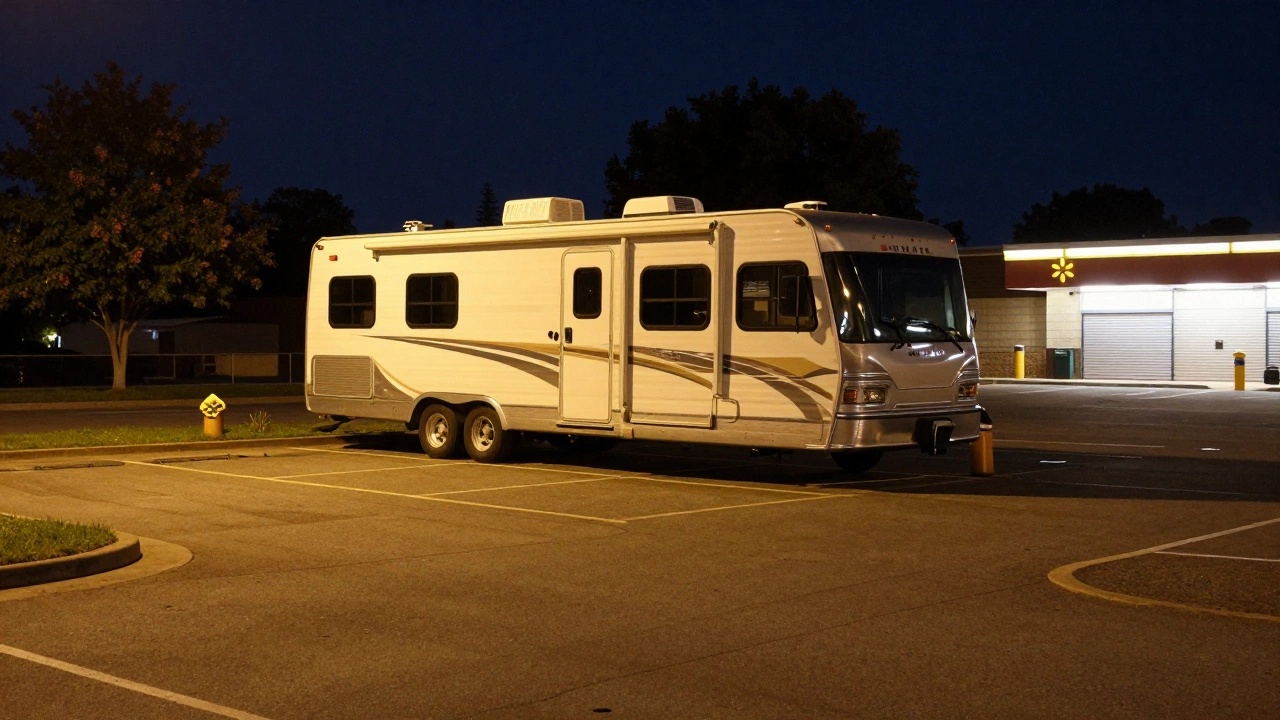
Walmart boondocking isn’t the same as pulling into a state park or national forest. You’re on private property, and the store manager has the final say. Most stores don’t post signs saying "No Overnight Parking," but that doesn’t mean you can stay forever. The unwritten rules are simple: don’t set up camp like you’re at a resort. No tents, no extension cords, no chairs outside your rig. Keep your rig clean, your trash picked up, and your noise low. Don’t stay more than one night unless you’ve asked permission. And never treat it like a long-term home—Walmart isn’t a campground. People who follow these basics are the ones who keep this option alive for everyone.
Some RVers confuse Walmart boondocking with free public land camping, overnight stays on federal or state land like national forests or BLM areas. Those spots often have different rules—sometimes you can stay for weeks, sometimes you need a permit. Walmart is different. It’s a quick stop. A place to recharge your batteries, refill water, and get a good night’s sleep before hitting the road again. It’s not about luxury. It’s about practicality. And it works because most drivers are respectful. The stores that allow it do so because they know RVers are quiet, clean, and don’t cause trouble. The ones that don’t? Usually because someone abused the privilege.
Don’t assume every Walmart will let you stay. Some have signs up. Some have security that checks in. Some just quietly ask you to leave if you’re there too long. The best way to know? Look for other RVs. If you see a few parked in the back corner, you’re probably good. If the lot is empty and the store is closed, it’s safer to move on. Apps like FreeCampsites.net and iOverlander have user-updated info on which locations are currently welcoming. But even then, use common sense. If you’re in a small town and your rig looks like it’s been parked for days, you’re asking for trouble.
Walmart boondocking is a gift from the RV community’s shared respect—not a right. It’s one of the few places where you can sleep for free in a safe, well-lit area without worrying about wildlife, police, or getting towed. But it only lasts as long as people act like guests, not invaders. If you follow the basics—stay one night, keep it quiet, leave no trace—you’re not just helping yourself. You’re helping every other RVer who wants to do the same tomorrow.
Below, you’ll find real stories, rules, and tips from people who’ve done this for years. No fluff. Just what works—and what gets you kicked out.
-
 VIEW POST
Is Boondocking at Walmart Safe? What You Need to Know Before Sleeping in the Parking Lot
Dec, 1 2025|0 CommentsWalmart boondocking is a popular but risky option for RVers. Learn when it's safe, how to avoid trouble, and what to do if you're asked to leave - plus better alternatives for overnight parking.