Walk-up Reserve America: What You Need to Know About Last-Minute Campsite Bookings
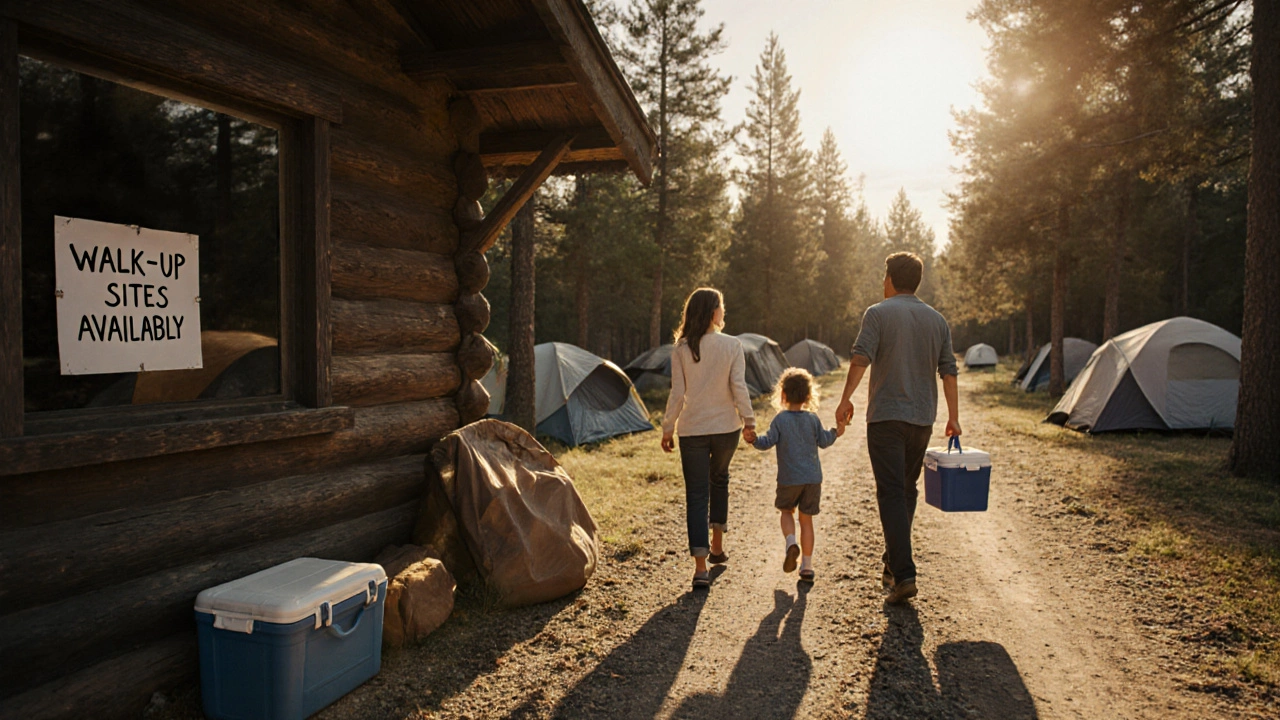
When you hear walk-up reserve America, a system where campers show up without a reservation and hope to get an open site. It’s not a guarantee—it’s a gamble. Also known as walk-in camping, this method works in some places but fails more often than not, especially in peak season. Many people think it’s a loophole, but it’s really just the last chance slot after online bookings fill up.
Most popular campgrounds in the U.S., especially those managed by Recreation.gov, the official federal platform for booking public lands campsites, don’t hold back many walk-up spots. When they do, it’s usually one or two sites per campground, and they’re gone by 8 a.m. on busy weekends. You’ll find these rare openings mostly in national forests or state parks with lower demand, not at the big names like Yosemite or Yellowstone. Even then, you need to be there early, in person, and ready to wait. Some parks let you join a physical waitlist—others just hand out numbers on a first-come basis. It’s not like booking online where you pick your spot. It’s like playing a slot machine with your vacation plans.
What makes this even harder is that campsite bots, automated tools used by some travelers to snatch up reservations the second they open have taken over most of the good spots. Regular folks who don’t use tech tricks are left with the scraps. That’s why so many people end up showing up at the gate hoping for a miracle. But here’s the truth: if you’re not booking ahead, you’re already behind. The only time walk-up works reliably is in shoulder seasons—late spring or early fall—when fewer people are traveling, or in remote areas where no one else even thinks to go.
And don’t assume all parks even allow walk-ups. Many have gone fully reservation-only to manage overcrowding and protect the land. Even if a site says "walk-up available," check the fine print. Some mean "walk-up only if no one booked," which is almost never true in July. Others mean "walk-up only for day use," not overnight stays. The rules change by state, by park, and sometimes even by day of the week. You can’t rely on memory or old advice. You need to call ahead—or better yet, check the official site the night before you plan to arrive.
If you’re serious about this strategy, here’s what actually helps: arrive before sunrise, bring a printed list of nearby alternatives, and know the exact name of the campground you’re targeting. Don’t just show up at the first park you see. Drive 20 miles past your first option—sometimes the next one has a spot. Pack snacks, water, and patience. And if you don’t get one? Don’t stress. There are always legal alternatives: dispersed camping on public land, private RV parks with last-minute cancellations, or even parking your rig overnight at a Walmart (where allowed). The goal isn’t to win the walk-up lottery. It’s to keep moving until you find a place that lets you sleep under the stars.
Below, you’ll find real stories and practical tips from people who’ve tried—and sometimes succeeded—at getting a campsite without a reservation. Some used timing. Others used luck. A few just got lucky enough to arrive when someone else canceled. You’ll see what works, what doesn’t, and how to avoid the most common mistakes that cost people their trip.
-
 VIEW POST
What Does Walk-Up Mean on Reserve America? Last-Minute Campsite Guide
Nov, 15 2025|0 CommentsWalk-up sites on Reserve America let you camp without booking ahead-just show up and ask. Learn when, where, and how to score one before they’re gone.