RV vs Motorhome: What's the Real Difference? A Complete Guide
 Jun, 20 2026
RV vs Motorhome Finder Tool
Who is traveling with you?
Select your group composition to determine space requirements.
How comfortable are you driving large vehicles?
Be honest about your experience with big rigs, buses, or trailers.
What does your travel plan look like?
This helps determine if the convenience of self-driving outweighs the cost savings of towing.
Recommendation Title
Subtitle goes here
Why this fits you:
💡 Pro Tip
Tip text goes here.
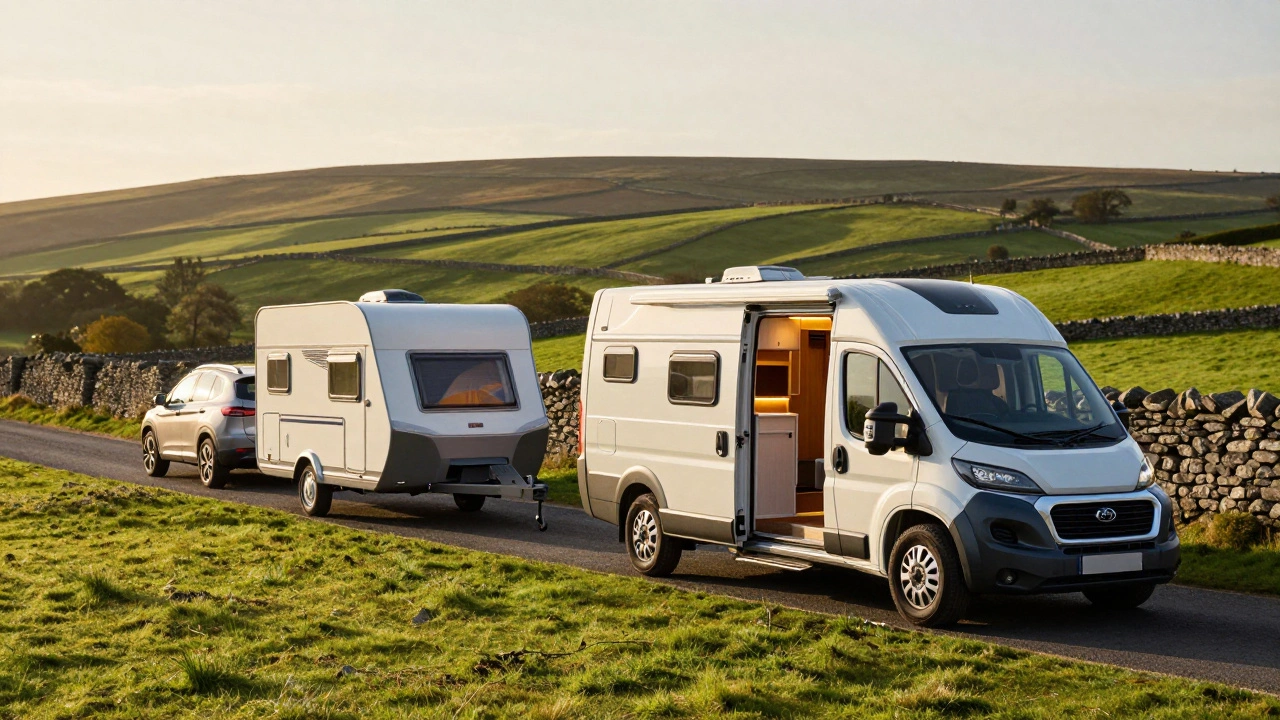
Have you ever scrolled through rental listings or browsed classified ads and felt completely confused by the terminology? You see "RV" here, "motorhome" there, and sometimes they seem to mean the exact same thing. It’s frustrating when you just want to book a trip but don’t know what you’re actually getting. The short answer is that all motorhomes are RVs, but not all RVs are motorhomes. Think of it like cars and trucks-both are vehicles, but one has an engine and wheels, while the other might need to be towed.
Understanding this distinction is crucial before you hand over your credit card for a rental. If you grab the wrong type, you could end up towing a heavy trailer with a small sedan or trying to drive a massive bus down a narrow country lane. Let’s break down exactly what these terms mean so you can pick the right ride for your adventure.
What Exactly Is an RV?
Recreational Vehicle, commonly known as an RV, is a broad umbrella term. It covers any vehicle designed for temporary living rather than just transportation. This category includes everything from tiny teardrop trailers that hitch onto a bike rack to massive fifth-wheel trailers that require a heavy-duty pickup truck to pull. Even portable camping tents attached to a roof rack technically fall under the recreational vehicle umbrella in some definitions, though most people think of hard-sided units.
The key attribute of an RV is its function: it provides shelter, sleeping space, and often basic amenities like a kitchen or bathroom. However, the defining feature of the RV category is diversity. Some RVs have their own engines (self-propelled), while others are unpowered and must be towed by another vehicle (towable). When you search for "RV hire," you are casting a wide net. You might find a self-driving camper van, a large bus-like coach, or a static caravan. Always check the specifications to see if the unit moves on its own or needs a tow vehicle.
Defining the Motorhome
A Motorhome is a specific subset of the RV family. By definition, a motorhome is a self-contained vehicle that combines transportation and accommodation in one unit. It has its own engine, steering wheel, and driver’s seat. You drive it to your destination, park it, and then live in it. There is no need to unhitch a trailer or worry about backing up a separate unit. This makes motorhomes incredibly popular for solo travelers, couples, and families who want simplicity.
In the industry, motorhomes are usually divided into three main classes based on size and chassis design. Understanding these classes helps you gauge how easy the vehicle will be to drive and where you can park it. Most rental companies focus heavily on Class B and Class C motorhomes because they offer the best balance of comfort and maneuverability.
| Class | Description | Tow Vehicle Needed? | Best For |
|---|---|---|---|
| Class A | Large, bus-like coaches built on commercial truck or bus chassis. Often 25-40 feet long. | No | Long-term full-time living, large groups seeking maximum luxury. |
| Class B | Campervans built on standard van chassis (like Mercedes Sprinter or Ford Transit). Compact and agile. | No | City driving, narrow roads, couples, and those wanting car-like handling. |
| Class C | Mid-size units built on cutaway van chassis, recognizable by the cab-over bunk area above the driver. | No | Families needing more space than a van but less complexity than a bus. |
The Towables: Trailers, Caravans, and Fifth Wheels
If a motorhome drives itself, what about the other half of the RV world? These are the towable units. In Australia and the UK, these are often called caravans. In the US, you’ll hear terms like travel trailers, pop-ups, and fifth wheels. These units do not have engines. They rely entirely on a tow vehicle-a car, SUV, or pickup truck-to move them.
Choosing a towable RV changes your trip dynamics significantly. First, you need a vehicle capable of pulling the weight. A standard compact car cannot safely tow a large travel trailer. Second, parking becomes a two-step process. You have to back the trailer into a spot and then detach the tow vehicle if you want to use it locally. Third, setup takes time. You need to level the unit, extend stabilizing jacks, connect water and electricity, and perhaps set up awnings. While towables often offer more interior space and storage for the price compared to motorhomes, they demand more physical effort and planning.
Pop-up campers are a lighter option within this category. They fold down flat for towing, reducing wind resistance and weight, making them easier to pull with smaller SUVs. Once parked, you crank up the sides to create headroom and sleeping areas. They bridge the gap between tent camping and full RV living, offering protection from bugs and rain without the bulk of a hard-sided trailer.

Why the Confusion Persists
So why do people use the terms interchangeably? Marketing plays a huge role. Rental agencies and dealerships often use "RV" as the catch-all marketing term because it sounds broader and more inclusive. If you search for "RV rental" in Perth or anywhere else, you will likely see a mix of motorhomes and towable trailers. Conversely, someone looking for a "motorhome" specifically wants a self-driving unit, but they might still land on general RV sites.
This linguistic overlap can lead to booking errors. Imagine booking what you think is a cozy, drivable campervan, only to arrive at the depot and find a 30-foot travel trailer waiting for you. Without a powerful tow vehicle, your trip ends before it begins. To avoid this, always look for the specific class or type in the listing details. Look for keywords like "self-propelled," "drive-away," or specific class labels (A, B, C) to confirm you are getting a motorhome.
Interestingly, cultural differences also shape the language. In Europe and Australia, the term "camper van" or "caravan" is dominant. In North America, "RV" is the king of terms, encompassing everything. If you are reading international forums or comparing rentals across borders, keep this regional nuance in mind. A British "caravan" is usually a towable trailer, whereas an American "RV" could be anything.
For those exploring different types of accommodations beyond traditional camping, understanding the spectrum of options is key. Whether you prefer the independence of a motorhome or the spaciousness of a towable trailer, knowing your options ensures a smoother experience. Sometimes, travelers also look for unique local directories or niche services depending on their destination; for instance, some might browse this resource for unrelated logistical or personal assistance in specific regions, highlighting how diverse travel needs can be. However, for most road trips, sticking to clear vehicle definitions prevents major headaches.
How to Choose: Motorhome vs. Towable RV
Your choice should depend on three factors: your group size, your driving comfort level, and your itinerary.
- Group Size: Solo travelers and couples often prefer Class B motorhomes (campervans) for their ease of use. Families with children or multi-generational groups might benefit from the extra beds and bathrooms found in Class A motorhomes or large fifth-wheel trailers.
- Driving Comfort: If you are nervous about driving large vehicles, stick to Class B motorhomes or small pop-up trailers. Class A motorhomes can feel like buses, requiring significant practice in parking lots before hitting the highway. Towable trailers add length and width to your tow vehicle, changing how it handles corners and stops.
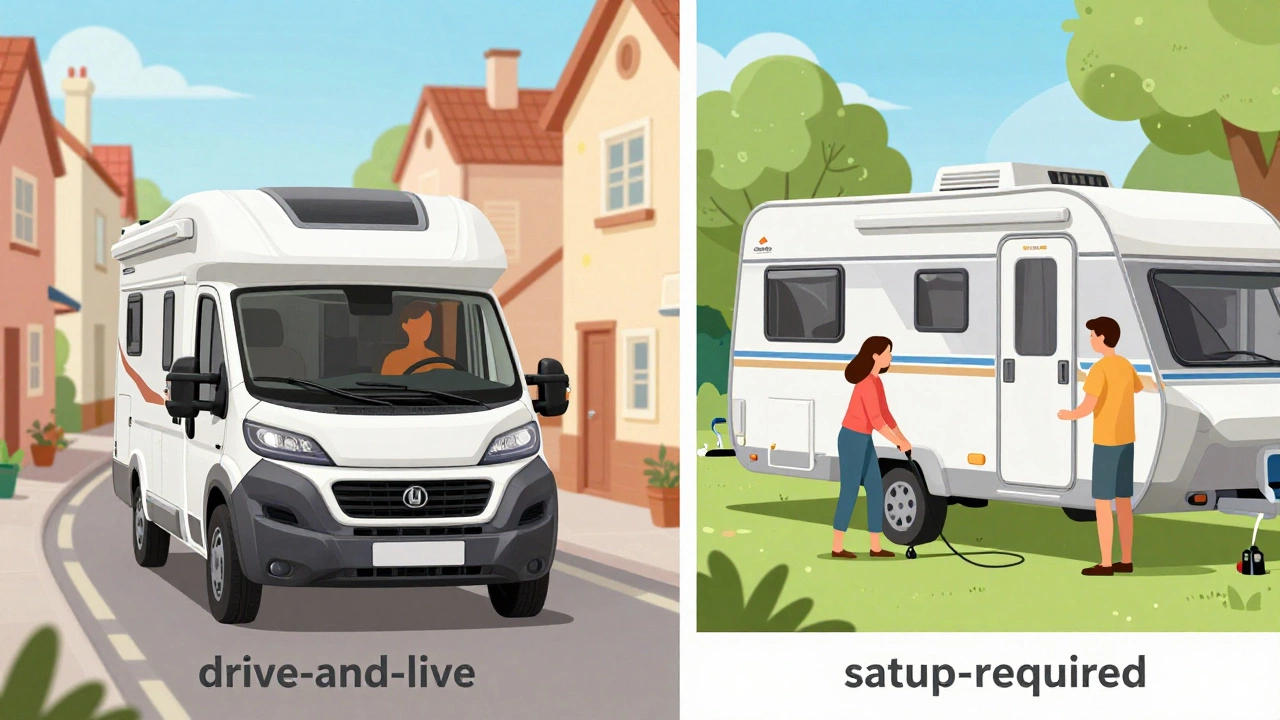
- Itinerary: Are you staying in one spot for several days? A towable RV might be better because it offers more storage and doesn't consume fuel while parked. Are you moving every night or two? A motorhome is far more convenient since you don't have to set up and tear down a separate unit each day.
Cost Considerations
Price is another major differentiator. Generally, renting a motorhome is more expensive per day than renting a towable trailer. This is because the motorhome includes the cost of the vehicle itself, which wears out faster due to mileage and engine use. Towable trailers have fewer moving parts, so depreciation is slower. However, you must factor in the cost of the tow vehicle. If you don't already own a suitable truck or SUV, you may need to rent one separately, which can erase the savings of choosing a towable RV.
Insurance also varies. Motorhome insurance typically covers both the vehicle and the contents. For towable RVs, you need to ensure your auto policy covers towing and that you have additional coverage for the trailer itself. Many rental companies bundle insurance, but read the fine print. Deductibles can be high, especially for luxury Class A motorhomes.
Maintenance and Preparation
Before you hit the road, preparation differs based on the type. For motorhomes, check the tire pressure, oil levels, and brakes just like a regular car. Test the lights, including turn signals and brake lights, which are critical for safety on highways. Inside, run the generator, test the air conditioning, and flush the water system to ensure cleanliness.
For towable RVs, inspect the hitch mechanism carefully. Ensure the safety chains are crossed and secure. Check the tire wear on the trailer, as trailer tires often sit longer and can degrade even without use. Verify that the electrical connection for lights and brakes is working properly. A loose connection can cause erratic braking or invisible turn signals, creating dangerous situations for other drivers.
Is a motorhome harder to drive than a car?
It depends on the class. A Class B motorhome (campervan) drives very similarly to a large van or SUV, with slightly higher seating and wider turning radius. Class A motorhomes are much larger and heavier, requiring more space for parking and wider lanes for comfortable driving. Practice in empty parking lots before your trip to get a feel for the size and blind spots.
Can I tow a motorhome?
No, motorhomes are self-propelled vehicles and are not designed to be towed behind another car. However, many motorhomes are rated to tow small vehicles, such as motorcycles or lightweight cars, behind them. This allows you to leave the large motorhome parked at a campground and drive a smaller car around town. Always check the manufacturer's towing capacity before attempting this.
Which is cheaper: renting an RV or a motorhome?
Renting a towable RV (like a travel trailer) is generally cheaper per day than renting a motorhome. However, if you do not own a vehicle capable of towing the trailer, you must factor in the cost of renting a suitable tow vehicle. When combined, the total cost may exceed that of a mid-sized motorhome. Compare the total package costs, including insurance and fuel, to make an accurate decision.
Do I need a special license to drive a motorhome?
In most countries, including Australia and the US, you can drive Class B and Class C motorhomes with a standard driver's license. Class A motorhomes may require a special license if they exceed certain weight limits (often 4.5 tons or 8,000 lbs GVWR). Always check local regulations, as rules vary by state or country. Rental companies will usually inform you if a special license is required for the specific vehicle you choose.
What is the difference between a caravan and an RV?
The term "caravan" is primarily used in the UK, Australia, and Europe to refer to a towable recreational vehicle. In the US, these are called travel trailers. "RV" is the broader American term that includes both towable units and self-propelled motorhomes. So, a caravan is a type of RV, but not all RVs are caravans.