RV Loans vs Mortgages: Key Differences Explained
 Sep, 28 2026
RV Loan vs. Mortgage Affordability Calculator
Enter your purchase price and desired term to see how RV loan terms differ from standard mortgages in Australia.
| Metric | Mortgage Real Property |
RV Loan Chattel |
|---|---|---|
| Max Borrowing (LTV) | $0 | $0 |
| Required Deposit | $0 | $0 |
| Monthly Repayment | $0 | $0 |
| Total Interest Paid | $0 | $0 |
| Asset Status at End | Likely Appreciated | Significantly Depreciated |
So, you’ve found the perfect camper. It’s got the bunk beds for the kids, a decent kitchenette, and enough storage to haul your entire life across the Nullarbor. The price tag is hefty-often comparable to a small house in some parts of Australia-but you’re thinking, "If I can get a loan for a house, why not just treat this like a mortgage?" It’s a logical leap, but it’s one that can trip up first-time buyers. RV loans are fundamentally different from home mortgages, and understanding those differences saves you thousands in interest and stress.
While both involve borrowing money against an asset, the rules, risks, and rewards are worlds apart. A house is real property; it stays put, appreciates over decades, and comes with land rights. A motorhome is a chattel-a movable object. It depreciates, it breaks down, and it doesn’t come with a block of dirt. If you’re planning to hire out your rig or use it as a primary residence on wheels, knowing how lenders view these assets changes everything about your financial strategy.
The Core Difference: Real Property vs. Chattel
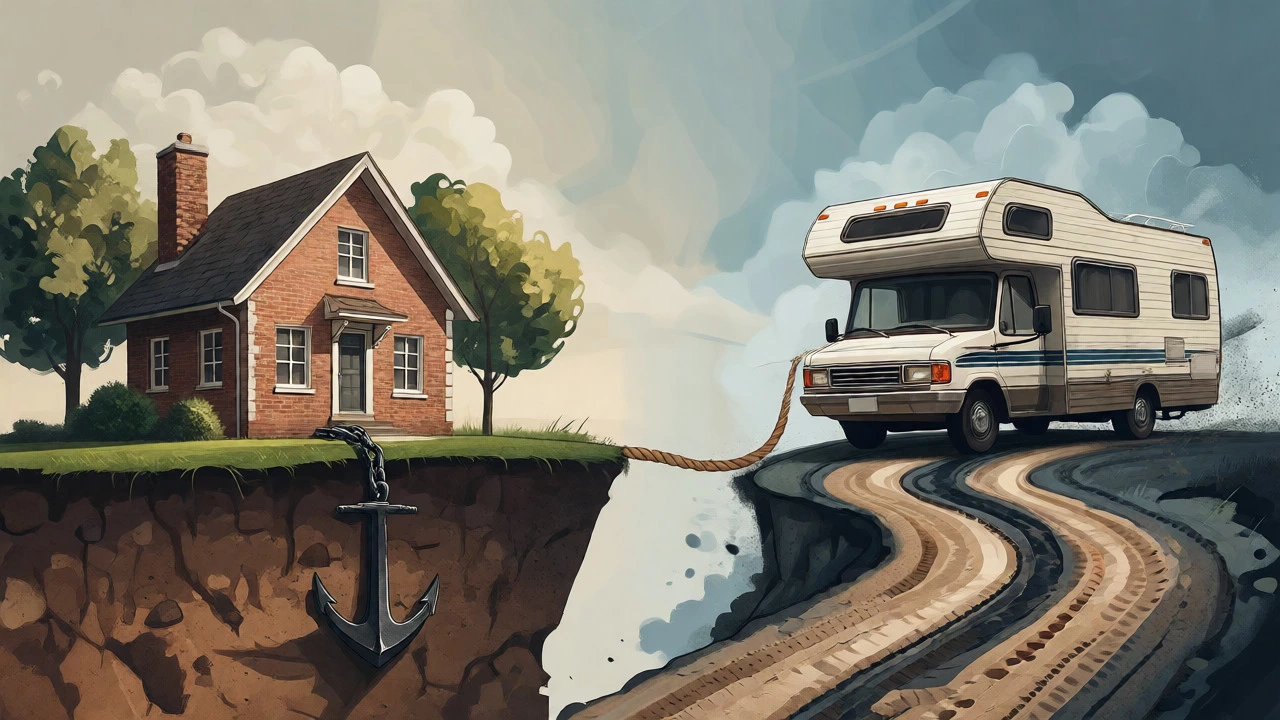
Let’s strip away the jargon. When you take out a mortgage, you are borrowing against real property. In legal terms, this means the asset (the house) and the land are permanently attached. The lender has a very secure claim because they can foreclose on the land itself if you stop paying. Land rarely loses value. In fact, historically, it gains value.
Recreational Vehicle (RV) loans, however, are secured against chattel. This is personal property that can be moved. Think of it like a car loan, but usually larger and more complex. Because the asset moves, it wears out faster. Tires degrade, engines accumulate hours, and seals leak when you leave the rig parked for six months. Lenders know this. Consequently, they treat RV loans as higher-risk products than mortgages. You aren’t buying into a piece of the earth; you’re buying into a machine that needs constant maintenance to hold its worth.
This distinction dictates the loan term. Mortgages often stretch over 25 to 30 years. Why? Because the asset lasts that long and typically grows in value. An RV loan rarely exceeds 10 to 15 years. Most standard terms sit between 5 and 7 years. Why would a bank lend you money for 30 years on something that might be scrap metal by year 20? They wouldn’t. The shorter term protects the lender’s collateral value.
Interest Rates and Loan-to-Value Ratios
You might expect RV loan rates to be lower because the loan amount is smaller than a typical Sydney or Melbourne house price. Wrong. Interest rates on RVs are almost always higher than current mortgage rates. Why? Risk. As mentioned, the collateral depreciates rapidly. If you default on a mortgage, the bank sells the house and likely recoups their money. If you default on an RV loan after three years, the bank sells a used motorhome that has lost 40% of its value. They lose money.
To mitigate this risk, lenders impose stricter Loan-to-Value (LTV) ratios. With a mortgage, you might get 90% or even 95% LTV. With an RV, you’re often capped at 80% or 85%. This means you need a larger deposit upfront. If you’re looking at a $150,000 motorhome, don’t expect to borrow $140,000. Expect to bring $22,500-$30,000 cash to the table. Some specialized lenders will go higher, but the interest rate will jump to compensate.
| Feature | Mortgage | RV Loan |
|---|---|---|
| Asset Type | Real Property (Land + Building) | Chattel (Vehicle) |
| Depreciation | Appreciates over time | Depreciates immediately |
| Typical Term | 25-30 Years | 5-15 Years |
| Max LTV | Up to 95% | Usually 80-85% |
| Interest Rate | Lower (Secured by land) | Higher (Secured by moving asset) |
| Tax Benefits | Negative gearing possible | Limited (mostly business only) |
Insurance Costs: The Hidden Killer
Here is where many buyers get blindsided. Insuring a house is relatively straightforward and cheap relative to the asset value. Insuring a motorhome is expensive. You need comprehensive cover that accounts for theft, accidental damage, and liability while driving. But wait-it gets worse. If you plan to park your RV at a caravan park, you also need third-party liability insurance for the site. And if you live in it full-time, you might need contents insurance similar to renters’ insurance.
Unlike a mortgage, where escrow accounts can sometimes bundle taxes and insurance into one payment, RV insurance is separate and paid annually or monthly. For a $200,000 rig, you could easily pay $3,000-$5,000 a year in premiums alone. That’s a significant chunk of change that doesn’t build equity. When calculating your affordability, do not just look at the loan repayment. Add the insurance premium to your monthly budget. If you skip this step, you’ll find yourself cash-poor despite having a manageable loan repayment.
Resale Value and Market Liquidity
Houses are liquid assets in a booming market. Motorhomes are illiquid. Try selling a niche Class B van conversion in winter in Tasmania. Good luck. The market for recreational vehicles is seasonal and highly dependent on economic confidence. When people tighten their belts, luxury toys are the first thing they cut from their budgets.
Mortgages benefit from a robust secondary market. Banks buy and sell mortgage-backed securities constantly. RV loans are held by banks or sold to private investors, but the underlying asset-the vehicle-is harder to value accurately. Two identical model-year motorhomes can have vastly different values based on mileage, generator hours, and interior wear. This subjectivity makes refinancing difficult. With a mortgage, if rates drop, you refinance easily. With an RV, if rates drop, you might struggle to find a lender willing to touch a 7-year-old rig with high hours unless you have excellent credit and a large equity cushion.
Can You Treat an RV Like an Investment?
Some people argue, "But Garrett, I’m renting mine out on platforms like Camplify!" Sure, you can generate income. But does that make it a mortgage-like investment? Not really. Rental income helps offset costs, but it doesn’t change the fundamental nature of the debt. The loan is still a consumer debt product, not an investment property loan.
In Australia, tax treatment differs significantly. Investment properties allow for negative gearing, depreciation schedules on the building and fixtures, and capital gains tax discounts after 12 months. Motorhomes used for rental income can claim deductions for fuel, insurance, and repairs, but the depreciation rules are tighter. You’re depreciating a vehicle, not a building structure. The Australian Taxation Office (ATO) views these as plant and equipment, which has different write-off rates. Don’t assume you’ll get the same tax shield you’d get with a rental apartment.
If you’re hiring out your motorhome, keep meticulous records. Every kilometer driven for rental purposes, every service invoice, every campsite fee paid by a guest who damaged the rug. These details matter when filing your return. Without them, you’re leaving money on the table-or worse, getting audited.
Practical Tips for Financing Your Rig
Ready to apply? Here’s how to navigate the process without getting burned.
- Check your credit score first. RV lenders are pickier than mortgage brokers. A slight dip in your score can mean a 1-2% higher interest rate. Fix any errors on your report before applying.
- Get pre-approved. Dealers love financing through their own arms because they earn commission. But dealer finance isn’t always the best deal. Get quotes from your bank, a credit union, and a specialist RV lender. Compare the total cost of credit, not just the monthly repayment.
- Beware of balloon payments. Some low-repayment RV loans end with a massive lump sum due at the end of the term. Unless you have a concrete plan to pay that off or refinance, avoid these structures. They trap you in a cycle of rolling over debt.
- Consider a secured personal loan. If you’re buying a smaller camper trailer or a van conversion under $80,000, a secured personal loan might offer better flexibility. You retain ownership title more easily, and there are fewer registration hassles with the lien holder.
One final thought: Never buy an RV solely because you think you can rent it out to cover the mortgage. The vacancy rates are unpredictable. Weather cancels trips. Mechanical failures ground rentals. Buy the RV because you want to travel. Let the rental income be a bonus, not the foundation of your financial plan.
Are RV loan interest rates fixed or variable?
Most RV loans in Australia are offered as fixed-rate loans for the duration of the term, though some lenders offer variable options. Fixed rates provide certainty for budgeting, which is crucial given the other volatile costs of owning a motorhome like fuel and insurance. Variable rates may start lower but carry the risk of rising repayments.
Do I need a deposit for an RV loan?
Yes, most lenders require a deposit of 10-20% of the purchase price. Unlike mortgages where Lenders Mortgage Insurance (LMI) allows you to borrow up to 95%, RV loans rarely offer LMI equivalents. A larger deposit reduces your interest rate and monthly repayment, making the loan more affordable.
Can I deduct RV loan interest on my taxes?
Generally, no. Personal use interest is not tax-deductible in Australia. However, if you use the RV exclusively for business or rent it out continuously, you may be able to claim a portion of the interest as a deduction. Consult a tax professional to determine your specific eligibility based on usage logs.
What happens if I default on my RV loan?
The lender can repossess the vehicle. Because RVs depreciate quickly, the sale proceeds might not cover the remaining loan balance plus repossession fees. You could still owe money after the vehicle is sold. This is known as a deficiency balance, and it can affect your credit rating significantly.
Is it cheaper to lease or buy an RV?
Leasing offers lower monthly payments and includes maintenance, but you build no equity. Buying builds equity but requires a large upfront deposit and covers all repair costs. For frequent travelers, buying is usually cheaper over 5+ years. For occasional users, leasing or hiring might be more economical.