Living in a Yurt on Your Own Land in the UK: Legal Guide
 Apr, 9 2026
UK Yurt Legality & Risk Checker
Check your planned setup against common UK planning triggers to estimate the risk of receiving an enforcement notice.
Key Takeaways for Aspiring Yurt Dwellers
- Temporary camping is generally allowed for up to 28 days a year without planning permission.
- Living permanently in a yurt usually requires full planning permission as it's seen as a "change of use" of the land.
- The "caravan" loophole rarely applies to yurts because they are often seen as permanent structures if they have decks or plumbing.
- Building regulations for sanitation and waste are non-negotiable, even if you are off-grid.
The Big Question: Is it a Tent or a House?
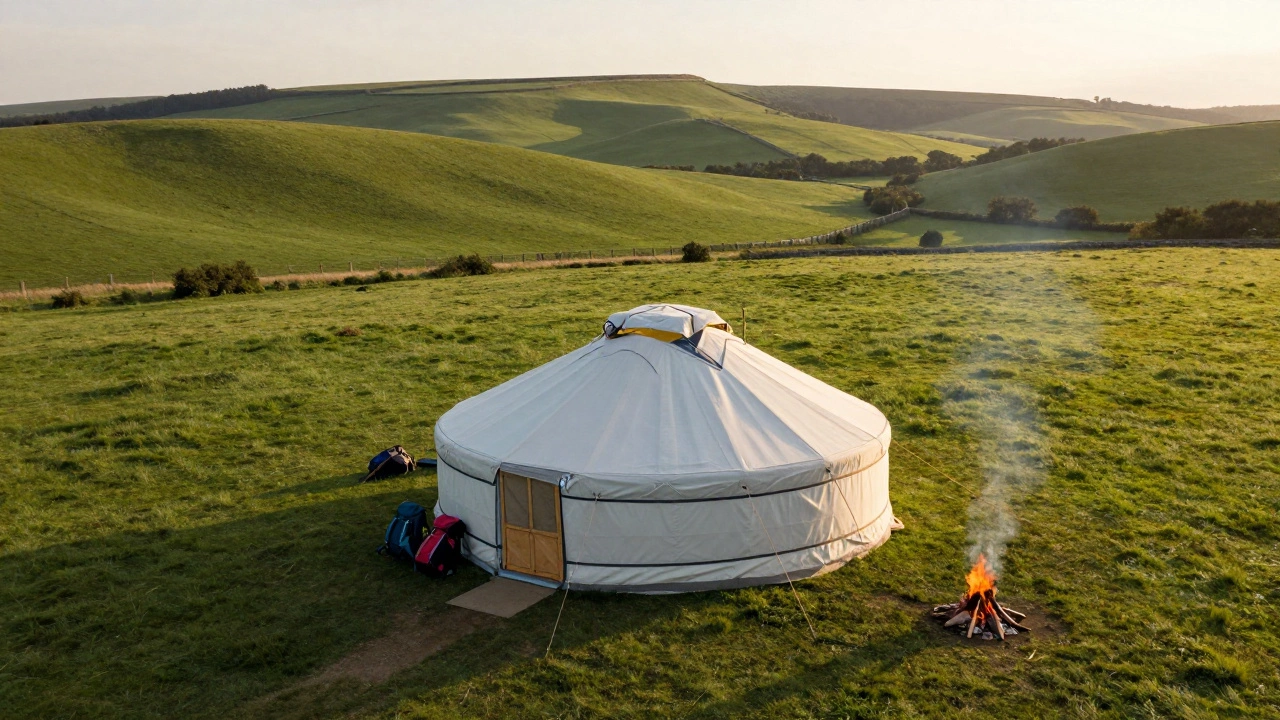
The crux of the issue is how the local council views your home. To a dreamer, a yurt is a portable shelter. To a planning officer, living in a yurt is the act of establishing a residential dwelling on land not previously designated for housing. If you're just visiting your land for a weekend, you're camping. But the moment you move your mail there, install a permanent wood-burner, or build a wooden deck, you've shifted from "recreational use" to "residential use."
In the UK, the Town and Country Planning Act governs what you can do with your land. Most land is zoned as agricultural or green belt. Putting a permanent home on agricultural land is a huge red flag for councils. They aren't just worried about the fabric of the yurt; they're worried about the infrastructure-roads, sewage, and the precedent it sets for others to build in the countryside.
The 28-Day Rule and the Myth of Temporary Living
You'll often hear people mention the "28-day rule." This usually refers to the idea that you can camp on your own land for up to 28 days a year without needing permission. While this is a helpful guideline for a summer holiday, it is not a legal loophole for permanent residency. If you stay for 29 days, or if you spend 20 days there every single month, the council can argue that the land has been permanently converted to a residential site.
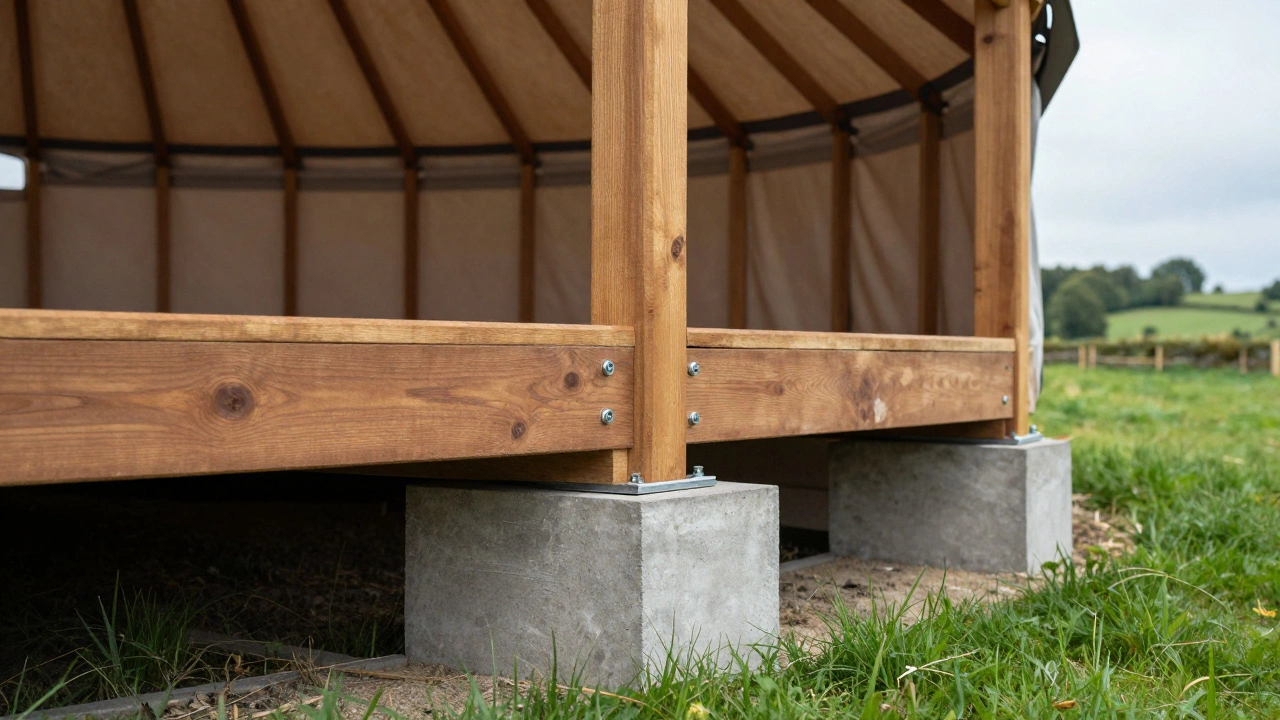
What makes a yurt "permanent" in the eyes of the law? It's rarely the canvas itself. It's the Substructure. If you pour a concrete slab or bolt a massive timber platform to the ground, you've created a permanent foundation. Once you have a foundation, the council views it as a building, and the rules for a yurt suddenly become the rules for a cottage.
Planning Permission: The Hurdles You'll Face
If you want to live in a yurt legally and permanently, you need to apply for Planning Permission. This is a formal request to the local planning authority to change the use of your land. Be prepared for a battle; it's rarely a "yes" on the first try, especially in the Green Belt areas where development is strictly limited to protect the landscape.
To increase your chances, you need to prove that your yurt won't harm the environment. This means providing a detailed plan for waste management. You can't just dig a hole in the ground. You'll likely need to install a Composting Toilet or a full Septic Tank system that meets Environmental Agency standards. If your waste leaks into a nearby stream, you're looking at massive fines regardless of whether you have planning permission for the yurt itself.
| Feature | Temporary Camping | Permanent Residency |
|---|---|---|
| Planning Permission | Generally not required (< 28 days) | Mandatory |
| Foundations | None or minimal (grass/tarp) | Decking, concrete, or piles |
| Utilities | Portable gas/bottled water | Plumbed water, electrics, sewage |
| Council View | Recreational Use | Change of Use (Residential) |
The Off-Grid Challenge: Water and Power
Living off-grid sounds romantic until you're hauling 20-litre canisters of water across a muddy field in February. If you're living in a yurt, you'll need a reliable water source. If you dig a borehole, you might need a license from the Environment Agency depending on how much water you extract daily.
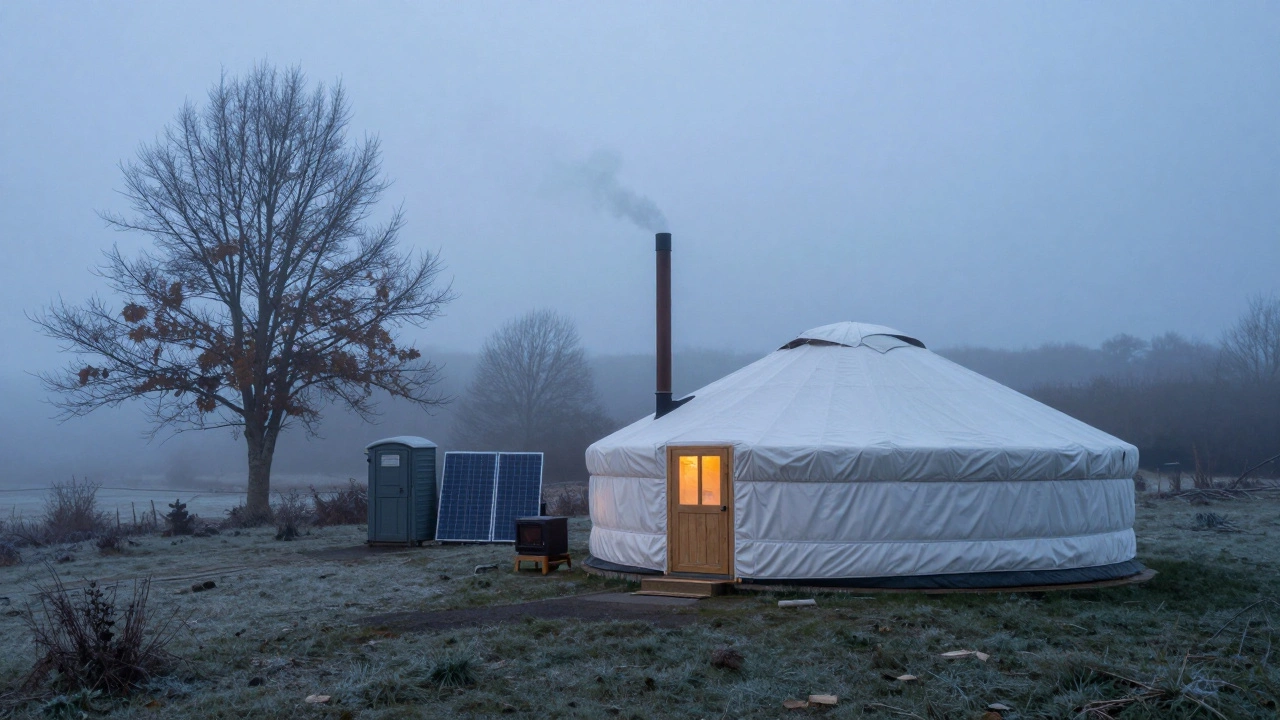
For power, most yurt dwellers opt for Solar Panels. While a few panels on a roof can charge a phone, running a fridge or a heater requires a significant battery bank. Remember, adding permanent electrical masts or large solar arrays can also be seen by councils as evidence of a permanent dwelling, which brings us back to the planning permission problem.
Dealing with Enforcement Notices
What happens if you just ignore the rules and move in anyway? You'll likely eventually receive an "Enforcement Notice." This happens when a neighbor reports you or a planning officer spots your smoking chimney from the road. An enforcement notice is a legal document telling you to stop using the land for residential purposes and to remove the structure.
If you ignore an enforcement notice, the council can take you to court. The fines are steep, and they can eventually send crews to demolish your deck and seize your yurt. Some people try the "four-year rule" (where a building becomes legal if it's been there for four years without a complaint), but be warned: this rule was tightened in 2020, and for many types of land, the limit is now ten years. Relying on this is a high-stakes gamble with your home.
Alternative Paths to Legal Living
If the council says no to a yurt, are there other options? Some people find success by applying for a "temporary permit" for a specific timeframe-say, three years-to prove that the dwelling doesn't negatively impact the area. This is often a stepping stone to permanent permission.
Another route is exploring the Permitted Development Rights. While these usually apply to existing buildings, there are specific rules for agricultural buildings. If you have a legal barn on the land, converting it might be easier than putting a brand-new yurt in the middle of a field. However, always consult a planning professional before spending a penny on a yurt you can't legally inhabit.
Can I just call my yurt a "tent" to avoid planning permission?
In theory, yes, but in practice, no. Planning officers look at the "use" of the land, not just the object on it. If you are using the "tent" as a permanent home-complete with a kitchen, bed, and heating-it is legally a dwelling. Once it's a dwelling, the planning rules for houses apply, regardless of whether the walls are brick or canvas.
Do I need a building permit for the yurt platform?
If the platform is small, temporary, and doesn't involve digging deep foundations, you might be okay. However, a large, permanent timber deck often counts as a structure. If it's clearly designed to support a permanent home, the council will view it as part of the residential development.
Is it legal to use a composting toilet in a yurt in the UK?
Yes, composting toilets are legal and often encouraged for off-grid living. However, you must ensure the waste is managed safely. If you're operating a business (like a glamping site), you'll need a more rigorous waste management plan to satisfy health and safety regulations.
Can I live in a yurt on land I'm renting?
This is even more complicated. You need the landlord's permission first, and then you still have to deal with the local council's planning rules. Most agricultural leases explicitly forbid residential use, so check your contract before moving in.
What is the risk of living in a yurt without permission?
The main risk is an enforcement notice. This can lead to legal battles, heavy fines, and the forced removal of your home. Additionally, without legal status, you cannot get a registered address for the property, making it difficult to get a bank account, register for a GP, or receive mail.
Next Steps and Troubleshooting
If you're determined to make this work, don't start by buying the yurt. Start by talking to your local planning office. Ask for a "pre-application advice" meeting. This is a formal way to find out if your plan is even remotely possible before you spend money on architects or materials.
For those who find the legal path too restrictive, consider a hybrid approach. Use your land for recreational camping for a few weeks a year, and keep your permanent residency in a traditional home. Or, look for land that already has "curtilage"-land that is already associated with an existing house-where adding a yurt is much more likely to be approved as an ancillary building.