Is It Safe to Walk Through a Forest at Night? A Survival Guide for Campers
 May, 22 2026
Forest Night Walk Safety Planner
Determine your preparedness level for a nighttime forest walk based on gear, environment, and personal factors.
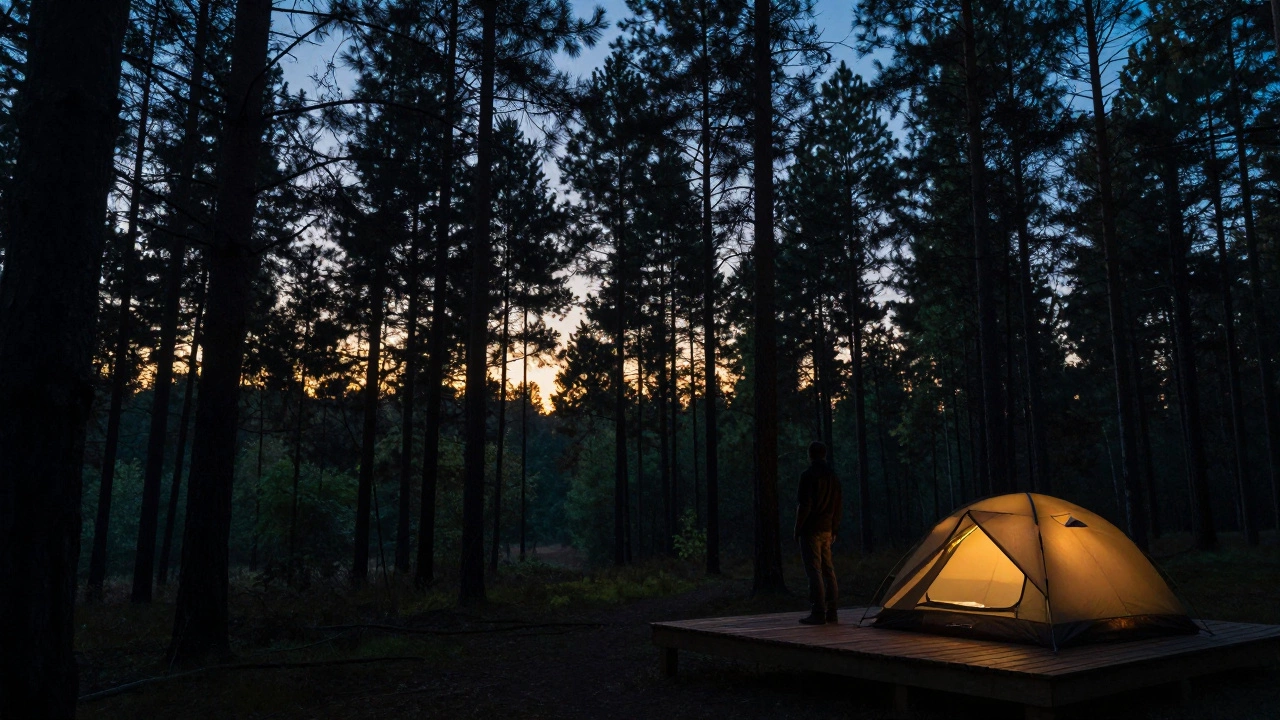
There is something undeniably magnetic about the woods after sunset. The light shifts from golden to grey, the air cools rapidly, and the familiar sounds of daytime birdsong are replaced by the rhythmic chirping of crickets and the distant hoot of an owl. For many campers, especially those staying at forest campsites, the idea of taking a nighttime stroll seems like a peaceful way to connect with nature. But before you step off your tent porch into the darkness, you need to ask yourself: is it actually safe?
The short answer is yes, but with major caveats. Walking through a forest at night is not inherently dangerous if you are prepared, aware, and respectful of the environment. However, it transforms a simple walk into a high-stakes navigation challenge where your primary senses-sight-are severely compromised. You aren't just walking; you are navigating a complex ecosystem that operates on a completely different schedule than you do.
While most people focus on the thrill of adventure, others look for different kinds of nocturnal experiences in urban settings, such as browsing this directory for companionship in Dubai, but when you are deep in the bush, you are entirely on your own. There is no customer service line for a twisted ankle or a sudden encounter with local wildlife. Your safety depends entirely on your preparation and your ability to read the subtle cues of the darkened landscape.
The Loss of Depth Perception and Terrain Hazards
The biggest threat to your safety in a forest at night isn't usually a predator; it's the ground beneath your feet. Human vision relies heavily on contrast and depth perception to navigate uneven terrain. In daylight, your brain instantly calculates the distance to a tree root, the height of a rock, or the slope of a hill. At night, even with a headlamp, this ability plummets.
Lighting creates its own problems. A bright beam can create harsh shadows that hide trip hazards directly in front of you. Conversely, looking directly into a light source causes temporary blindness, making it impossible to see obstacles until it is too late. This phenomenon, known as "tunnel vision," restricts your peripheral awareness. You might see the path clearly ahead but miss a low-hanging branch swinging back toward your face or a snake coiled on the trail edge.
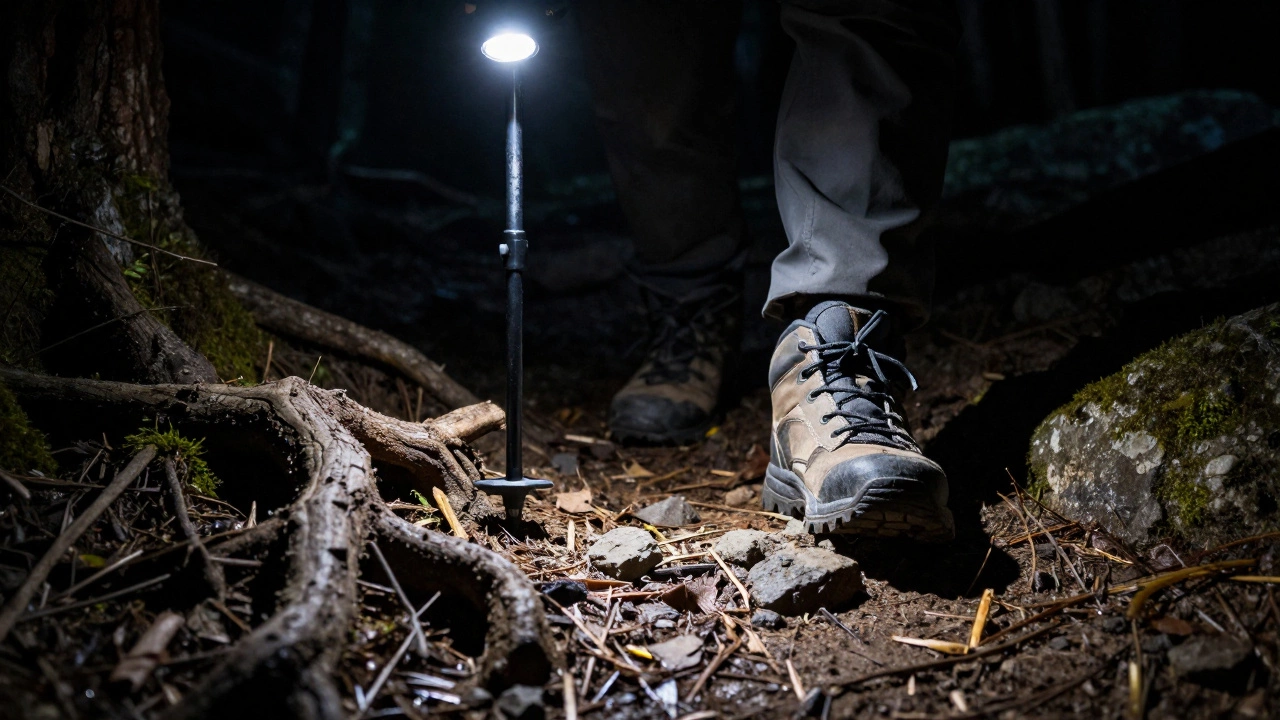
To mitigate this, you must change how you walk. Slow down significantly. Use a trekking pole not just for balance, but as a probe. Tap the ground two steps ahead of you. If the pole hits solid earth, you know the ground is stable. If it sinks or brushes against something soft, you have detected a hole, mud, or potentially a burrow. This tactile feedback loop compensates for your visual limitations.
Navigating Wildlife Encounters
When we think of danger in the woods, we often imagine bears or wolves. While these animals exist, they generally avoid humans. The real risks come from creatures that are active at night and may feel threatened by your presence. Understanding the behavior of local fauna is critical.
| Animal | Risk Level | Recommended Action |
|---|---|---|
| Mosquitoes & Ticks | High (Disease) | Wear long sleeves, use DEET repellent, check skin immediately upon return. |
| Snakes | Medium | Watch where you place hands and feet; do not disturb rocks or logs. |
| Bears | Low (if managed) | Make noise while moving; carry bear spray; never run. |
| Coyotes/Foxes | Low | Stand tall, wave arms, shout to appear larger; back away slowly. |
Insects are often overlooked but pose a significant health risk. Mosquitoes are most aggressive at dusk and dawn. A single bite can lead to itching that ruins your sleep, or worse, transmit diseases depending on your location. Ticks, which attach silently, thrive in the damp underbrush common in forests. Always tuck your pants into your socks and perform a thorough body check before entering your tent.
If you encounter a larger animal, remember that surprise is the enemy. Animals rarely attack unless they feel cornered or surprised. Make your presence known by talking out loud or clapping your hands as you walk. This gives nocturnal creatures ample time to move away from your path. If you do spot an animal, stop. Do not run. Running triggers a chase instinct in many predators. Stand still, assess the situation, and back away slowly while maintaining eye contact if it is a mammal like a coyote or bear.
Navigation and Getting Lost
Getting lost is the most likely negative outcome of a night walk. Trails that look distinct in daylight become indistinguishable lines of dirt and leaves in the dark. Landmarks disappear. The psychological stress of realizing you are disoriented can lead to panic, which leads to poor decision-making, which leads to injury.
Never rely solely on your phone's GPS. Batteries drain faster in cold temperatures, and signal loss is common in dense forest canopies. Instead, use a physical map and a compass. Before you leave your campsite, orient yourself. Know which direction is north relative to your tent. Take note of major features like streams or ridges that you will cross.
A practical technique is the "breadcrumb" method. If you are venturing off-trail, mark your path with biodegradable flags or small piles of stones (where permitted). This allows you to retrace your steps if you lose your bearings. Additionally, stick to established trails whenever possible. Even faint trails provide a linear reference point that reduces cognitive load.
Essential Gear for Nighttime Exploration
Your gear list changes drastically when the sun goes down. Daylight hiking requires comfort; night hiking requires redundancy and reliability.
- Headlamp with Red Light Mode: White light blinds you and disrupts your night vision adaptation. Red light preserves your ability to see in the dark while illuminating your immediate path. Always carry extra batteries.
- Trekking Poles: As mentioned, these act as sensors for terrain instability and help conserve energy on uneven ground.
- Whistle: Sound travels further than voice in a forest. Three blasts is the universal distress signal. If you get separated from a group, a whistle is louder and easier to hear than shouting.
- First Aid Kit: Include bandages, antiseptic, and blister care. Cuts happen more easily when you can't see thorns or sharp rocks.
- Emergency Blanket: Hypothermia is a risk even in mild climates if you get wet and stay still. A space blanket weighs almost nothing and can save your life if you are stranded overnight.
Do not underestimate the power of proper footwear. Worn-out soles offer little traction on mossy roots or wet rocks. Ensure your boots are broken in and laced tightly to prevent ankle rolls.
Psychological Factors and Group Dynamics
Safety is also mental. The unknown amplifies fear. Every snapping twig sounds like a predator. Every shadow looks like a threat. This heightened state of alertness can be exhausting. To manage anxiety, focus on your breathing and keep your movements deliberate. Panic clouds judgment.
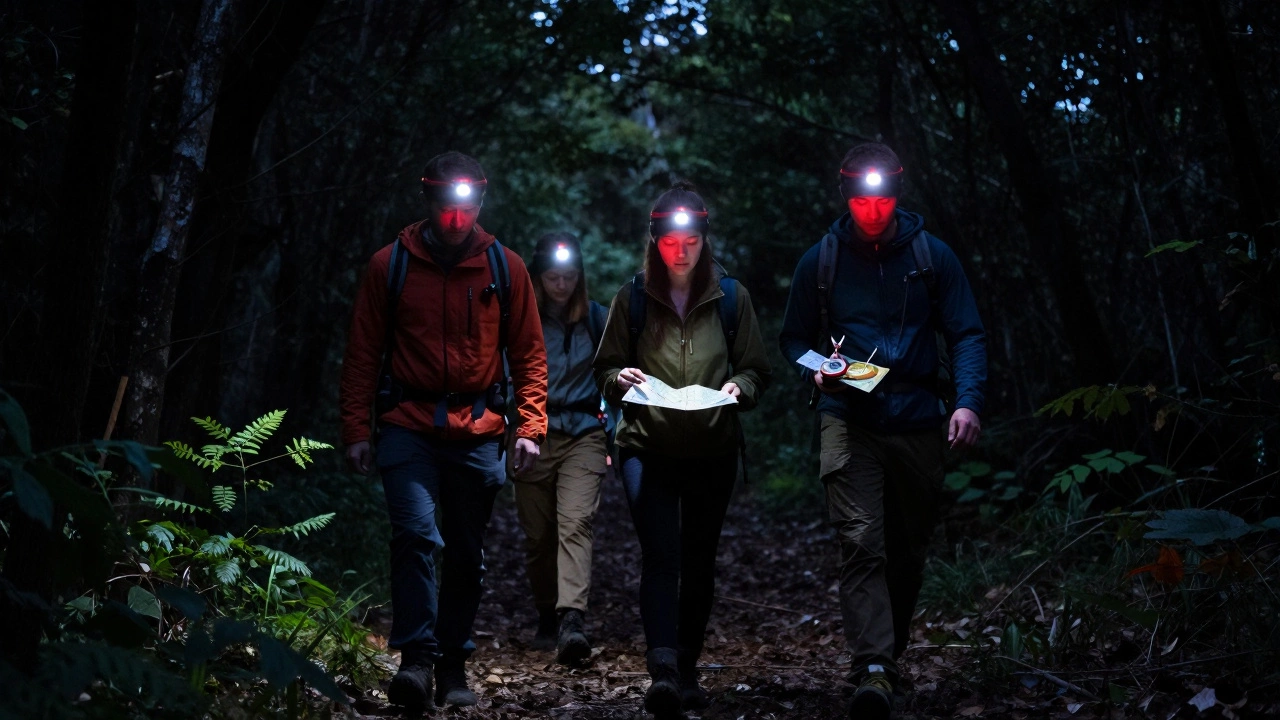
If you are walking with others, establish clear rules. Stay within sight of each other. If someone falls behind, the group stops. Never let one person scout ahead alone in the dark. Communication should be constant but quiet enough not to startle wildlife. Agree on a meeting point before you start, in case visibility drops to zero due to fog or rain.
When to Stay Put
Knowing when not to go out is just as important as knowing how to prepare. Certain conditions make night walks inadvisable:
- Poor Weather: Rain makes trails slippery and masks sound. Thunderstorms bring lightning risks, especially if you are near tall trees or open ridges.
- Full Moon vs. New Moon: A full moon provides natural illumination, making navigation easier. A new moon means pitch blackness outside your headlamp beam, increasing the difficulty level significantly.
- Fatigue: If you are tired from setting up camp or traveling, your reaction times are slower. Save the exploration for when you are fresh.
- Unfamiliar Territory: If you do not know the local flora, fauna, or trail layout, stick to the campsite perimeter. Exploration is for when you have built a baseline of familiarity with the area.
Ultimately, walking through a forest at night is a rewarding experience that offers a unique perspective on the natural world. It connects you to the rhythms of the earth in a way that daytime camping cannot. But respect the darkness. Prepare thoroughly, move slowly, and listen to the woods. If you do, the forest will welcome you safely back to your tent.
Is it safe to walk alone in the forest at night?
It is generally safer to walk in pairs or groups. Solo night hikes increase the risk because if you injure yourself, there is no one to call for help or assist you. If you must go alone, inform someone of your route and expected return time.
What should I do if I see a bear at night?
Stay calm and do not run. Speak in a calm, firm voice to identify yourself as human. Slowly back away while facing the bear. If it approaches, use bear spray if available. Remember, most bears are curious rather than aggressive.
How do I prevent getting lost in the dark?
Stick to marked trails, use a headlamp with red light mode, and carry a physical map and compass. Mark your path with biodegradable indicators if going off-trail. Avoid exploring unfamiliar areas without prior daylight reconnaissance.
Are there more bugs in the forest at night?
Yes, many insects like mosquitoes and moths are nocturnal. Wear long clothing, use insect repellent containing DEET or Picaridin, and avoid standing still in stagnant water areas. Check for ticks before bed.
Can I use my phone flashlight instead of a headlamp?
No, a phone flashlight is not sufficient. It drains battery quickly, lacks brightness, and requires one hand to hold, leaving you unbalanced. A dedicated headlamp frees your hands and provides consistent, adjustable lighting.