Is It Illegal to Take Sand from the Beach in NC? What You Need to Know
 Feb, 16 2026
NC Beach Sand Impact Calculator
Sand Removal Impact Calculator
Under NC General Statute 14-132, removing beach sand is illegal without a permit. See how small actions create big impacts.
Impact Analysis
For 100 visitors removing 1 lb each over 1 year:
Total Sand Removed: 100 lbs
Equivalent to 0.003 swimming pools (25,000 gallons)
NC Law Reminder: Under General Statute 14-132, removing sand is illegal without a permit. Penalties range from $250-$500 per violation.
Why this matters:
North Carolina loses 3-5 feet of beach per year from erosion. 15 million visitors taking just 1 lb each annually removes 75 tons of sand—enough to fill 3 swimming pools. The state spends $42 million annually on beach restoration.
Legal Alternatives
Enjoy the beach responsibly:
- Buy legally sourced beach sand from local shops
- Take photos or collect surface shells
- Use driftwood as a natural keepsake
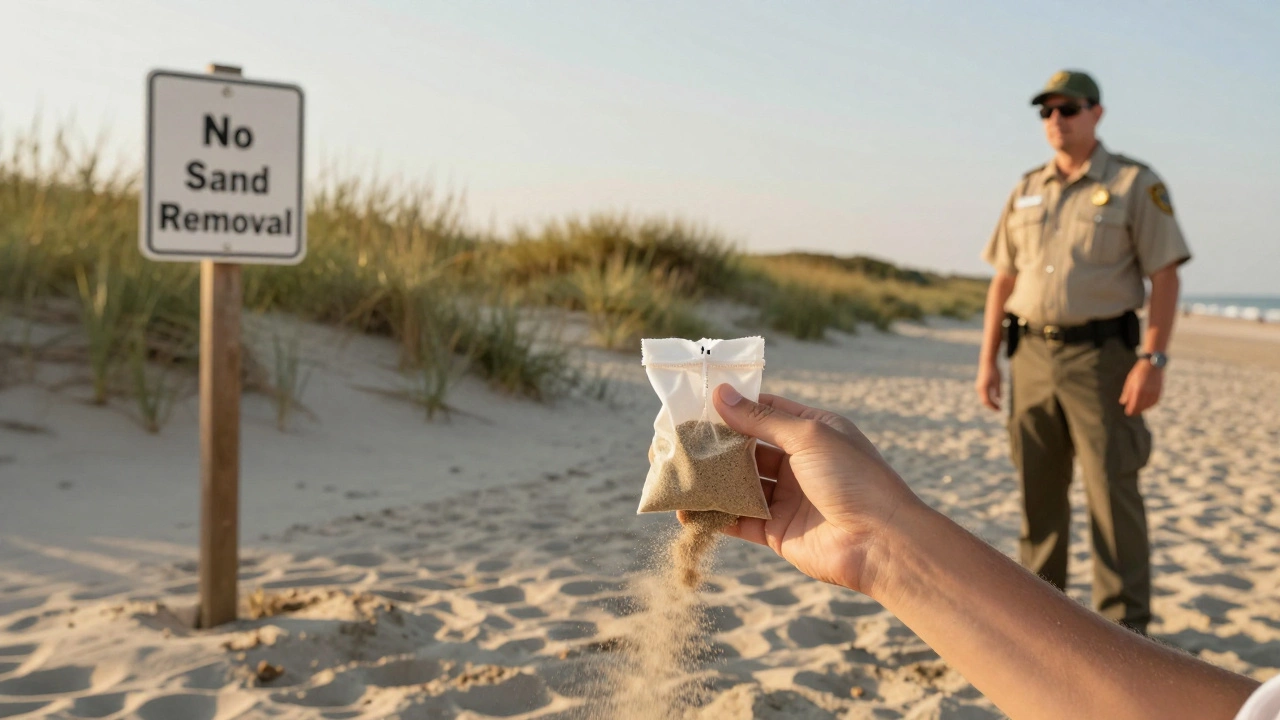
People often pick up a handful of sand from the beach in North Carolina-maybe as a souvenir, for a craft project, or just because it feels good between their fingers. But here’s the truth: taking sand from the beach in North Carolina is illegal in most cases, and you could face fines if you’re caught.
Why Is Taking Sand Illegal?
North Carolina’s beaches aren’t just pretty spots for sunbathing. They’re dynamic, living systems that protect the coast from storms, support wildlife, and slowly rebuild themselves after every tide. Removing sand disrupts this natural balance. Even a small bag of sand might seem harmless, but when thousands of visitors do it every year, the impact adds up.
The North Carolina Division of Coastal Management (DCM), part of the state’s Department of Environmental Quality, treats beach sand as a public resource. Under NC General Statute 14-132, it’s unlawful to remove, disturb, or take any sand, soil, or shell material from state-owned beaches and dunes without a permit. This rule applies to all public beaches from the Virginia border down to the South Carolina line.
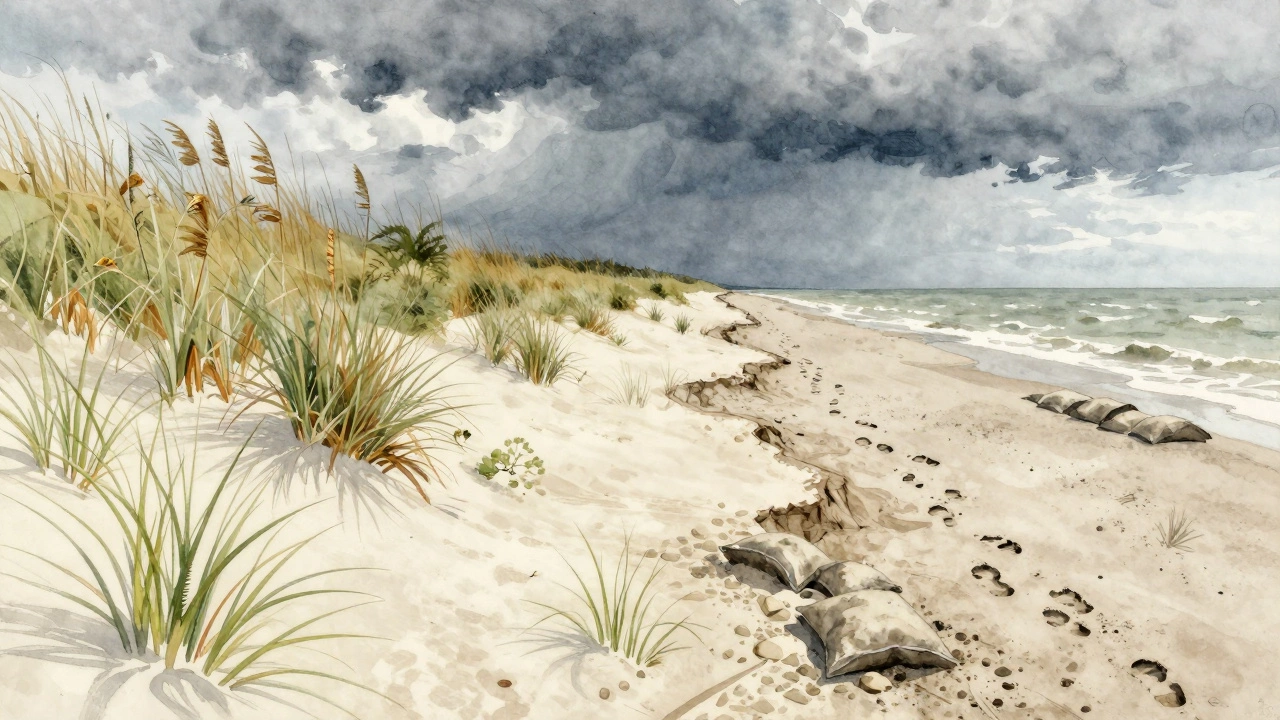
Why does the state care so much? Because coastal erosion is accelerating. Between 2010 and 2023, North Carolina lost an average of 3 to 5 feet of beach per year along its outer banks. Sand removal, even in small amounts, contributes to that loss. Beaches naturally move and shift, but when humans take sand away faster than nature can replace it, the shoreline becomes more vulnerable to storms and flooding.
What Counts as "Taking Sand"?
You might think the law only targets big operations-like contractors hauling away truckloads. But it’s broader than that. The law covers:
- Collecting sand in buckets, bags, or containers
- Using shovels or tools to dig into the dunes
- Taking sand from beach access points, boardwalks, or parking areas
- Carrying sand home in suitcases, coolers, or toy buckets
Even if you’re just filling a jar for a DIY project or giving a friend a "memorial" of your vacation, you’re breaking the law. Rangers and park staff patrol popular beaches like Outer Banks, Wrightsville Beach, and Myrtle Beach (NC side). They’ve issued warnings and fines to tourists who didn’t realize this was illegal.
What Are the Penalties?
Violating the sand removal law is a Class 3 misdemeanor. The fine starts at $250 for a first offense, but can go up to $500 if you’re caught again. In some cases, especially if you’re removing sand from protected dune areas, the state may also require you to pay for restoration work.
It’s not just about money. In 2022, a family from Ohio was fined $400 after park rangers found 12 pounds of sand in their cooler. They claimed they didn’t know it was illegal. The ranger responded: "We post signs. We have brochures. And we tell people every day. Ignorance isn’t a defense here."
What About Collecting Shells or Sea Glass?
Good news: collecting shells, sea glass, or driftwood is generally allowed-as long as you’re not digging or disturbing the dunes. The law specifically targets sand and soil. You can take home a few shells or a piece of weathered glass, but don’t dig holes or scrape the beach surface to find them. If you’re unsure, stick to what’s already loose on the surface.
What If You’re a Researcher or Contractor?
There are exceptions. Scientists studying coastal erosion, engineers working on beach restoration, or state-approved contractors can apply for a permit from the DCM. These permits require detailed plans, environmental reviews, and public notice. They’re not given out for personal use. If you’re a homeowner trying to refill your backyard beach area? No permit exists for that.
What Are the Alternatives?
If you want a keepsake from the beach, here are legal options:
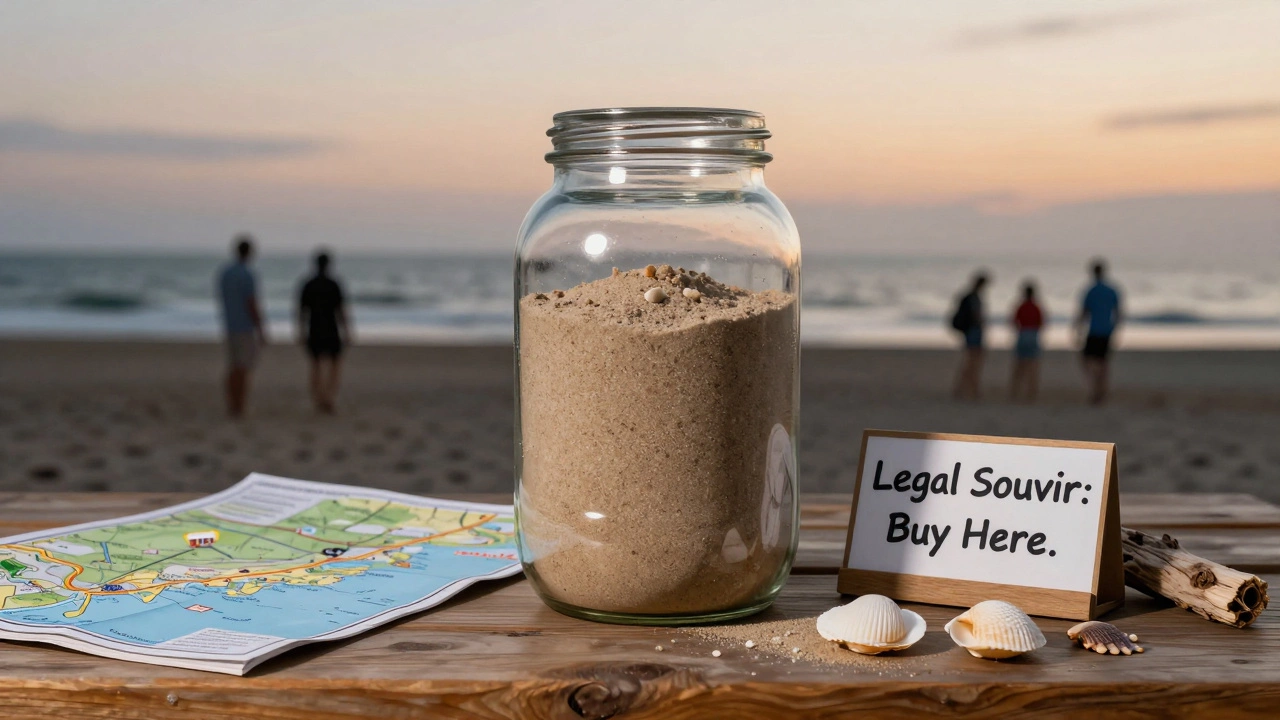
- Buy a bag of North Carolina beach sand from a local gift shop (some sell sanitized, labeled sand in decorative jars)
- Take photos of the beach instead
- Collect sea glass, shells, or smooth stones (if they’re already on the surface)
- Bring home a piece of driftwood (no digging, no tearing from dunes)
Many local shops in OBX and Wrightsville Beach sell sand art kits made with legally sourced materials. These are often labeled "North Carolina Beach Sand" and come with a small history card. It’s a thoughtful, legal alternative that supports local businesses.
Why This Matters Beyond the Law
It’s easy to think one person taking a handful of sand won’t make a difference. But consider this: North Carolina gets over 15 million beach visitors each year. If just 1% of them took 1 pound of sand, that’s 150,000 pounds removed annually. That’s more than 75 tons of sand lost every year-enough to fill a small swimming pool.
Beaches are not just scenery. They’re natural barriers. They absorb wave energy. They protect homes, roads, and businesses. When sand disappears, dunes collapse, erosion speeds up, and repair costs rise. In 2024, the state spent $42 million on beach nourishment projects just to restore sand lost to erosion and human removal.
Respecting the sand means respecting the coast. It’s not about punishment-it’s about preservation.
What Should You Do If You’ve Already Taken Sand?
If you’ve already taken sand from a North Carolina beach and didn’t know it was illegal, don’t panic. There’s no retroactive enforcement. But now you know. The best thing to do is to stop. If you’ve stored it at home, consider returning it to the ocean by scattering it back into a natural waterway-though not directly into the ocean, as that could introduce foreign particles. Or, just compost it if you have a garden. Either way, don’t take more.
The real win? Sharing this knowledge. Tell your friends. Post a reminder on your social media. The more people know, the less sand gets taken.