Is It Illegal to Sleep on the Beach in Florida? Here’s What You Need to Know
 Jan, 4 2026
Florida Beach Sleepability Checker
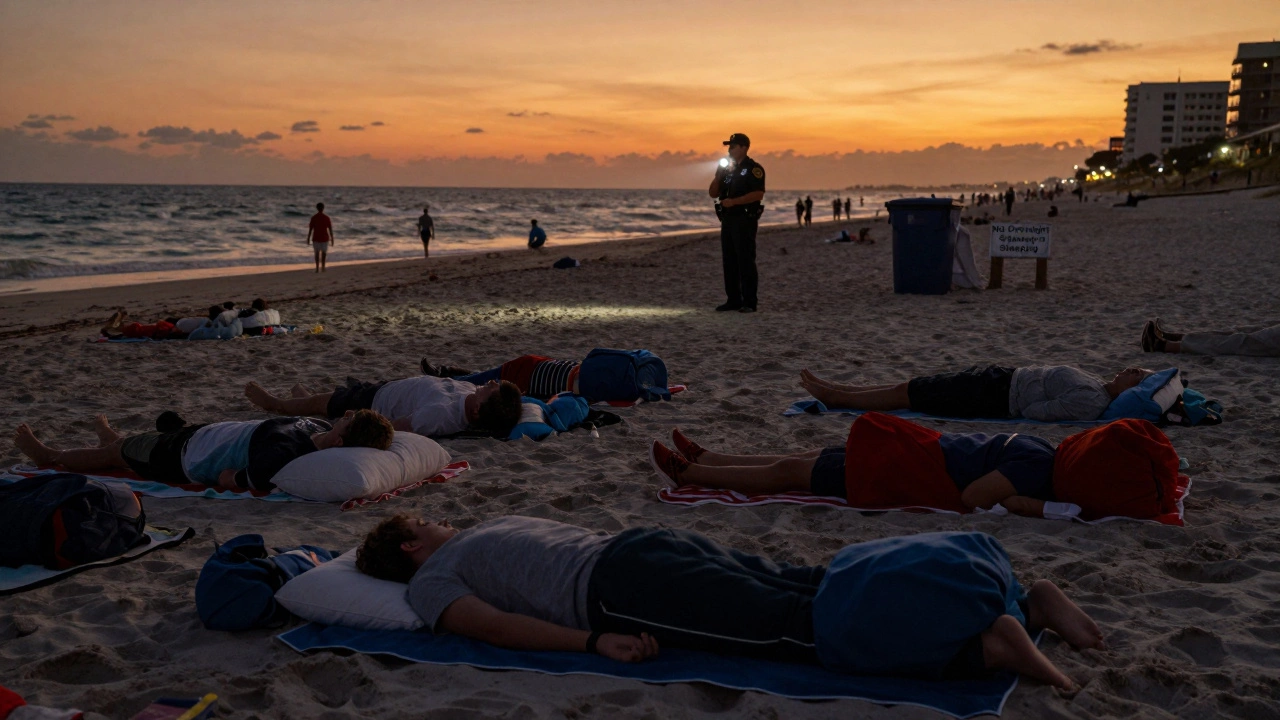
People show up on Florida’s beaches at sunset with sleeping bags, coolers, and dreams of falling asleep to the sound of waves. But by sunrise, some are packing up fast-maybe because a police officer showed up with a warning, or maybe they just got lucky. The truth? Sleeping on the beach in Florida isn’t a simple yes or no. It depends on where you are, when you’re there, and how you’re doing it.
Florida’s Beach Sleeping Rules Vary by City and County
There’s no single Florida state law that says, “You can’t sleep on the beach.” Instead, local governments-cities and counties-set their own rules. That means what’s allowed in Panama City Beach might get you fined in Miami Beach.
For example, in Miami-Dade County, sleeping on the beach between 10 p.m. and 6 a.m. is illegal. Signs are posted at major access points. If you’re caught, you could face a $100 fine or more. In Fort Lauderdale, the same rule applies: no overnight stays on the sand. Police patrol regularly, especially during holidays and spring break.
But head north to St. Augustine Beach, and things loosen up. While you still can’t camp with tents or fires, sleeping on a towel with a sleeping bag is rarely enforced unless you’re causing a disturbance. In Clearwater Beach, overnight sleeping is banned outright. Even lying down after dark can draw attention.
On the Gulf Coast, Anna Maria Island has a more relaxed attitude. As long as you’re quiet, not leaving trash, and not using tents or tarps, most officers won’t bother you. But that’s not a guarantee-it’s a gray area.
Why Do These Rules Exist?
It’s not about stopping people from enjoying the beach. It’s about safety, sanitation, and public order.
Beaches in Florida get crowded. When people sleep on the sand, they leave behind trash, urine, and sometimes even needles. In tourist-heavy areas like Daytona Beach or Orlando’s nearby beaches, overnight campers attract pickpockets, drug activity, and littering. Local governments say they’re protecting the environment and keeping the beach safe for families.
Also, beaches aren’t designed for overnight stays. There’s no running water, no toilets, no waste disposal. Sleeping there puts pressure on city services. In 2023, Tampa Bay reported over 200 calls for beach-related disturbances between May and September-many tied to people sleeping overnight.
What Counts as “Sleeping”?
Law enforcement doesn’t just care about tents. If you’re lying down with a blanket, sleeping bag, pillow, or even a beach chair propped up like a bed, you’re considered to be “camping.” Even if you’re just resting your head on your backpack, you could be interpreted as preparing to sleep.
Some people try to get around this by saying they’re “resting” or “waiting for the sunrise.” But officers don’t ask for your intentions-they look at your setup. A sleeping bag + pillow + cooler = camping. A towel + book = just lounging.
Where Can You Legally Sleep Near Florida’s Beaches?
If you want to sleep close to the ocean without breaking the law, you have options.
- State Parks with beach access: Places like John D. MacArthur Beach State Park in Boca Raton or Fort De Soto Park near St. Petersburg allow overnight camping-but only in designated campsites. You need a reservation. Rates start around $25 a night.
- County-run beach campgrounds: Canaveral National Seashore has primitive campsites right on the beach. You need a permit, and you can’t use generators or tents larger than 10x10 feet.
- Private RV parks near the coast: Many towns like Cocoa Beach, Naples, and Destin have RV parks within a 5-minute drive of the beach. They offer showers, restrooms, and sometimes even beach shuttles.
These spots are legal, safe, and often cheaper than hotels. And you still get the sound of waves.
What Happens If You Get Caught?
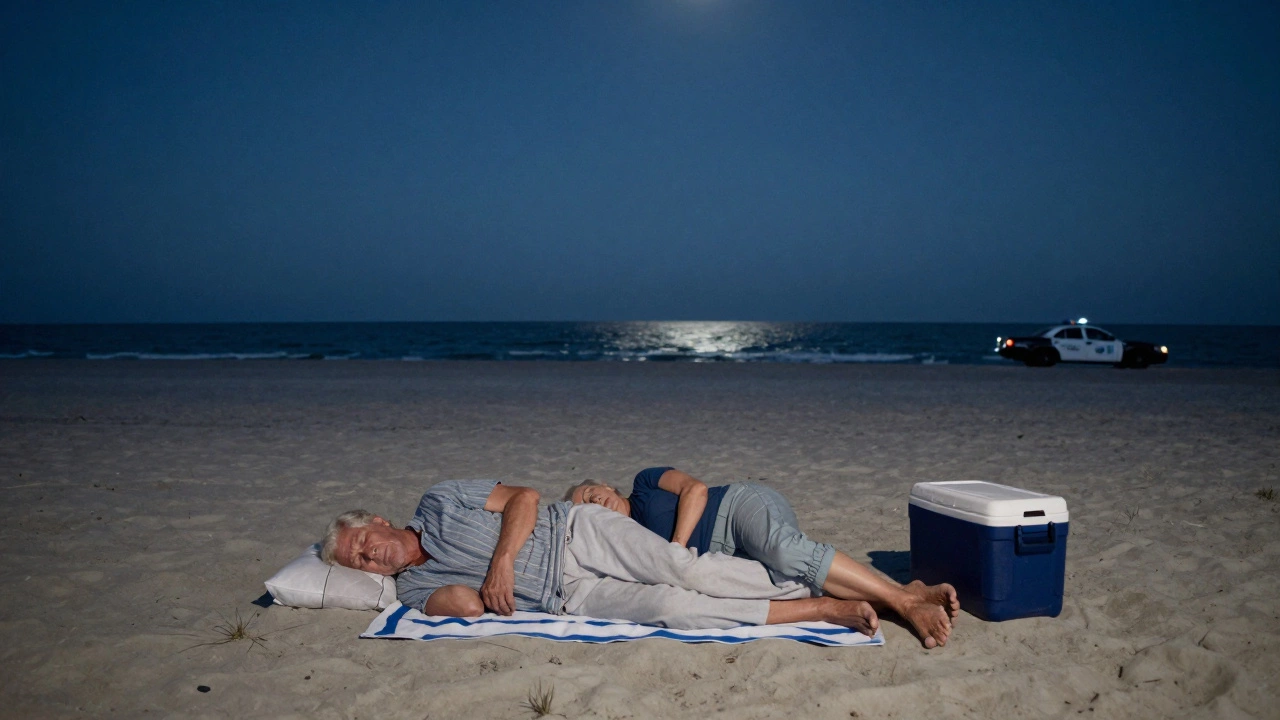
If you’re sleeping on the beach where it’s banned, you’ll likely get a warning the first time. But don’t assume that means it’s okay. Repeat offenders get tickets. Fines range from $50 to $500, depending on the city.
In some places, like Key West, you can be arrested for “disorderly conduct” if you’re sleeping in a public area after hours. That means a night in jail, even if you didn’t do anything else wrong.
And here’s the kicker: if you’re caught sleeping on a beach that’s part of a national park or protected wildlife area-like the Florida Keys National Marine Sanctuary-you could face federal fines up to $5,000.
What About Beach Bonfires and Tents?
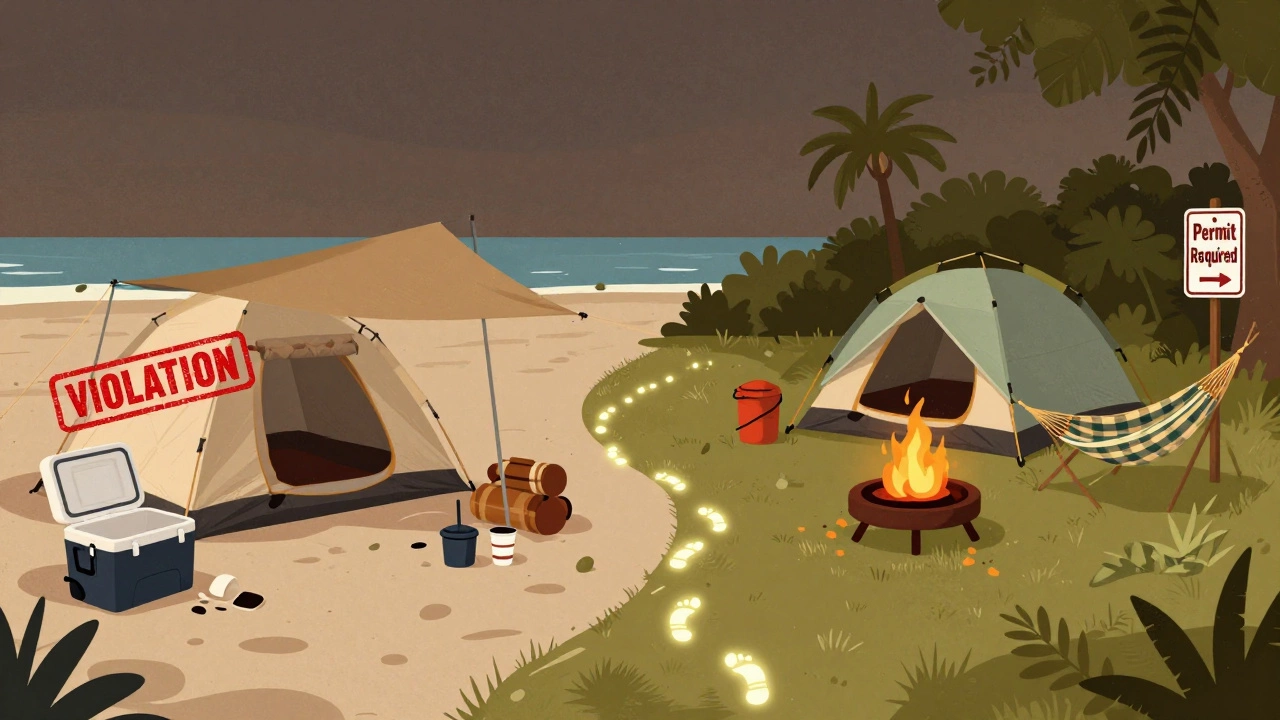
Forget it. Nearly every Florida beach bans open fires. Even small campfires or charcoal grills are illegal on public sand. Tents, hammocks, tarps, and pop-up shelters are also prohibited in most areas. The rules aren’t just about safety-they’re about keeping the beach open and clean for everyone.
Some people try to sneak in a small tarp or umbrella. But if it looks like you’re setting up camp, you’re already in violation. Rangers and beach patrol officers are trained to spot these setups.
Real Stories from People Who Tried It
One couple from Ohio drove to Fort Myers Beach for a weekend getaway. They brought a tent, a sleeping bag, and a cooler. They thought, “It’s just one night.” They were woken up at 2 a.m. by a police officer who gave them a $200 ticket and told them to leave. They left-empty-handed.
A group of college students in Panama City Beach slept on the sand during spring break. They didn’t plan to stay long. But when a local news crew filmed them, the city posted the video online with a warning: “Don’t be next.” Within a week, patrols doubled.
On the flip side, a retired couple in St. Pete Beach slept on a towel every night for three weeks. They didn’t use anything but a blanket. No one ever said a word. They said they were quiet, cleaned up every morning, and never blocked access to the water.
That’s the difference: intention and behavior matter. But you can’t rely on luck.
How to Stay Safe and Legal
Here’s how to avoid trouble:
- Check the official website of the city or county before you go. Search for “beach ordinances” + the name of the town.
- Look for signs at beach entrances-they usually list hours and rules.
- If you see someone camping legally, ask them where they’re staying. Locals often know the loopholes.
- Never leave trash, food, or gear behind. Even if you’re not caught, you’re contributing to the problem.
- If you’re unsure, sleep in your car. Most Florida beaches allow overnight parking in designated lots-but not on the sand.
And if you really want that beachside sleep? Book a campsite. It’s not expensive. You’ll sleep better, safer, and without the fear of being woken up by a flashlight and a ticket.
What About Overnight Fishing or Surfing?
Some people stay on the beach all night to fish or surf. That’s allowed-because they’re actively engaged in a legal activity. But if you lie down after your last cast or after your last wave, you’re no longer “fishing.” You’re sleeping. And that’s when the rules kick in.
Keep your gear visible. Don’t set up a blanket as a bed. Stay active. If you’re just resting, you’re at risk.
Final Thought: Respect the Rules, Respect the Beach
Florida’s beaches are some of the most beautiful in the world. They’re also some of the most visited. Local governments aren’t trying to ruin your trip-they’re trying to keep the sand clean, the water safe, and the experience enjoyable for everyone.
You don’t need to sleep on the sand to feel the ocean breeze. You don’t need to risk a fine to hear the waves. There are plenty of legal, affordable, and peaceful places to camp just steps away.
Choose the right spot. Sleep well. And leave the beach better than you found it.