Is It Financially Smart to Live in an RV? Real Costs and Savings Explained
 Mar, 12 2026
RV Living Cost Calculator
Your RV Expenses
Traditional Housing Comparison
Your Total Monthly Costs
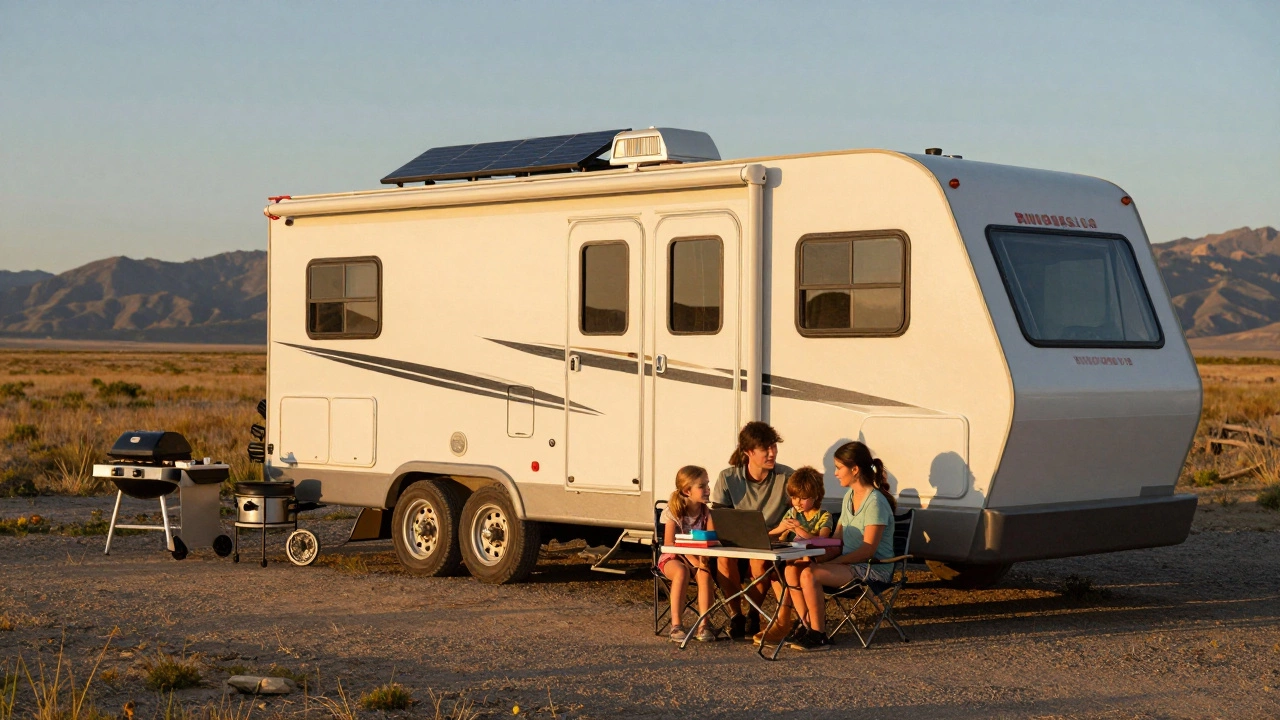
Living in an RV isn’t just a summer vacation fantasy-it’s a real lifestyle choice for thousands of families across the U.S. and Canada. But is it actually cheaper than renting an apartment or paying a mortgage? The short answer: it can be, but only if you know what you’re getting into. Too many people assume they’ll save money just because they’re not paying rent. Then they hit a wall-unexpected repairs, campground fees piling up, or a broken AC in the middle of July. Let’s cut through the hype and look at the real numbers.
What You Save: The Real Financial Upside
If you’re currently paying $1,800 a month for a one-bedroom apartment in a mid-sized city, switching to an RV could slash that cost dramatically. No security deposit. No landlord fees. No rising rent hikes. Most full-time RVers report housing costs between $300 and $800 a month, depending on where they park. That’s not a guess-it’s from a 2025 survey of 2,100 full-time RV households by the RV Industry Association. The average monthly spend on camping was $520, with many using free or low-cost public lands.
Utilities are another big win. No electric bill? Not quite. But if you’re running a small fridge, LED lights, and a 15,000 BTU AC unit on solar and shore power, your monthly power cost might be $15-$40. Water and sewer? Often included in campground fees or handled with a tank system. Internet? Many use mobile hotspots for under $50 a month. That’s a total utility bill under $100, compared to $200+ in most apartments.
What You Don’t Save: Hidden Costs That Bite
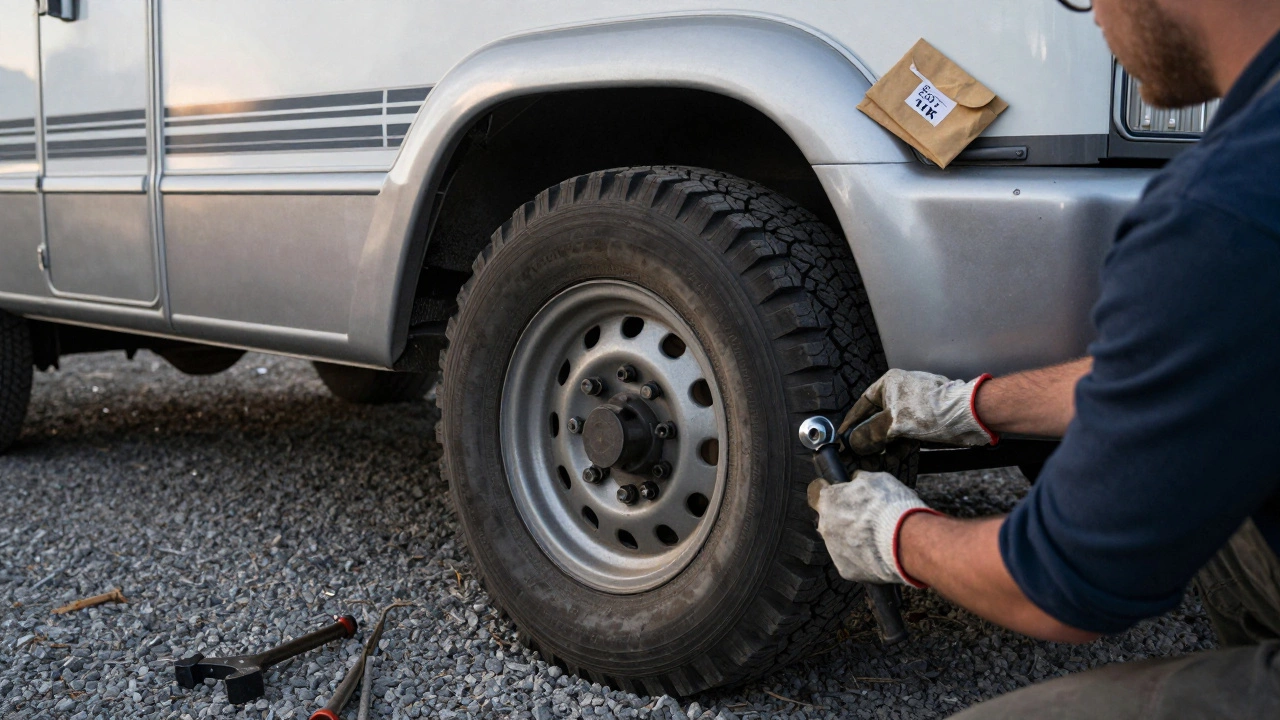
Here’s where most people get tripped up. You’re not just paying for a place to sleep-you’re paying for a vehicle that needs constant care. A 2023 study by Consumer Reports found that RV owners spend an average of $1,200 a year on maintenance. That’s $100 a month, minimum. And that’s for a well-maintained unit. If your RV is 12 years old and has 85,000 miles on it? That number jumps to $250-$400 a month. Brake jobs, water pump replacements, roof seal repairs-these aren’t optional. They’re part of the monthly budget.
Then there’s insurance. Full-timers need comprehensive RV insurance, not just liability. Average cost? $1,100-$1,600 a year. That’s $90-$135 a month. Add that to maintenance, and you’re already at $200+ before you even pay for a campsite.
And don’t forget tires. RV tires wear out faster than car tires because of the weight. A full set of 6 tires costs $1,200-$1,800 and needs replacing every 5-7 years, even if you don’t drive much. That’s $160-$240 a year just to keep rolling.
Where You Park Matters More Than You Think
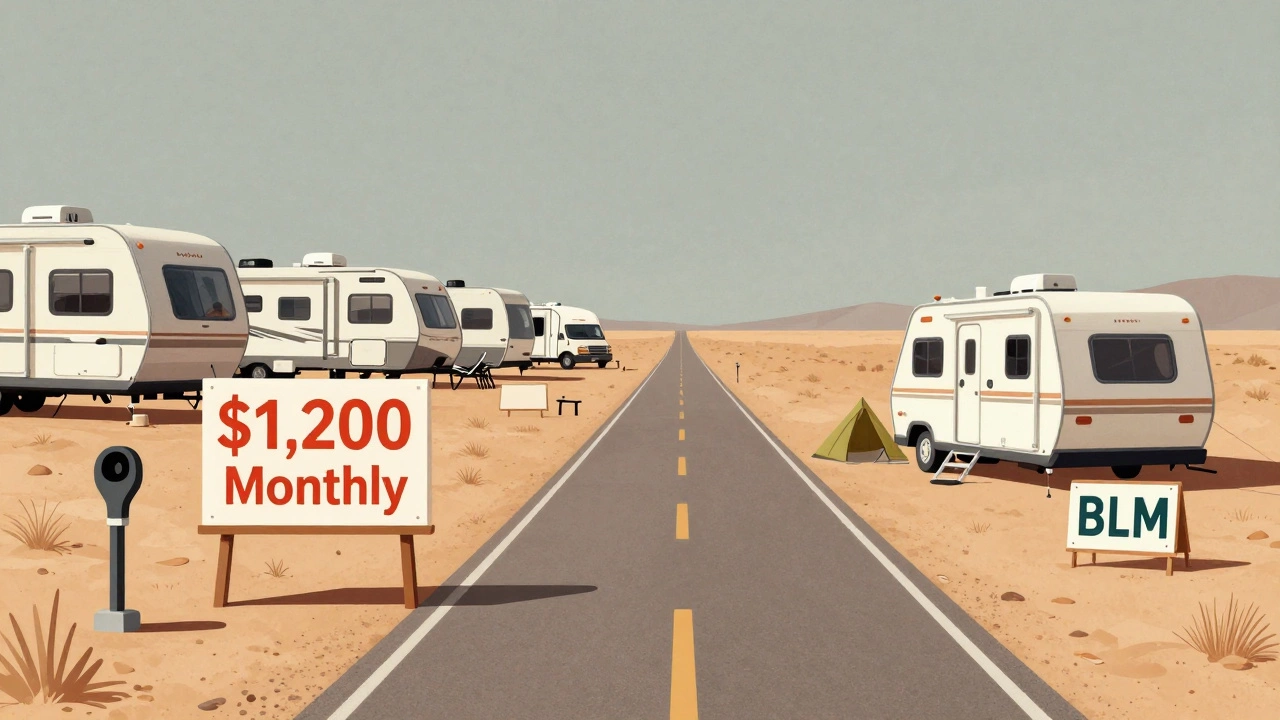
Not all campgrounds are created equal. A private RV park with full hookups (water, sewer, electric) might charge $600-$1,200 a month. That’s more than rent in some cities. But if you know where to look, you can cut that in half-or eliminate it entirely.
Walmart parking lots? Free. Many allow overnight stays if you’re quiet and don’t set up chairs or awnings. Bureau of Land Management (BLM) land? Free in most states, with no hookups but no fees either. National Forests? Often $5-$15 a night. Some states like Arizona and Nevada offer long-term stays at state parks for under $400 a month. A 2024 report from RVshare showed that 63% of full-timers spend less than $500 a month on camping by using a mix of free sites, workamping, and state park discounts.
Workamping is another game-changer. In exchange for 15-20 hours a week of work-front desk, cleaning, gardening-you can get a free site with full hookups. Sites like Workamper.com list over 12,000 opportunities nationwide. Families use this to cut housing costs to zero while kids get to explore national parks and learn real-world skills.
What You Lose: Lifestyle Trade-Offs
Money isn’t the only thing at stake. Living in an RV means giving up certain comforts. No walk-in closet. No dishwasher. No laundry room-just a portable washer or laundromat runs. Showering? You’re limited by water tank capacity. In winter, you might need to heat your RV with propane or risk frozen pipes. In summer, heat builds up fast, and AC units can’t keep up if you’re parked in direct sun.
And then there’s the emotional toll. Constant movement. Packing up every few weeks. Kids changing schools. Finding pediatricians on the road. A 2025 survey by the Family RV Living Network found that 41% of families who tried full-time RV living ended up returning to a house because of stress on children or relationship strain. It’s not for everyone.
Who Actually Saves Money? Real Examples
Let’s look at two real cases:
- Case 1: The Smith Family-They sold their $320,000 house in Ohio, bought a 2022 Class C RV for $85,000, and moved to Arizona. Their monthly costs: $380 (campground), $110 (insurance), $140 (maintenance), $45 (internet), $60 (groceries for 4). Total: $735. Before, they were paying $2,100 in rent, $300 in utilities, $150 in property taxes, and $200 in HOA fees. Their savings? Over $1,200 a month.
- Case 2: The Chen Couple-They bought a used 2015 RV for $22,000 and live on BLM land in Nevada. Their monthly costs: $40 (propane), $50 (internet), $120 (repairs), $80 (tires and fluids). Total: $290. They work seasonal jobs at national parks. Their savings? $1,800 a month compared to their old apartment rent.
But here’s the catch: both families had emergency funds. Smiths had $15,000 saved. Chens had $10,000. Without that buffer, one breakdown could have ended their lifestyle.
Is It Smart for Your Family?
If you’re considering this, ask yourself:
- Do you have at least $10,000 in savings for repairs?
- Can you handle changing locations every 2-4 weeks?
- Are your kids adaptable, or do they need stable schools?
- Do you have reliable income sources that aren’t tied to a location?
- Have you tested it for 3 months before selling your house?
If you answered yes to all five, you might be ready. If not, maybe try a trial run. Rent an RV for 60 days. Live in it. See how you sleep. See how the kids handle it. See how often you’re fixing things.
RV living isn’t about being cheap. It’s about being intentional. It’s not a shortcut to freedom-it’s a different kind of responsibility. The people who succeed don’t just save money. They build a life that fits their values. And that’s worth more than any monthly budget line.
Is it cheaper to live in an RV than to rent an apartment?
It can be, but only if you avoid high-end RV parks and keep maintenance under control. On average, full-time RVers spend $500-$900 a month on housing and utilities, compared to $1,500-$2,500 for a typical apartment. But if you’re paying $1,000 a month for a premium RV park with hookups, you’re not saving anything. The key is using free or low-cost public lands and staying on top of repairs.
What are the biggest hidden costs of living in an RV?
Maintenance is the biggest surprise. Most people budget for fuel and campsite fees but forget about tires, roof seals, water pumps, and propane systems. On average, RV owners spend $100-$250 a month on repairs, depending on age and usage. Insurance, propane, and sewer pump-outs also add up. A 10-year-old RV with 70,000 miles can easily cost $3,000 a year in upkeep.
Can families with kids live full-time in an RV?
Yes, but it’s harder than it looks. Over 30% of families who try full-time RV living return to a house within a year, according to the Family RV Living Network. Kids need stable education, social connections, and space to play. Many use online schooling, workamping at parks with playgrounds, or join RV homeschooling groups. Success depends on planning, patience, and flexibility.
Do you need good credit to live in an RV?
Not for the lifestyle itself, but if you’re financing an RV, yes. Most lenders require a credit score of 660+ and a 10-20% down payment. If you’re buying used outright with cash, credit doesn’t matter. But if you’re planning to stay at private RV parks long-term, some require background checks or proof of income. It’s not about credit-it’s about reliability.
How do you handle healthcare and insurance while living in an RV?
Health insurance works the same as it does on land-you can use any provider that accepts your plan. Many full-timers choose high-deductible plans with HSA accounts to save money. For emergencies, telehealth services like Teladoc are widely used. Some RVers also join national networks like RV Health Access, which connects them to clinics near popular routes. It’s not perfect, but it’s manageable with planning.
Next Steps: How to Test It Before You Commit
Don’t sell your house yet. Don’t quit your job. Start small:
- Rent an RV for 30 days. Use RVshare or Outdoorsy to find one near you.
- Park it in your driveway or at a local campground. Live in it like you’re full-time.
- Track every expense: fuel, food, repairs, electricity, water, internet.
- Ask your kids how they feel. Do they miss friends? Do they hate showering in 5 minutes?
- After 30 days, ask yourself: Would I do this for a year?
If the answer is yes, then you’ve got a real shot. If not, you’ve saved yourself thousands-and maybe a broken family.