Is it cheaper to live in an RV or a tiny home? Real costs compared
 Nov, 27 2025
RV vs Tiny Home Cost Calculator
Choose Your Housing Type
Upfront Costs
Monthly Costs
Additional Features
Cost Comparison Results
Yearly Costs
Living in an RV or a tiny home sounds like a dream-less debt, more freedom, no mortgage. But which one actually saves you more money? It’s not just about the purchase price. You need to look at fuel, insurance, parking, maintenance, utilities, and even how often you move. Let’s break down what it really costs to live in each, based on real numbers from people doing it right now in Australia and the US.
Upfront costs: RV vs tiny home
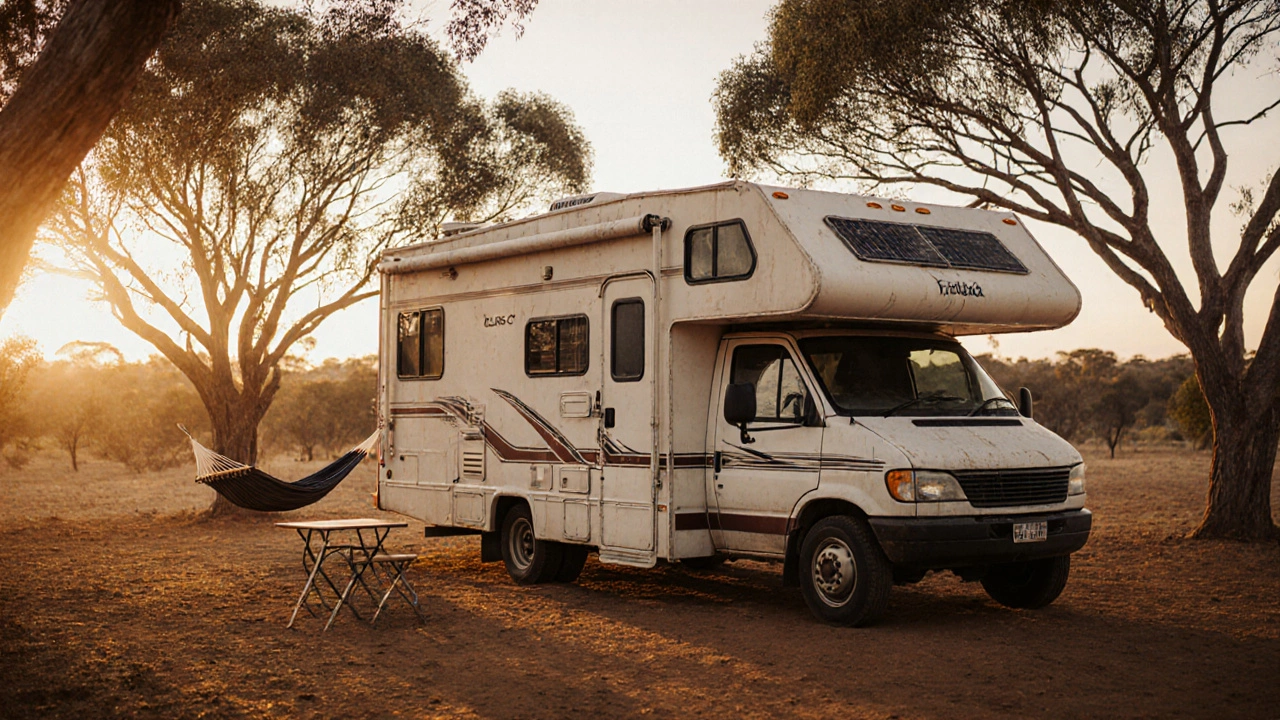
An RV can start as low as $15,000 for a used 20-foot camper van. But if you want something with a bathroom, kitchen, and decent insulation, you’re looking at $40,000-$80,000. New Class A motorhomes? Those can hit $300,000. Most people who live in them full-time go for used Class C or A-frame trailers-solid, reliable, and under $60,000.
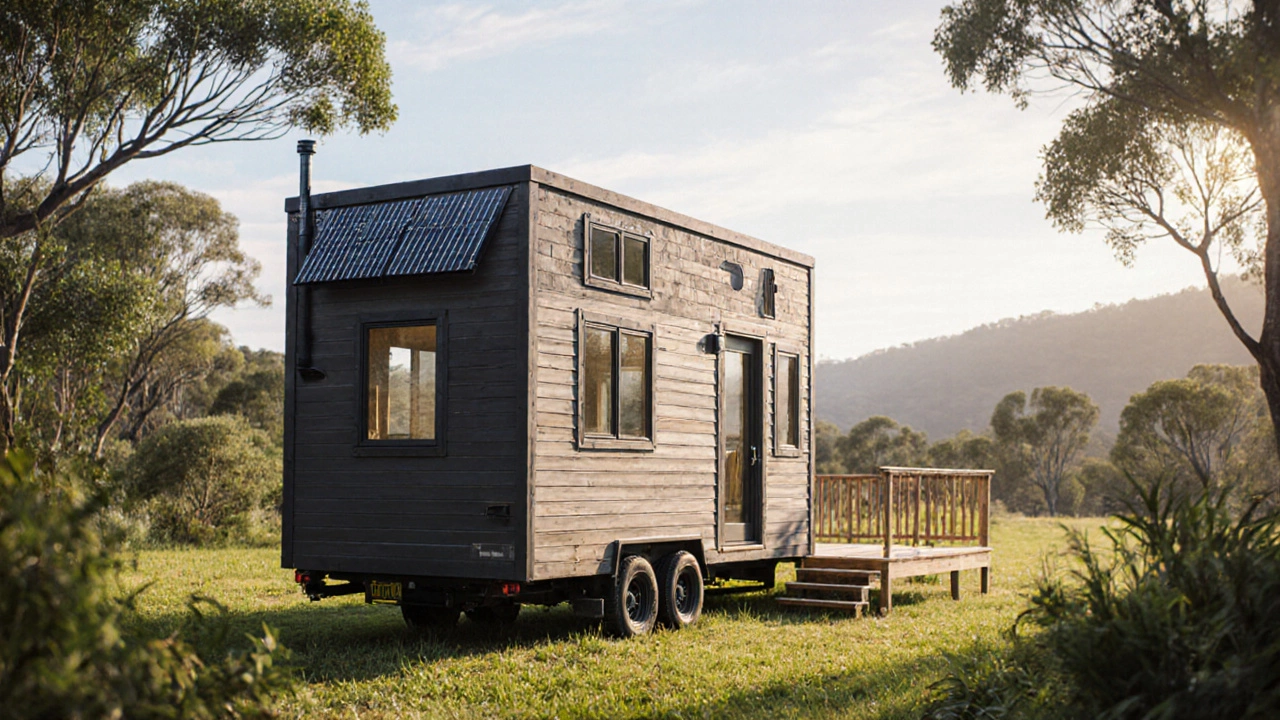
A tiny home on wheels? Those start around $35,000 for a basic build. But if you want proper insulation, solar panels, a composting toilet, and a full kitchen, you’re looking at $70,000-$120,000. Custom tiny homes often cost more than a decent RV because they’re built to last like a house, not a vehicle. Some people buy a trailer chassis and build it themselves to save money, but that takes time, tools, and skill.
Bottom line: You can find a cheaper RV, but a tiny home usually costs more upfront. If you’re on a tight budget, a used RV wins.
Monthly costs: Fuel, parking, and fees
RVs are vehicles. That means fuel. A 25-foot motorhome gets about 8-10 miles per gallon. Drive 1,000 miles a month? You’re spending $150-$200 on diesel alone. Add in oil changes every 5,000 miles, tire replacements every 3-5 years, and brake checks-those add up fast. Insurance runs $80-$150/month depending on coverage.
Tiny homes on wheels? They’re towed, so you’re using your car or truck. If you’re towing once a month, you’re adding maybe 200-300 miles to your vehicle’s odometer. That’s $20-$40 extra in fuel. Insurance is cheaper-around $40-$70/month-because it’s treated like a trailer, not a motor vehicle.
Parking is where things get messy. RV parks charge $300-$800/month for full hookups (water, sewer, power). In Australia, you can find cheaper sites-$150-$300/month in regional areas. But you can’t just park anywhere. Many cities ban overnight RV parking. Tiny homes face the same rules. Some people park on private land (a friend’s property, a rural lot), which cuts costs to near zero. But that’s not legal everywhere. In Perth, you need council approval to live in a tiny home on wheels, even on your own land.
Utilities: Water, power, waste
Both RVs and tiny homes use similar systems: propane for cooking and heating, batteries for power, holding tanks for waste. But here’s the difference:
- RVs usually have smaller water tanks (30-60 gallons) and waste tanks (30-50 gallons). You’re emptying them every 3-5 days if you’re full-time living. Dump stations are free at many campgrounds, but private ones charge $5-$15 per dump.
- Tiny homes often have larger tanks (80-100 gallons water, 50-80 gallons waste) because they’re designed for longer stays. Many people install solar panels (300-800W) and battery banks (200-400Ah), which cost $3,000-$8,000 upfront but cut electricity bills to zero.
RVers often rely on campground hookups for power and water, which adds $50-$150/month. Tiny home owners who go off-grid save on that-but they pay more upfront for solar and batteries.
Maintenance: What breaks, and how often?
RVs are machines. They have engines, transmissions, brakes, tires, and slide-outs that leak. A 10-year-old RV might need a new water pump, a leaky roof seal, or a failing AC unit. Those repairs can hit $500-$3,000 every couple of years. Tire blowouts on highways? That’s $800+.
Tiny homes have fewer moving parts. No engine. No transmission. Just a trailer frame, walls, roof, and systems. But they’re still exposed to weather. Roof leaks are common if not sealed well. Insulation can settle. Windows fog up in winter. Plumbing freezes if you don’t winterize. Repairs? Usually $100-$800, but they’re less frequent.
One big advantage of tiny homes: you can fix them yourself. Most RV repairs require a specialist. Tiny home owners often learn to do their own plumbing, electrical, and roofing.
Long-term value: Depreciation and resale
RVs depreciate fast. A $50,000 RV might be worth $25,000 after five years. After ten years? Maybe $10,000. They’re vehicles, not property. Buyers know that.
Tiny homes hold value better-if they’re well-built. A $90,000 tiny home might sell for $70,000 after five years. Why? Because people see them as homes, not trailers. If it’s on a solid chassis, has real windows, and looks like a house, it’s easier to resell. Some even get appraised like property.
But here’s the catch: you can’t finance a tiny home like a house. Most lenders won’t give you a mortgage for it. You need a personal loan or RV loan-which means higher interest rates.
Where you live changes everything
In Australia, RV living is common in the outback, on the coast, and near national parks. But in cities like Perth or Melbourne, zoning laws are strict. You can’t legally live in an RV on your driveway unless you have a permit. Tiny homes face the same rules.
Some people get around this by renting a plot of land. A rural acreage might cost $300-$600/month to rent. You park your RV or tiny home there, hook up to power, and live quietly. That’s often cheaper than renting a flat.
Winter matters too. RVs aren’t built for cold. Insulation is thin. Heating costs spike. Tiny homes with proper insulation and double-glazed windows handle cold better. If you’re in Tasmania or the highlands, a tiny home is the smarter choice.
Who wins? Real-world examples
Meet Sarah, 34, from Adelaide. She bought a 2018 Jayco RV for $42,000. She works remotely. Her monthly costs: $180 fuel, $350 for a monthly RV park, $40 insurance, $30 for water/sewer dumps. Total: $600/month. She’s paid off the RV. No loan.
Then there’s Mark, 41, from Brisbane. He built a 24-foot tiny home for $85,000. He uses solar, has a composting toilet, and parks on his sister’s land in the Gold Coast hinterland. His monthly costs: $20 fuel (for occasional trips), $0 for power, $0 for water, $50 insurance. Total: $70/month. He’s paying off a $15,000 personal loan at 9% interest.
Sarah spends more monthly but has less upfront cost. Mark spends almost nothing monthly but paid way more to start. Both are debt-free now. Neither owns a house.
Final call: Which is cheaper?
If you want to start cheap and move often? Go RV. You can find a decent used one for under $40,000. Monthly costs are higher, but your barrier to entry is lower.
If you want to stay put, cut bills to the bone, and build something that lasts? Tiny home wins. The upfront cost is higher, but your monthly expenses drop to almost nothing if you go off-grid and park for free.
Neither is a magic solution. Both require work. You’ll deal with bureaucracy, weather, loneliness, and maintenance. But if your goal is to live with less debt and more freedom, both are possible. Just know what you’re signing up for.
Most people who switch to either don’t regret it. They just wish they’d done more research before buying.