Is Boondocking Legal in the UK? The Truth About Wild Camping Laws
 May, 17 2026
UK Wild Camping Legal Checker
Select a location and vehicle type above to see legal requirements.
If you’ve spent time reading American RV blogs, you’ve probably heard about boondocking. It’s that glorious feeling of pulling your rig off the grid, finding a patch of dirt or gravel near a national park, and sleeping for free under the stars. But here is the hard truth: if you try to do that in the United Kingdom, you will likely wake up to a fine, a tow truck, or a very angry landowner knocking on your door.
The short answer is no. Boondocking, as Americans know it-parking anywhere you like without permission-is generally illegal in England, Wales, and Scotland. However, the reality is more nuanced than a simple "yes" or "no." Depending on where you are and how long you stay, there are loopholes, specific permissions, and designated areas that allow for something very close to the boondocking experience. Let’s break down exactly what is legal, what isn’t, and how to camp wild without breaking the law.
What Is Boondocking Anyway?
First, let’s get our terms straight. In the US, Boondocking (also known as dry camping) means camping away from established hookups, often on public lands managed by agencies like the Bureau of Land Management (BLM). You can drive onto vast stretches of federal land, park for up to 14 days, and pay nothing.
In the UK, this concept doesn't exist in the same way. Almost all land is privately owned or managed by specific bodies with strict regulations. There is no equivalent to the BLM's open-access policy. When people in the UK talk about "wild camping," they usually mean pitching a tent or parking a camper van on uncultivated ground, often in remote areas. This is not the same as driving into a town center and parking on a street overnight.
| Feature | US Boondocking | UK Wild Camping |
|---|---|---|
| Land Ownership | Often Public (Federal) | Almost Always Private |
| Permission Needed | No (for most public land) | Yes (usually required) |
| Cost | Free | Free (if permitted) or Paid |
| Duration | Up to 14 days | Usually 1-2 nights max |
| Hookups | None (Dry Camping) | None (Self-contained) |
The Law in England and Wales
In England and Wales, the rules are strict. The primary legislation at play is the Criminal Justice and Public Order Act 1994. Section 77 of this act makes it an offense for two or more people to live in tents or vehicles on any land without the owner’s consent. If police believe you are intending to reside there, even for a short period, they can order you to leave. Failure to comply can result in a fine or imprisonment.
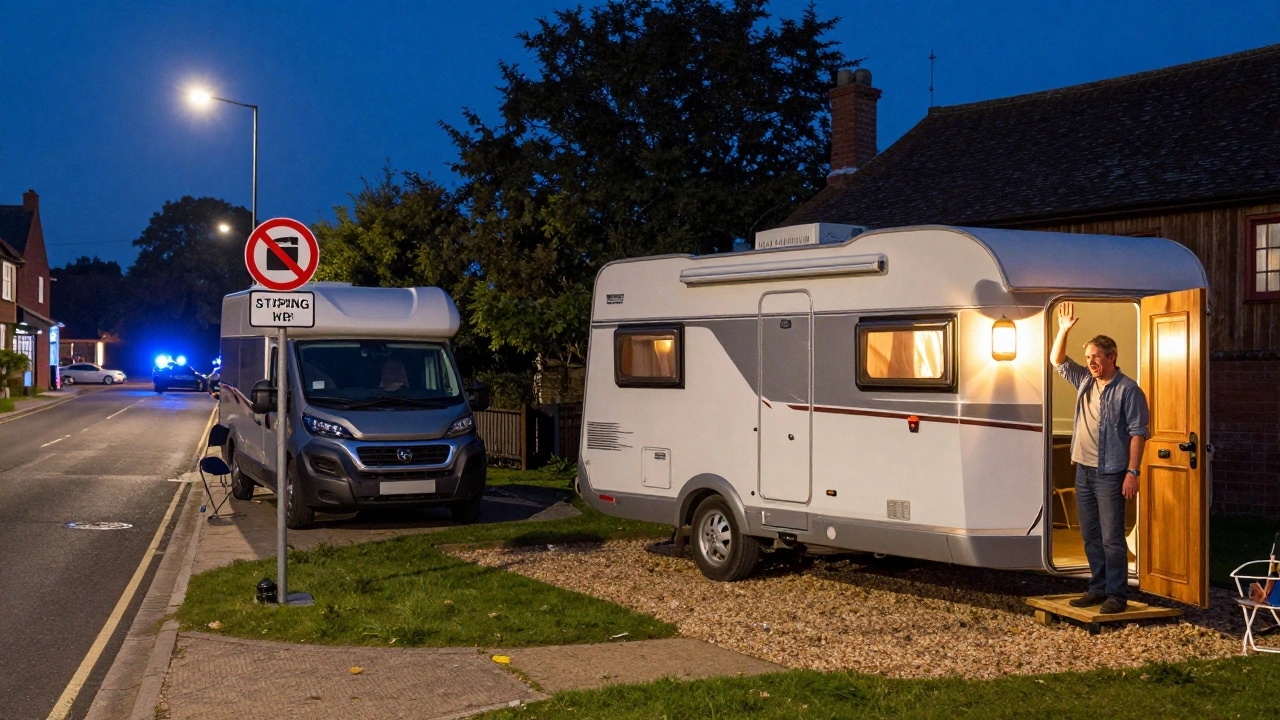
Even if you are alone, local councils have significant power. Most towns and cities have Traffic Regulation Orders (TROs) that prohibit overnight parking on streets. You’ll see signs saying "No Stopping Between 8 PM and 7 AM." Ignoring these leads to Penalty Charge Notices (PCNs), which can cost you £65 to £130 depending on the location. London fines are often higher.
So, is it impossible to camp wild? Not entirely. There are exceptions:
- Designated Wild Camping Sites: Some organizations manage campsites that allow wild-style camping. For example, Green Road Camping allows you to pitch up on quiet country roads for a small fee (£10 per night). It’s not free, but it’s legal and low-impact.
- Private Permission: If you find a farmer or landowner willing to let you park on their field for the night, you’re safe. Apps like Corncamp connect travelers with farmers who offer cheap, legal overnight stays.
- Short Stops: Parking at a scenic viewpoint for a few hours during the day is usually fine. But once the sun goes down, you need to move unless you have explicit permission.
Scotland: The Right to Roam
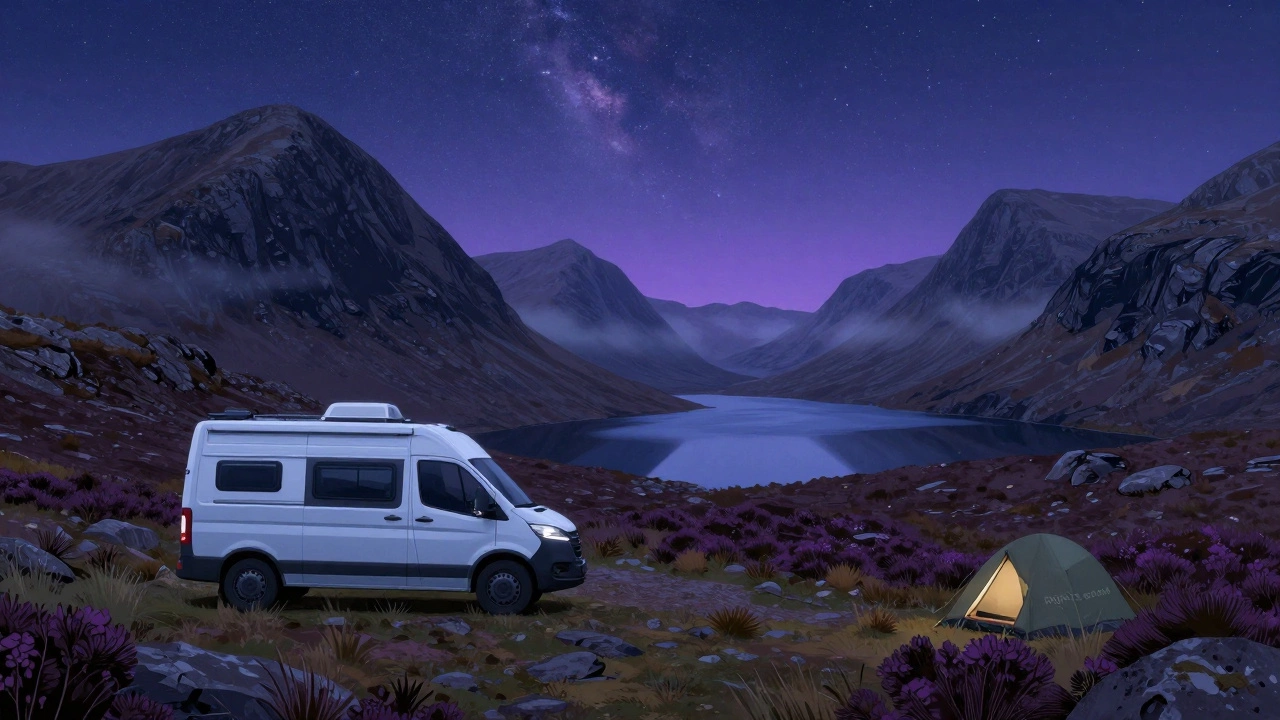
Scotland is different. Thanks to the Land Reform (Scotland) Act 2003, Scots enjoy a unique right called "Right to Roam." This allows anyone to access most land and water in Scotland, including wild camping, provided they follow the Scottish Outdoor Access Code.
Here’s what that means for you:
- You can camp wild: You don’t need permission from the landowner to pitch a tent or park a camper van in most rural areas.
- Keep it brief: Stay no more than 2-3 nights in one spot. Moving on shows respect and prevents complaints.
- Leave no trace: Take all your trash, avoid damaging vegetation, and keep noise down.
- Avoid farmland: Don’t camp on cultivated fields, especially near livestock. Farmers work hard, and disturbing their animals can lead to serious issues.
- Be discreet: Pitch your tent out of sight from roads and houses. Use natural cover.
However, even in Scotland, you cannot just park anywhere. Urban areas, private gardens, and some protected sites still require permission. Also, while wild camping is legal, parking a large motorhome on a narrow country road might block traffic, which is illegal regardless of camping rights.
Northern Ireland
Northern Ireland follows similar rules to England and Wales. There is no general right to roam, and wild camping without permission is technically trespassing. While enforcement may be less strict in remote areas, you risk being asked to leave by landowners or police. Stick to designated campsites or seek private permission.
Where Can You Legally Park Overnight?
If you want the freedom of boondocking without the legal risks, here are your best options:
- Wild Camping in Scotland: As mentioned, this is your best bet for free, legal wild camping. Popular spots include the Highlands, Islands, and Loch Lomond & Trossachs National Park (though some areas now require booking).
- Green Road Camping: Available in parts of England and Wales, this service lets you camp on quiet roads for £10 per night. It’s a great compromise between wild freedom and legality.
- Corncamp Farms: A network of farmers across the UK who offer affordable overnight parking. Prices range from £10 to £20 per night. You get a hot shower and sometimes breakfast.
- Forest Discovery Campsites: Managed by Forestry England, these sites offer basic facilities in beautiful forest settings. They’re cheaper than traditional campsites and allow a more rugged experience.
- Traveller Stops: Some local authorities provide designated areas for motorhomes to stop briefly. These are rare and often full quickly.
Pitfalls to Avoid
Even if you think you’re being careful, small mistakes can lead to big problems. Here’s what to watch out for:
- Dumping Waste: Never dump gray water or black water on the ground. This is illegal everywhere in the UK and harms the environment. Use proper disposal points at service stations or campsites.
- Blocking Gates: Never park in front of farm gates or driveway entrances. This is considered obstruction and can lead to immediate removal.
- Making Noise: Loud music or generators late at night will get you reported. Respect the peace and quiet of rural communities.
- Starting Fires: Open fires are often prohibited due to fire risk. Use portable stoves instead.
- Ignoring Signs: If a sign says "No Camping" or "Private Property," respect it. Arguing with landowners rarely ends well.
How to Find Legal Spots
Finding places to park legally requires planning. Here are some tools and tips:
- Use Apps: Apps like AllCampers, Corncamp, and Green Road Camping help you find legal spots. They also allow you to book in advance, giving you peace of mind.
- Ask Locals: Sometimes the best advice comes from locals. Ask at pubs, shops, or fuel stations if there are nearby spots where parking is tolerated.
- Check Local Council Websites: Many councils list designated traveler stops or wild camping areas on their websites.
- Join Forums: Online communities like The Caravan Club forums or Facebook groups for UK motorhome owners share real-time updates on legal parking spots.
Conclusion: Is It Worth It?
While you can’t boondock in the UK like you can in the US, you can still enjoy the freedom of wild camping if you follow the rules. Scotland offers the most flexibility, while England and Wales require more planning and often a small fee. By respecting landowners, leaving no trace, and using legal resources, you can have a memorable and stress-free camping experience.
Can I sleep in my car in the UK?
It depends on where you park. Sleeping in your car on public streets is often prohibited by local council rules (Traffic Regulation Orders). In rural areas, if you have permission from the landowner, it’s legal. In Scotland, you can wild camp in most rural areas, but you must follow the Right to Roam code.
Is wild camping free in Scotland?
Yes, wild camping is generally free in Scotland under the Right to Roam legislation. However, some popular areas now require booking fees to manage overcrowding. Always check local guidelines before heading out.
What happens if I get caught wild camping illegally?
In England and Wales, you could be fined or ordered to leave by police. Landowners may ask you to move, and ignoring them can lead to trespass charges. In urban areas, you might receive a parking ticket for overnight parking.
Are there any free campsites in the UK?
True free campsites are rare. Most "free" spots require permission from landowners. Services like Green Road Camping charge a small fee (£10) for legal overnight parking on quiet roads. Corncamp offers affordable stays on farms starting around £10-£20.
Can I use a generator while wild camping?
Using a generator is legal if you have permission to camp. However, noise pollution is a major issue. Generators should only be used during daylight hours and kept away from residential areas. Many wild camping enthusiasts prefer solar panels or battery systems to remain silent and discreet.