How to Hook Up Power at a Campsite: A Complete Guide to Electric Camping
 May, 7 2026
Camping Power Load Calculator
Current Load Status
*Values are estimates based on standard 230V/120V averages. Always prioritize safety and unplug high-draw items if lights flicker.
There is nothing worse than arriving at your dream campsite, setting up the tent or van, and realizing you have no way to charge your phone, run the fridge, or brew coffee. You are not alone in this frustration. Many campers struggle with the basics of electric hookup because the terminology can be confusing, and the gear varies wildly depending on where you are.
Whether you are driving a motorhome, towing a caravan, or just pitching a tent near a power point, understanding how to connect safely is crucial. It’s not just about plugging in; it’s about matching amperage, choosing the right cable length, and avoiding costly mistakes that could trip the site’s main breaker-or worse, start a fire.
Understanding Amperage: The Core of Camping Power
The first thing you need to know is that camping power is not the same as household power. In most parts of the world, including Australia, Europe, and much of Asia, campsite electricity operates on different current limits than your home outlets.
Your house usually provides 10-amp or 15-amp circuits for general use. Campsites, however, typically offer two standards:
- 6-Amp Supply: This is the older, weaker standard. It is often found at basic sites or older parks. It can barely handle a small LED light and charging a phone simultaneously. If you try to plug in a kettle or a fan, you will likely blow the fuse.
- 16-Amp Supply: This is the modern standard for caravans and motorhomes. It delivers significantly more power, allowing you to run multiple appliances like a compressor fridge, lights, and charging devices without issue.
If you are unsure which one you have, look at the socket. A 6-amp socket is smaller and often has a distinct shape (like a CEEform blue plug in Europe). A 16-amp socket is larger and robust. Always check your vehicle’s inlet or your extension lead’s rating before connecting. Mismatching these can damage your equipment instantly.
Choosing the Right Extension Cable
You might think any outdoor extension cord will do, but that is a dangerous assumption. Standard household extension leads are not designed for the ground-level moisture, dirt, and physical stress of a campsite. They lack proper grounding and surge protection.
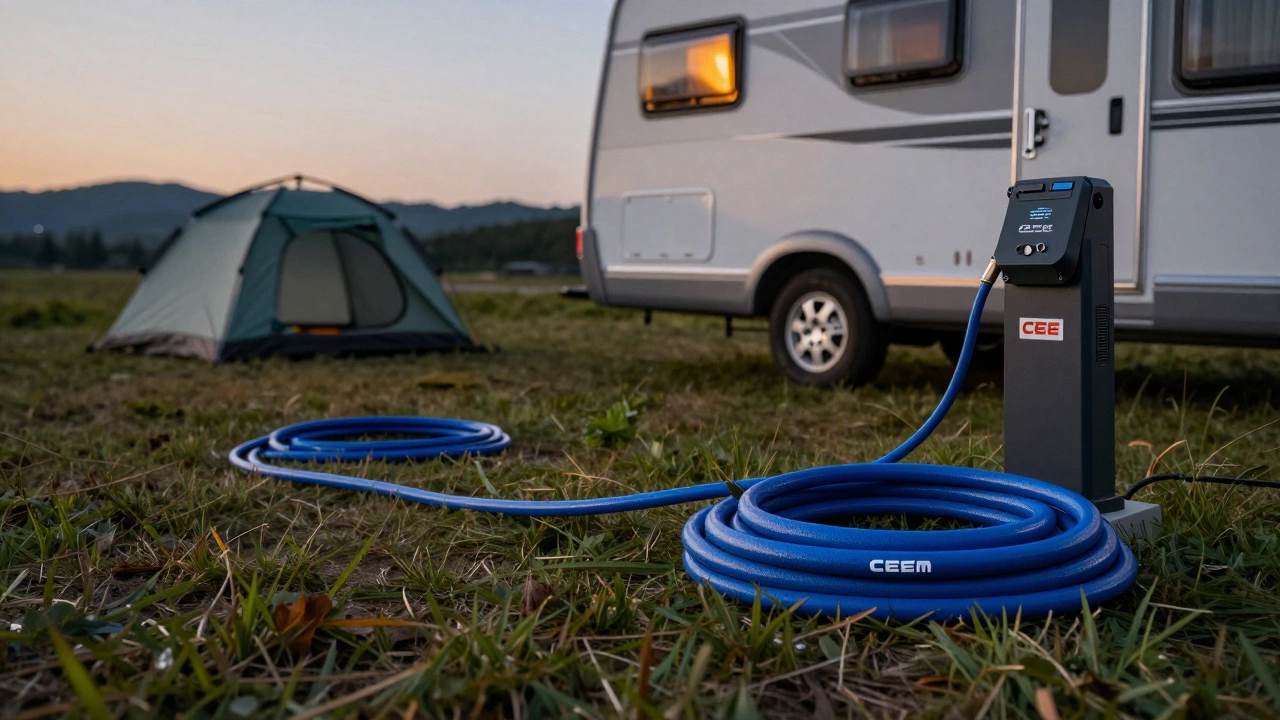
For safe camping, you need a dedicated CEE extension cable. These cables are heavy-duty, waterproof, and color-coded by amperage. Blue plugs indicate 16 amps, while red plugs usually indicate 32 amps (used for large industrial setups or high-end luxury touring).
When buying a cable, consider the distance from the power point to your pitch. Power points are rarely right next to your spot. A common mistake is buying a cheap, thin cable that stretches far but drops voltage, causing your electronics to malfunction or overheat. Look for cables with thick copper cores-usually 3mm² or higher for long runs. If you need more than 20 meters, invest in a quality brand rather than a budget option.
Safety First: Grounding and Weather Protection
Electricity and water do not mix. This is obvious, yet many campers ignore simple precautions. Even if your cable is rated for outdoor use, the connection points are vulnerable.
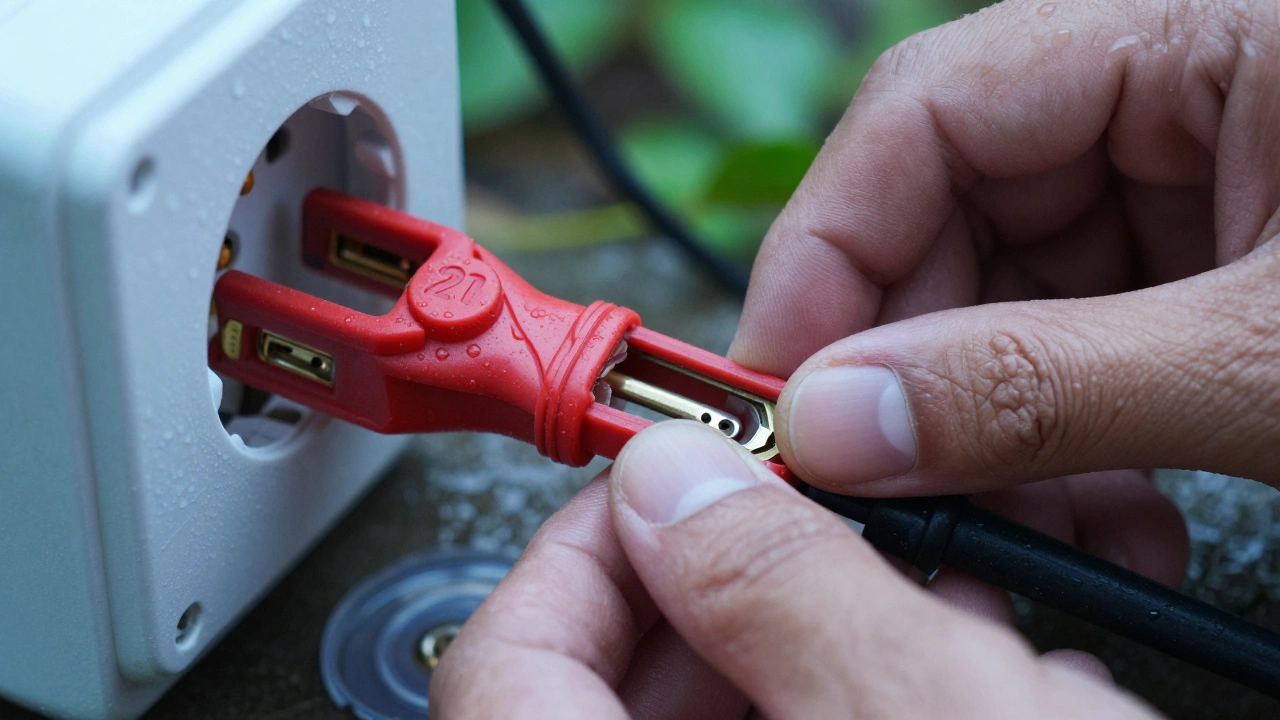
Always ensure the power point is covered when not in use. Rain can seep into the socket, leading to corrosion or short circuits. Use a protective cover or a simple plastic bag secured with tape if the site doesn’t provide one. Before plugging in, inspect the cable for cracks or exposed wires. A damaged cable is a shock hazard and a fire risk.
Grounding is another critical factor. Most modern camping sockets include an earth pin. Make sure your device or extension lead utilizes this pin properly. If you are using an adapter to convert a plug type (for example, traveling abroad), ensure the adapter maintains the earth connection. Unearthed appliances can give you a nasty shock if there is an internal fault.
Managing Your Load: What Can You Actually Run?
Just because you have a 16-amp hookup doesn’t mean you can run everything at once. You still need to manage your load. Here is a rough guide to what consumes power:
| Appliance | Average Amps (at 230V) | Notes |
|---|---|---|
| LED Lights | 0.1 - 0.5 A | Very low consumption; safe to leave on. |
| Phone/Laptop Charging | 0.2 - 0.5 A | Negligible impact on total load. |
| Compressor Fridge | 1 - 2 A | Runs intermittently; efficient choice. |
| Electric Kettle | 7 - 10 A | High spike; avoid running other high-draw items. |
| Hair Dryer | 8 - 10 A | Use sparingly; may trip sensitive breakers. |
| Induction Cooktop | 10 - 15 A | Risk of tripping 16A supply if used with other loads. |
The rule of thumb is to avoid running high-wattage heating elements (kettles, heaters, cooktops) simultaneously with other major appliances. If you hear a buzzing sound from the socket or notice flickering lights, unplug immediately. You are drawing too much current.
Troubleshooting Common Connection Issues
Even with the right gear, things can go wrong. Here are the most common issues and how to fix them:
- No Power: Check if the site’s master switch is on. Some campsites turn off power at night to save energy or reduce noise from generators. Ask the site office about their hours.
- Tripped Breaker: If the power cuts out suddenly, it might be a local breaker near your pitch or the main site breaker. Reset it carefully. If it trips again, you have a fault in your cable or appliance. Disconnect everything and test each item individually.
- Loose Connection: Older sockets can become loose. Ensure the plug is fully inserted. A loose connection creates heat, which melts the plastic and causes fires. If the plug feels hot, stop using it immediately.
Alternatives When Hookup Isn't Available
Not all campsites offer electric hookup. Some wild camping spots or eco-friendly parks deliberately exclude it to preserve the environment. In these cases, you need alternative power solutions.
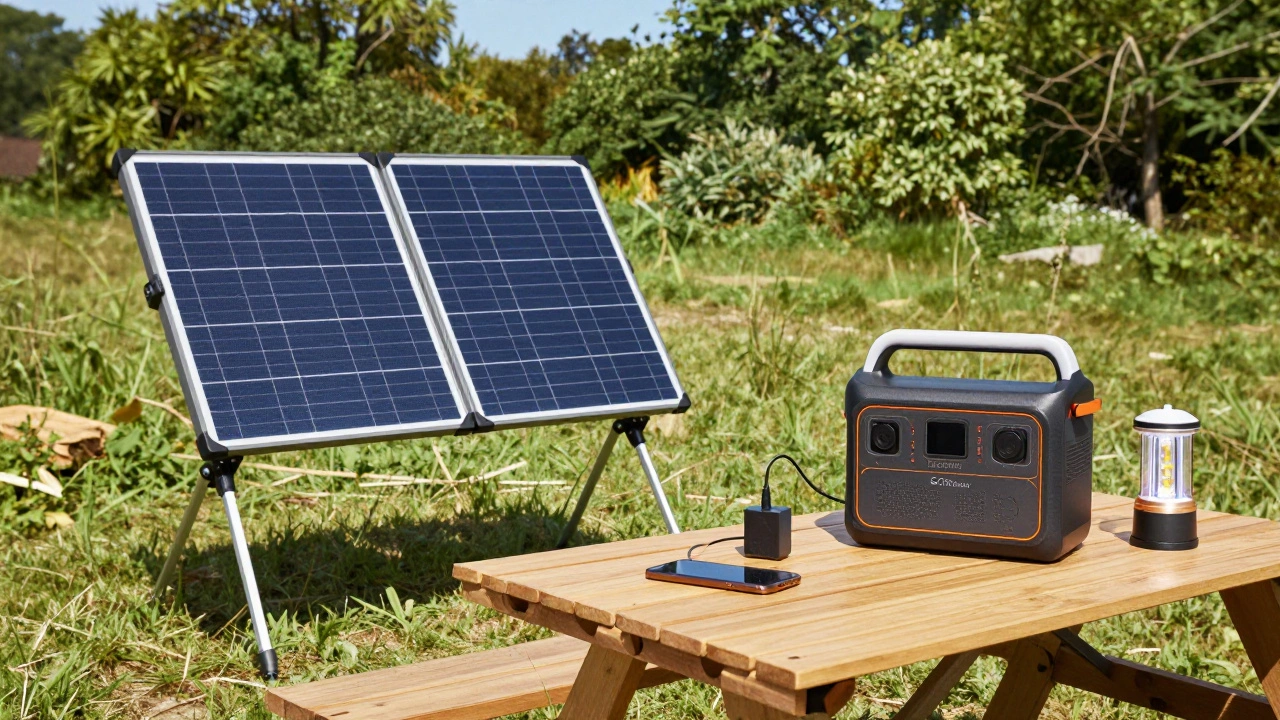
Portable Power Stations have become a game-changer for modern campers. Devices like the Jackery Explorer or EcoFlow Delta provide clean, silent power for days. They are perfect for charging phones, running LED lights, and powering small fans. Unlike petrol generators, they produce zero emissions and noise, making them ideal for quiet zones.
Solar panels are another excellent option, especially in sunny regions like Perth. A foldable solar panel connected to a battery bank can keep your devices charged indefinitely. Just remember that cloud cover reduces efficiency, so size your battery appropriately for your needs.
Can I use a regular household extension lead at a campsite?
It is highly discouraged. Household leads are not designed for outdoor conditions, lack proper earth continuity for camping sockets, and often have insufficient gauge wire for long distances. Using them risks overheating, electrical shocks, and fire. Always use a dedicated CEE camping extension cable.
What happens if I plug a 16-amp device into a 6-amp socket?
You cannot physically force a 16-amp plug into a 6-amp socket due to different shapes. However, if you use an improper adapter, you risk blowing the site's fuse or damaging your appliance. The 6-amp circuit will trip instantly under heavy load, cutting power to your entire area.
How long should my camping extension cable be?
Measure the distance from the power point to your vehicle or tent before booking. Add 2-3 meters for slack. Avoid daisy-chaining multiple extension leads, as this increases resistance and heat. One high-quality cable is safer than several cheap ones connected together.
Is it safe to leave camping electronics plugged in overnight?
Yes, provided you use quality equipment and the site allows it. Modern devices have built-in safety features. However, always ensure cables are dry and not running through doorways where they could be crushed. If the site cuts power at night, unplugging prevents surge damage when power returns.
Do I need a generator if I have electric hookup?
No. If you have a reliable electric hookup, a generator is unnecessary and often prohibited due to noise pollution. Generators are best reserved for remote locations without grid access. For most campers, a portable power station is a quieter, cleaner backup.