How Much Is Camping Per Night in the UK? 2026 Price Guide
 May, 10 2026
UK Camping Cost Calculator 2026
You pack your tent, load the car, and hit the road for a weekend escape. But before you even pitch your first peg, one question stops you cold: how much is this actually going to cost? The answer isn't simple. In the UK, camping prices swing wildly depending on where you go, when you go, and what kind of "camping" you're doing.
In 2026, the average cost for a standard family pitch at a commercial campsite in England ranges from £15 to £30 per night. However, if you look closer, you'll find options as low as £8 for basic wilder spots or soaring above £100 for premium glamping pods. This guide breaks down exactly what you'll pay, so you can stop guessing and start planning.
The Real Cost Breakdown: What You Pay For
When you see a price tag on a booking site, it rarely tells the whole story. To understand the true cost of camping per night in the UK, you need to separate the base pitch fee from the hidden extras that add up quickly.
The base rate usually covers:
- Pitch space: A designated spot for your tent or caravan.
- Facilities access: Shared toilets, showers, and washing-up areas.
- Site amenities: Electricity hook-ups (sometimes extra), Wi-Fi, and reception services.
But here is where the bill jumps. Many sites charge separately for electricity, which can run £3-£5 per night. If you bring a dog, expect a £2-£5 surcharge per pet. Some popular coastal sites also charge for beach access fees or parking if you leave your car further away. Always check the "small print" section on the booking page, not just the headline price.
Price Tiers: From Budget to Luxury
Not all campsites are created equal. Your budget dictates your experience. Here is how the market splits into three distinct tiers in 2026.
| Type | Avg. Price Per Night | Best For | Key Features |
|---|---|---|---|
| Budget / Youth Hostels | £8 - £15 | Solo travelers, students | Basic facilities, shared tents, remote locations |
| Standard Commercial Sites | £15 - £30 | Families, couples | Pitch & putt, play areas, hot showers, shops |
| Luxury Glamping | £80 - £200+ | Couples, special occasions | Private en-suite, heating, furnished interiors |
Budget options often include Youth Hostels Association (YHA) sites or smaller independent farms. These places offer minimal fuss but great value. Standard commercial sites, like those run by big groups such as Wilderness Holidays or The Camping and Caravanning Club, offer reliability and consistent quality. Luxury glamping has exploded in popularity, offering hotel-like comfort with outdoor views, but at a premium price point.
Seasonality: The Biggest Price Driver
If there is one rule in UK camping, it is this: timing is everything. The same pitch can cost double during July compared to May. Understanding peak seasons helps you save hundreds of pounds.
Peak Season (July - August): This is when school holidays hit. Prices are at their highest. Popular coastal sites in Cornwall, Devon, and Wales often require bookings months in advance. Expect to pay the top end of the price range (£25-£40+ per night for standard pitches).
Shoulder Season (May - June, September): The weather is often still good, but crowds thin out. This is the sweet spot for value. You might find last-minute deals or lower base rates (£15-£25 per night). Many sites offer discounts for mid-week stays during these months.
Off-Peak (October - April): Most commercial sites close or operate on a reduced basis. However, some open-air festivals and winter camping spots remain open. Prices drop significantly (£10-£15 per night), but you must be prepared for cold, wet conditions. Heating costs for your van or tent will rise, offsetting some savings.
Wild Camping: Free or Fined?
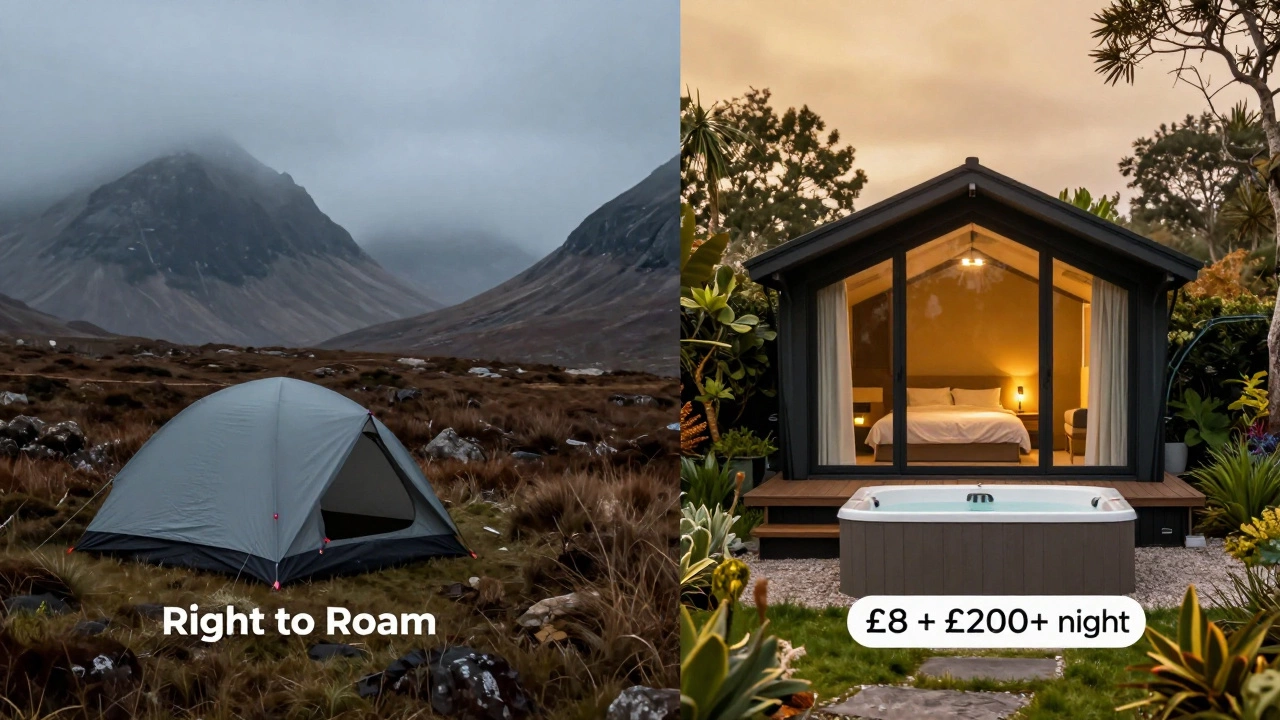
This is the trickiest part of UK camping costs. Technically, wild camping-pitching outside of designated campsites-is free. But "free" comes with strict legal conditions that vary by country within the UK.
In England and Wales, wild camping is generally illegal without landowner permission. While enforcement is lax in remote areas, you risk being asked to leave or fined if you cause disturbance. The cost here is the risk of conflict or damage deposits.
In Scotland, the Right to Roam legislation allows responsible wild camping almost anywhere. It is truly free, provided you follow the Scottish Outdoor Access Code: stay unnoticed, leave no trace, and burn no fires. This makes Scotland the best destination for zero-cost camping.
In Northern Ireland, rules are similar to England. Permission is key. Always ask local farmers or estate managers. A small donation (£5-£10) is often appreciated and keeps relations friendly.
Hidden Costs That Add Up
It is easy to forget the ancillary expenses until you are standing at the checkout. Here is what most campers overlook:
- Membership Fees: Joining clubs like the Camping and Caravanning Club or AA offers member-only discounts (often 10-20% off) and access to exclusive sites. The annual fee (£70-£100) pays for itself after two weekends.
- Food and Drink: Site shops mark up prices. A pint of beer might cost £6-£7 instead of £4. Cooking your own meals saves money, but you need a decent stove and fuel.
- Travel Costs: Fuel and parking. Coastal sites often have paid car parks nearby. Factor in £2-£5 for parking if you don't park directly on your pitch.
- Equipment Rental: If you don't own a tent, renting one from the site can cost £10-£20 per day. Buying second-hand gear is cheaper long-term.
How to Find the Best Deals
You don't have to pay full price. With a few strategies, you can cut your nightly costs significantly.
Book Directly: Third-party platforms like Pitchup or Cool Camping take a commission. Booking directly through the campsite's website often yields better rates or perks like free late checkout.
Mid-Week Stays: Friday and Saturday nights are expensive. Sunday to Thursday stays can be 30-50% cheaper. If you work flexibly, this is the biggest hack for saving money.
Last-Minute Apps: Apps like Glamping Hub or Park4Night sometimes list unsold inventory at discounted rates. Check them daily.
Join Clubs: As mentioned, membership pays dividends. Look for local camping associations too; they often have cheaper, community-run sites.
Regional Price Differences
Where you camp matters just as much as when. Southern England tends to be more expensive due to higher demand and land costs. Northern England, Scotland, and Wales offer better value for money.
Cornwall and South West: High demand, limited space. Expect £25-£40 per night in summer.
Northumberland and Lake District: Slightly lower prices, £15-£25 per night, with stunning scenery.
Scotland Highlands: Excellent value, especially with wild camping options. Commercial sites average £15-£20.
London Surrounds: Very expensive due to proximity to the capital. Budget £30+ per night for any site within 50 miles of London.
Is camping cheaper than a hotel in the UK?
Yes, significantly. A budget hotel room costs £60-£100 per night, while a standard campsite pitch averages £15-£30. Even adding food and travel costs, camping remains 40-60% cheaper overall.
Can I camp for free in the UK?
Only in Scotland under the Right to Roam laws, provided you are responsible and leave no trace. In England, Wales, and Northern Ireland, wild camping is technically illegal without landowner permission, though discreet camping in remote areas is sometimes tolerated.
What is the cheapest time to go camping in the UK?
The shoulder seasons of May, June, and September offer the best balance of weather and price. Mid-week stays (Sunday to Thursday) are consistently cheaper than weekends year-round.
Do I need insurance for camping in the UK?
While not legally required, comprehensive camping insurance is highly recommended. It covers theft, storm damage, and personal liability. Basic policies cost around £5-£10 per week.
Are electric hook-ups always included in the price?
No. Many sites charge an additional £3-£5 per night for electricity. Always check the specific pitch details when booking. Some budget sites do not offer hook-ups at all.