How Long Can You Stay on a Campsite in the UK?
 Dec, 25 2025
UK Campsite Stay Calculator
How Long Can You Stay?
Answer these questions to see your legal stay duration in the UK
Your Maximum Stay
Ever shown up at a campsite in the UK, pitched your tent, and wondered - how long can you actually stay? It’s not as simple as ‘until you’re ready to leave.’ The answer depends on where you are, what kind of site you’re on, and even what time of year it is. Some places let you stay for weeks. Others kick you out after three nights. And then there are places where staying longer than a few days is outright illegal.
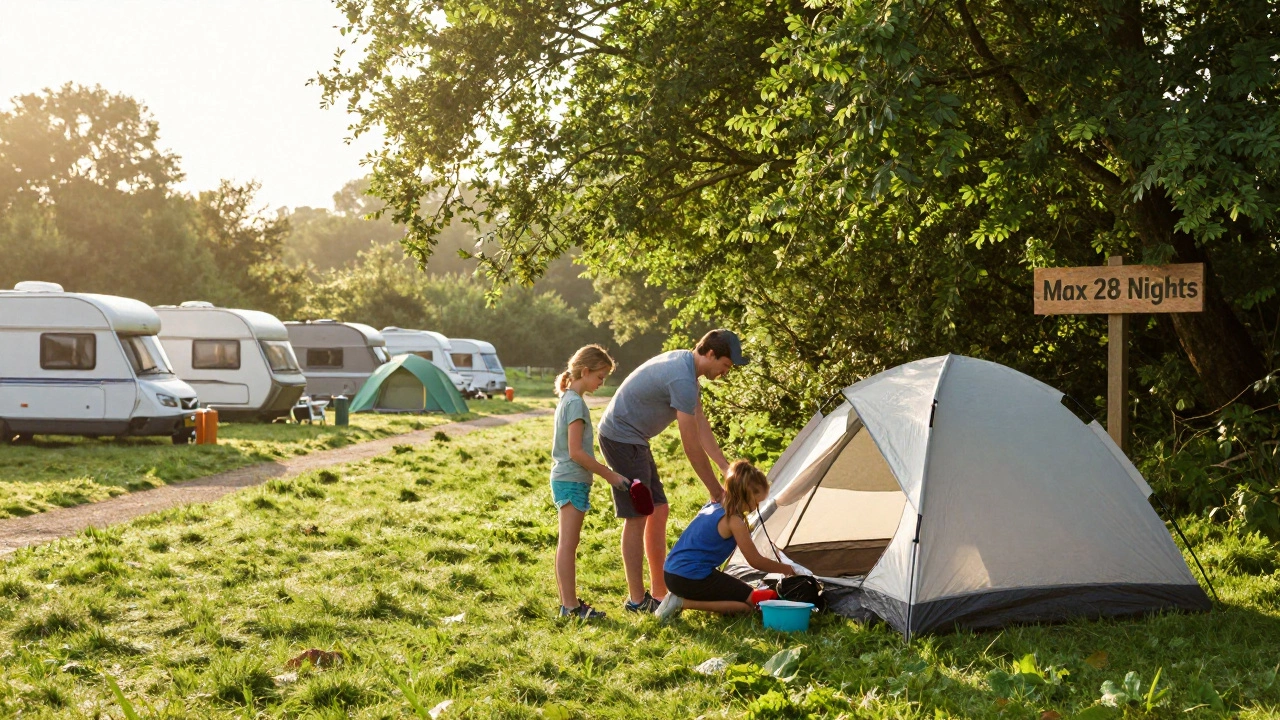
Most campsites in the UK limit stays to 14-28 days
The standard rule across most private and commercial campsites in the UK is a maximum stay of 14 to 28 consecutive nights. This isn’t a national law - it’s a policy set by the site owner, usually based on local planning rules and the need to rotate visitors. If you’re staying at a site like Pitchup.com or National Trust campsites, you’ll typically see this limit clearly listed in their terms.
Why 14-28 days? It’s about fairness. Campsites want to give everyone a chance to use the space. If one family stayed for three months, others couldn’t book. It’s also about infrastructure - sewage emptying, water supply, and waste collection are designed for short-term use, not permanent residency.
Some larger, more permanent sites - especially those catering to retirees or digital nomads - offer extended stays. Places like Caravan Club sites or Holiday Parks in Devon, Cornwall, or Wales sometimes allow 3-6 months, but only if you book as a long-term resident. These aren’t your typical weekend tent spots. They have full hookups, laundry, and even social clubs.
Wild camping rules are strict - and vary by region
If you’re thinking of pitching a tent in the middle of the Lake District, the Scottish Highlands, or the Brecon Beacons, you need to know this: wild camping is not legal everywhere in the UK.
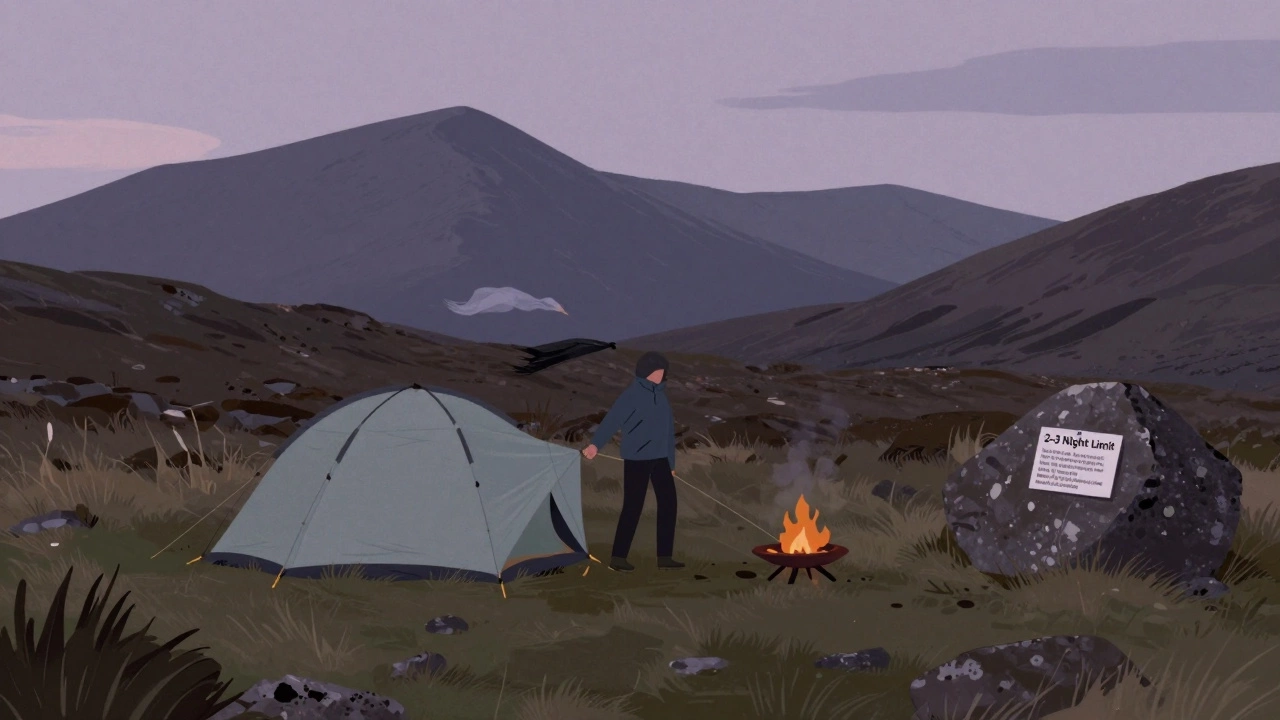
In Scotland, wild camping is generally allowed under the Land Reform (Scotland) Act 2003, as long as you follow the Scottish Outdoor Access Code. That means no fires near trees, no littering, and moving on after 2-3 nights. You can’t camp in the same spot for a week straight - even if no one sees you.
In England and Wales, wild camping is illegal without the landowner’s permission. That includes most national parks. If you get caught, you’ll be asked to leave. Repeat offenders can face fines. There are a few exceptions - like parts of Dartmoor - where limited wild camping is tolerated, but even there, you can’t stay more than a couple of nights in one place.
There’s a big difference between “no one will notice” and “it’s legal.” Just because you’ve seen 20 tents in a valley doesn’t mean it’s allowed. Rangers and landowners do patrol these areas, especially in peak season.
Caravan and motorhome sites have different rules
If you’re living in a motorhome or static caravan, you’re not bound by the same rules as tent campers. Many sites offer monthly or seasonal pitches - especially in coastal towns like Bournemouth, Hastings, or Tenby. These are designed for longer stays and often come with full utilities.
But here’s the catch: even on these sites, you can’t just move in permanently. Most sites require you to have a permanent home elsewhere. This is because UK planning law doesn’t classify these as residential properties. If you try to use your motorhome as your main address, you could run into trouble with the council.
Some people try to game the system by rotating between sites - staying 28 days at one, then moving to another. That’s a gray area. While not illegal per se, it can raise red flags with local authorities, especially if you’re using the same vehicle to avoid council tax or benefit restrictions.
Seasonal sites and winter stays
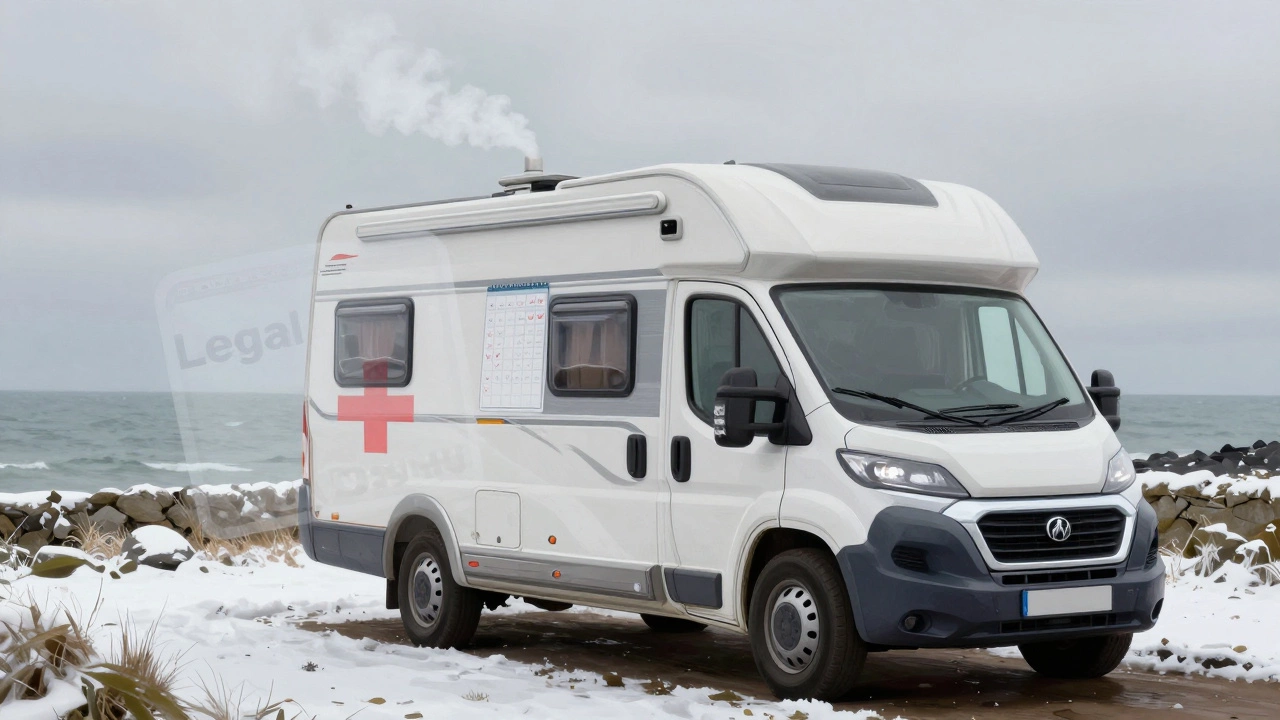
Many campsites in the UK operate seasonally - open from March to October. But some, especially in southern England and Wales, stay open year-round. These are often called “wintering sites” and are popular with retirees and full-time RVers.
Winter sites usually allow stays of 3-6 months, sometimes longer. But they’re not cheap. Expect to pay £1,000-£2,500 per month, depending on location and facilities. You’ll also need to prove you can handle the weather - no one wants a tent blowing away in a gale.
Some sites require you to leave for a few days during the off-season to allow for maintenance. Others let you stay through the winter as long as you’re not using the site as your legal address. It’s a fine line, and site managers know it.
What happens if you overstay?
Most campsite owners will give you a warning if you’re about to break the stay limit. But if you ignore it? They can charge you extra fees, refuse your next booking, or even call the police for trespassing.
It’s not just about fines. Your reputation matters. Many sites use shared booking systems. If you get flagged as a “long-stay violator,” you might find yourself blocked from dozens of sites across the country.
There’s also the social side. Other campers don’t like it when someone takes up a spot for months. It’s not just about space - it’s about community. Campsites are meant to be temporary escapes, not permanent homes.
How to plan a long stay legally
If you want to stay longer than a few weeks, here’s how to do it right:
- Look for sites that advertise “long stay” or “seasonal pitches.” These are usually marked clearly on booking platforms.
- Call ahead. Ask directly: “What’s your maximum stay limit?” Don’t assume.
- Ask about renewal rules. Some sites let you rebook after a 48-hour gap.
- Keep records. If you’re moving between sites, save your receipts and booking confirmations.
- Don’t use a campsite as your legal address. That’s where you cross into trouble with councils and benefit agencies.
There are companies like Longstay Campsites UK and RV Life UK that specialize in connecting long-term travelers with approved sites. They vet the locations and make sure the rules are clear.
What about national parks and protected areas?
Even if a site is inside a national park - like the Peak District or Snowdonia - the same stay limits apply. In fact, these areas often have stricter rules because they’re protected by law. The National Park Authorities work closely with local councils to enforce limits on occupancy.
Some parks, like the New Forest, have designated areas for extended stays, but only for pre-booked, low-impact camping. You can’t just show up with a caravan and stay for two months.
Always check the park’s official website before planning a long stay. They’ll list exact rules, including quiet hours, vehicle limits, and fire bans.
Common myths about campsite stays
- Myth: “I can stay as long as I pay.” Truth: Paying doesn’t override planning laws. Sites can’t legally let you stay beyond their permitted limits.
- Myth: “If I move my tent 50 yards, it’s a new stay.” Truth: Site managers track vehicle registration and pitch numbers. Moving within the same site doesn’t reset the clock.
- Myth: “I’m retired, so I’m allowed to live here.” Truth: Retirement doesn’t override planning rules. You still need a legal address for council tax and benefits.
- Myth: “It’s fine if I’m not causing trouble.” Truth: The rules aren’t about behavior - they’re about land use. Even quiet, clean campers can be asked to leave if they overstay.
What to do if you need to stay longer
If you’re traveling long-term and need more than 28 days in one place, consider:
- Booking a static caravan on a holiday park - these are designed for months-long stays.
- Using a storage unit for gear and staying in short-term rentals (Airbnb, cottage rentals) for longer periods.
- Looking into landowner agreements - some farmers in rural areas rent out fields for camping at low rates, with permission.
- Joining a camping club like the Caravan Club or The Camping and Caravanning Club. Members often get access to exclusive long-stay sites.
There’s no magic loophole. The system is built to balance access with sustainability. If you want to stay long, you have to play by the rules - or find a different way to live on the road.
Can I stay on a campsite for 3 months in the UK?
Only on sites that specifically allow long-term stays - usually called seasonal or wintering pitches. Most standard campsites cap stays at 14-28 days. Even on long-stay sites, you typically can’t use the pitch as your legal address. You’ll need to prove you have another home elsewhere.
Is it legal to live in a tent on a campsite in the UK?
No. Even if you’re paying, living in a tent on a campsite full-time violates UK planning laws. Campsites are licensed for temporary recreational use, not permanent residence. If you’re found living there, you could be asked to leave and banned from the site.
Can I camp for free in the UK for weeks?
Free camping is only legal in Scotland under the Outdoor Access Code, and even then, you must move every 2-3 nights. In England and Wales, wild camping without permission is trespassing. You can’t legally camp for weeks for free anywhere in the UK without landowner consent.
What’s the longest you can stay at a caravan park in the UK?
Many caravan parks allow stays of 3-6 months, especially in southern England and Wales. Some even let you stay year-round if you book as a seasonal resident. But you still need to have a permanent address outside the park, and you can’t use it as your official home for council tax or benefits.
Do I need to leave a campsite between bookings?
Many sites require a 48-hour gap between bookings to allow for cleaning and maintenance. This isn’t a law - it’s a site policy. Always check the booking terms. Some sites allow back-to-back stays if you switch pitches, but others don’t allow it at all.
Final advice: Know before you go
There’s no single answer to “how long can you stay on a campsite in the UK?” It’s always site-specific. Always read the fine print. Always call ahead. And if you’re planning a long trip, treat it like a job - plan your stops, know the rules, and respect the limits.
The UK’s campsites are a gift - they give you access to nature, freedom, and quiet. But that freedom comes with responsibility. Stay within the rules, and you’ll keep that access for years. Break them, and you’ll lose it - not just for one site, but for the whole system.