Hire vs Buy a Campervan: The Real Cost Breakdown for 2026
 Nov, 2 2026
Campervan Cost Calculator: Hire vs Buy
You’re standing in a dealership lot, keys jingling in your pocket, staring at a shiny new Sprinter conversion. Or maybe you’re refreshing a rental listing on your phone, wondering if spending $3,500 for two weeks is worth it compared to sinking $80,000 into an asset that loses value the second you drive it off the lot. This isn’t just a financial decision; it’s a lifestyle gamble. Do you want the freedom of owning your home on wheels, or do you prefer the flexibility of renting without the headache of maintenance?
The answer depends entirely on how often you actually plan to use the vehicle. If you’re dreaming of van life but only have three weeks off work a year, buying might be a money pit. But if you’re a digital nomad or planning extensive road trips across Australia or Europe, ownership could pay for itself faster than you think. Let’s break down the numbers, the hidden costs, and the reality of both options so you can stop guessing and start planning.
The Hard Numbers: Depreciation vs. Rental Fees
Let’s get the scary part out of the way first. Vehicles are terrible investments. Unlike stocks or real estate, a campervan usually drops in value every single day you own it. When you buy a new converted van, you’re paying a premium for the build-out. As soon as you take delivery, that custom kitchen and solar setup lose about 10-15% of their resale value instantly.
Consider a standard high-roof Volkswagen Transporter T6.1 with a professional conversion. In 2026, this might cost around $95,000 AUD. If you keep it for five years, you might sell it for $60,000. That’s a $35,000 loss, plus interest if you financed it. Now, compare that to hiring. A decent rental from a company like Go Campers or Apollo might cost $150-$200 per day during peak season. If you rent for 30 days a year, that’s $4,500-$6,000 annually. Over five years, you’ve spent $22,500-$30,000 on rentals. You haven’t lost equity, but you haven’t gained any either. However, you’ve also avoided insurance, registration, storage fees, and major repairs.
| Cost Factor | Buying ($95k Van) | Hiring (30 Days/Year) |
|---|---|---|
| Initial Outlay / Total Rent | $95,000 | $0 upfront |
| Depreciation (Est.) | $35,000 | $0 |
| Insurance & Rego | $12,000 | Included in rate |
| Maintenance & Repairs | $8,000 | $0 |
| Total 5-Year Cost | $150,000* | $30,000** |
*Assumes no financing interest. **Assumes average daily rate of $200.
The math looks simple until you factor in usage. If you travel more than 60-70 days a year, buying starts to look cheaper per day. Below that threshold, hiring is almost always financially safer. But money isn’t the only metric here.
The Hidden Costs of Ownership
When people calculate the cost of buying a van, they often forget the "sunk costs" that never show up on a price tag. Storage is a big one. Where does your van live when you aren’t using it? In Perth, where I’m writing this, secure parking for a large vehicle can cost $150-$250 a month. Multiply that by twelve months, and you’re burning through cash just keeping the van dry.
Then there’s maintenance. A campervan isn’t just a car; it’s a house with plumbing, electrics, and gas systems. Leaks happen. Solar controllers fail. Water pumps seize up. If you’re handy, you can fix these things. If you’re not, you’re calling a mechanic who charges $120 an hour. One bad alternator replacement or a cracked windscreen can wipe out the savings you made by not renting for a month.
Insurance is another hurdle. Comprehensive cover for a modified vehicle is expensive because insurers view them as higher risk. They worry about theft of the contents and damage to the custom fit-out. Expect to pay significantly more than you would for a standard passenger car. And don’t forget registration. Depending on your state, rego for a heavy vehicle classification can add hundreds to your annual bill.

The Freedom Factor: Why People Still Buy
So why do thousands of Australians buy vans every year if hiring seems cheaper? It’s not just about the money. It’s about control. When you hire, you’re driving someone else’s property. You treat it gently. You don’t hang your favorite art on the walls because you’ll get charged for nail holes. You don’t install extra shelving because you’d have to remove it before returning the key.
Owning means personalization. You can configure the layout exactly how you need it. Maybe you need a massive desk for remote work. Maybe you need space for surfboards. Maybe you want a specific type of mattress. With a hired van, you get what they give you. Often, rental fleets are older models with generic layouts designed for durability, not comfort. You might find yourself fighting with a cramped kitchen or a noisy generator that wasn’t serviced properly.
There’s also the psychological benefit of having your "home base." If you’re working remotely, knowing your bed and workspace are always ready for you reduces stress. You don’t have to pack up your entire life every time you move locations. You just park, open the doors, and start working. That consistency is hard to quantify but incredibly valuable for long-term travelers.
When Hiring Makes Perfect Sense
Hiring is the superior choice for most casual travelers. If you’ve never slept in a van before, do not buy one. Rent for a weekend first. You might discover that you hate the condensation, the lack of privacy, or the hassle of emptying the cassette toilet. These are deal-breakers for many people, and finding out after spending $80,000 is painful.
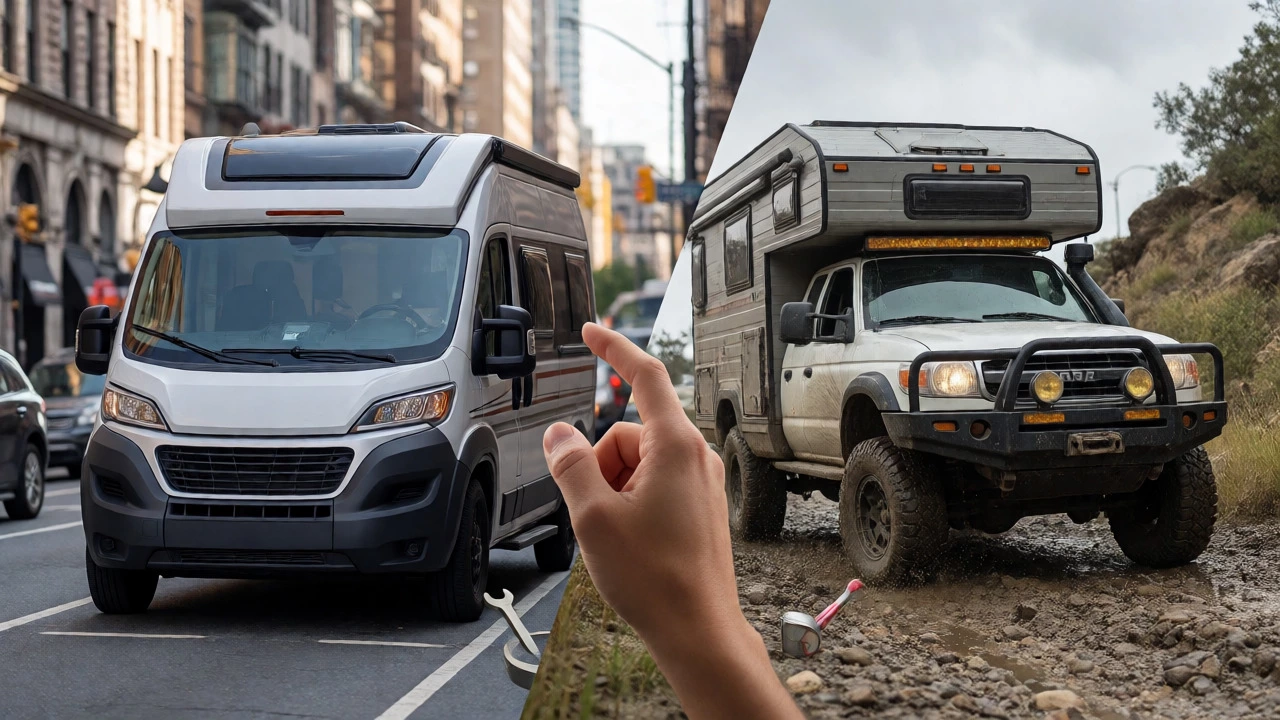
Hiring also allows you to match the vehicle to the trip. Planning a rugged outback adventure? Hire a 4WD camper with heavy-duty suspension. Heading to the coast for a relaxed holiday? Rent a compact camper van that fits in city parking spots. If you bought a massive 4WD, you’d struggle in tight urban environments. If you bought a small camper, you’d suffer on rough tracks. Flexibility is the killer feature of the rental market.
Furthermore, modern rental companies handle all the logistics. They provide linens, cooking equipment, and sometimes even pre-paid fuel cards. They offer roadside assistance networks that cover you anywhere in the country. If your van breaks down in the middle of nowhere, you call their hotline, and they arrange help. If your owned van breaks down, you’re arranging towing, finding accommodation, and dealing with mechanics yourself. For short trips, that peace of mind is worth the premium.
The Middle Ground: Lease-to-Buy and Peer-to-Peer
If neither extreme appeals to you, consider hybrid models. Some dealerships now offer lease-to-buy schemes. You pay a monthly fee for two or three years, and if you decide you love it, you apply those payments toward the purchase price. This lets you test-drive ownership without committing fully. If you hate it, you walk away with minimal loss compared to selling a used van.
Another option gaining traction is peer-to-peer sharing platforms like Camplify. You can buy a van and list it when you aren’t using it. If you travel six weeks a year, you can rent it out for the other forty-six weeks. This offsets your loan repayments and insurance. However, it turns your hobby into a business. You need to manage bookings, clean the van between guests, and handle wear-and-tear claims. It’s not passive income; it’s active management.
Decision Checklist: Which Path Is Right for You?
Use this quick guide to determine your best move:
- Choose Hiring If: You travel less than 30 days a year; you want variety in vehicles; you dislike maintenance tasks; you live in an apartment with no parking space; you are trying van life for the first time.
- Choose Buying If: You travel more than 60 days a year; you have specific interior requirements; you have secure storage at home; you enjoy DIY repairs; you want to customize your living space permanently.
- Consider Hybrid Models If: You are unsure about long-term commitment; you want to offset costs through rental income; you want to test ownership before full purchase.
Remember, the "best" option changes over time. Many people start by hiring for a few years, learning what they like and dislike, then buying a second-hand van once they know exactly what they need. There is no shame in starting small. In fact, it’s the smartest financial move most beginners can make.
Is it cheaper to buy or hire a campervan for a one-week trip?
Hiring is almost always cheaper for short trips. Even if you buy a cheap van, the transaction costs of purchasing and reselling a vehicle within a short period exceed the cost of renting it for a week. You also avoid insurance, registration, and storage fees for the rest of the year.
How much does it cost to maintain a campervan annually?
Expect to budget between $2,000 and $4,000 per year for routine maintenance, including oil changes, tire replacements, brake services, and minor appliance repairs. Major unexpected repairs can add another $1,000-$3,000 depending on the age and condition of the vehicle.
Do campervans hold their value well?
Generally, no. Most campervans depreciate by 10-15% in the first year and continue to lose value each subsequent year. High-quality builds from reputable manufacturers may retain value better than poorly converted vans, but you should still expect a significant drop in resale price compared to the purchase price.
Can I make money renting out my campervan?
Yes, platforms like Camplify allow owners to rent out their vans. Earnings vary based on location, season, and vehicle quality, but successful hosts can offset 30-50% of their ownership costs. However, this requires active management, cleaning, and handling guest interactions.
What are the biggest downsides of owning a campervan?
The main downsides are high upfront costs, ongoing maintenance responsibilities, storage issues, and depreciation. Additionally, owning a van ties you to a specific vehicle type, limiting your flexibility compared to renting different models for different trips.