Can You Use a Gazebo on the Beach? Rules, Risks & Setup Tips
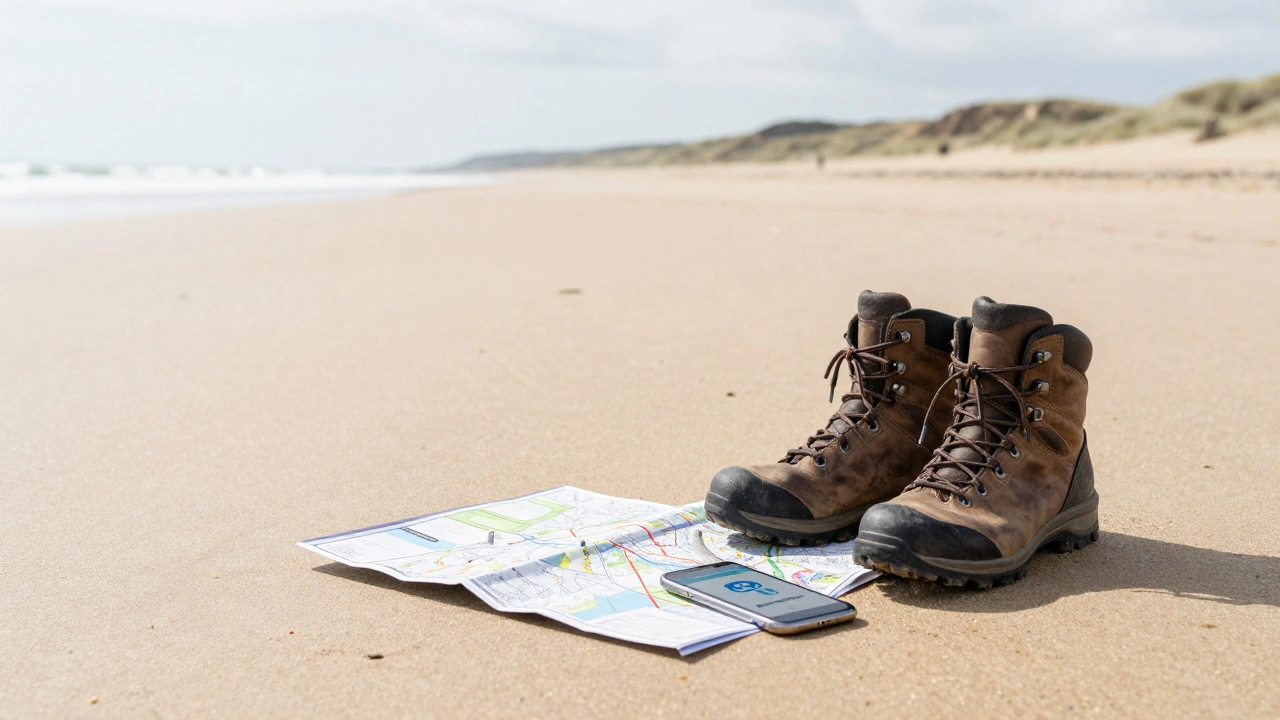 May, 4 2026
Beach Gazebo Readiness Calculator
Setup Configuration
Enter Details
Configure your setup to see a safety rating.
Quick Tips
- Wind Use mesh walls to let air pass through.
- Anchor Wet sand in bags weighs more than dry sand.
- Risk Dismantle immediately if storm clouds gather.
Imagine setting up your perfect beach campsite is a coastal location designated for temporary accommodation, often offering direct access to sand and water activities with a shaded gazebo is a freestanding outdoor structure providing shade and shelter, typically made of fabric stretched over a metal frame. It sounds like the ultimate summer escape. But before you pack that pop-up shelter, there’s a critical question: is it even allowed? The short answer is yes, but only if you follow specific local rules and prepare for harsh environmental conditions.
The Legal Reality: Permits and Local Regulations
Not every stretch of sand welcomes structures. In many countries, public beaches are managed by local councils or national park services. These authorities often have strict codes about what you can place on the ground. For example, in Australia, where I live, many state parks prohibit permanent or semi-permanent structures without a permit. Similarly, in the UK, most National Trust beaches ban gazebos entirely to preserve the natural landscape.
You need to check three things before heading out:
- Local Council Bylaws: Search for "beach camping regulations" plus your specific location. Look for keywords like "temporary structures," "shade sails," or "canopies."
- National Park Rules: If the beach is part of a protected area, rules are stricter. Many parks allow tents but ban rigid-framed gazebos due to fire risk and visual impact.
- Private vs. Public Land: Some beaches are privately owned or leased to hotels. Setting up a gazebo here without permission is trespassing.
If you’re unsure, call the local ranger station. A quick phone call saves you from fines or having your gear confiscated. Always assume you need permission unless explicitly told otherwise.
Wind: The Biggest Threat to Your Gazebo
Even if it’s legal, the beach environment is brutal on equipment. Coastal winds are unpredictable. They don’t just blow steadily; they gust, swirl, and change direction suddenly. A standard garden gazebo might hold up in your backyard, but it will likely flip inside out within minutes on the dunes.
To survive, you need a gazebo designed for high-wind conditions. Look for these features:
- Ribbed Frame Design: Flexible poles that bend rather than break under pressure.
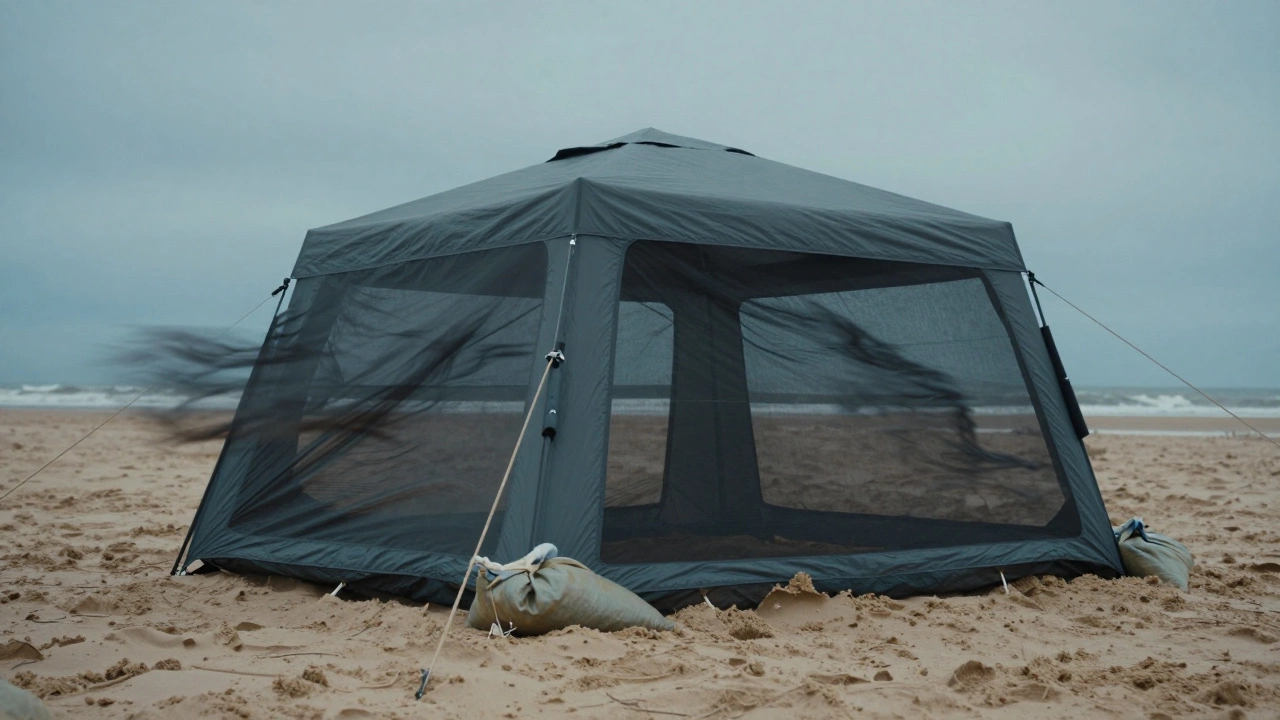
- Mesh Walls: Solid walls act like sails, catching wind. Mesh allows air to pass through, reducing lift.
- Low Profile: Shorter gazebos (under 2 meters tall) present less surface area to the wind.
Never use a cheap, instant-pop-up model on the beach. These rely on tension springs that fail easily in strong breezes. Invest in a heavy-duty, hub-and-pole system built for camping or events.
Anchoring Techniques for Sand
Sand offers little grip compared to soil or concrete. Standard stakes slide right out. You need specialized anchoring methods to keep your gazebo secure.
Here are the most effective ways to anchor a gazebo in sand:
- Sandbags: Fill durable bags with wet sand and strap them to each leg. Wet sand compacts better and adds significant weight. Aim for at least 10-15 kg per corner.
- Wide Snow Stakes: These flat, broad stakes bury deeper into loose sand than narrow tent pegs. Drive them in at a 45-degree angle away from the structure.
- Paracord Tensioning: Use strong nylon rope to tie the base of each pole to a heavy object buried deep in the sand, like a large rock or a dedicated anchor plate.
Always test your anchors before fully erecting the roof. Pull hard on each line. If it moves, reinforce it immediately. Wind speeds can double in seconds during a storm front.
Choosing the Right Spot on the Beach
Where you place your gazebo matters as much as how you secure it. Avoid low-lying areas near the tide line. Even if the tide looks far away, sudden surges can sweep everything away. Check local tide charts carefully.
Also, stay clear of dune vegetation. Roots stabilize the sand, and trampling them causes erosion. Most beaches require you to camp above the high-tide mark and away from sensitive habitats. Look for firm, packed sand rather than soft, dry drifts. Firm sand holds stakes better and makes walking easier.
Avoid setting up directly behind other people’s tents if possible. Wind funnels between structures can create turbulent eddies that damage nearby gear. Give yourself plenty of space-aim for at least 3-5 meters from neighboring setups.
Maintenance and Care After Beach Use
Saltwater and sand are enemies of fabric and metal. Salt corrodes zippers, rusts frames, and degrades waterproof coatings. Sand acts like sandpaper, wearing down seams and stitching.
After every beach trip, clean your gazebo thoroughly:
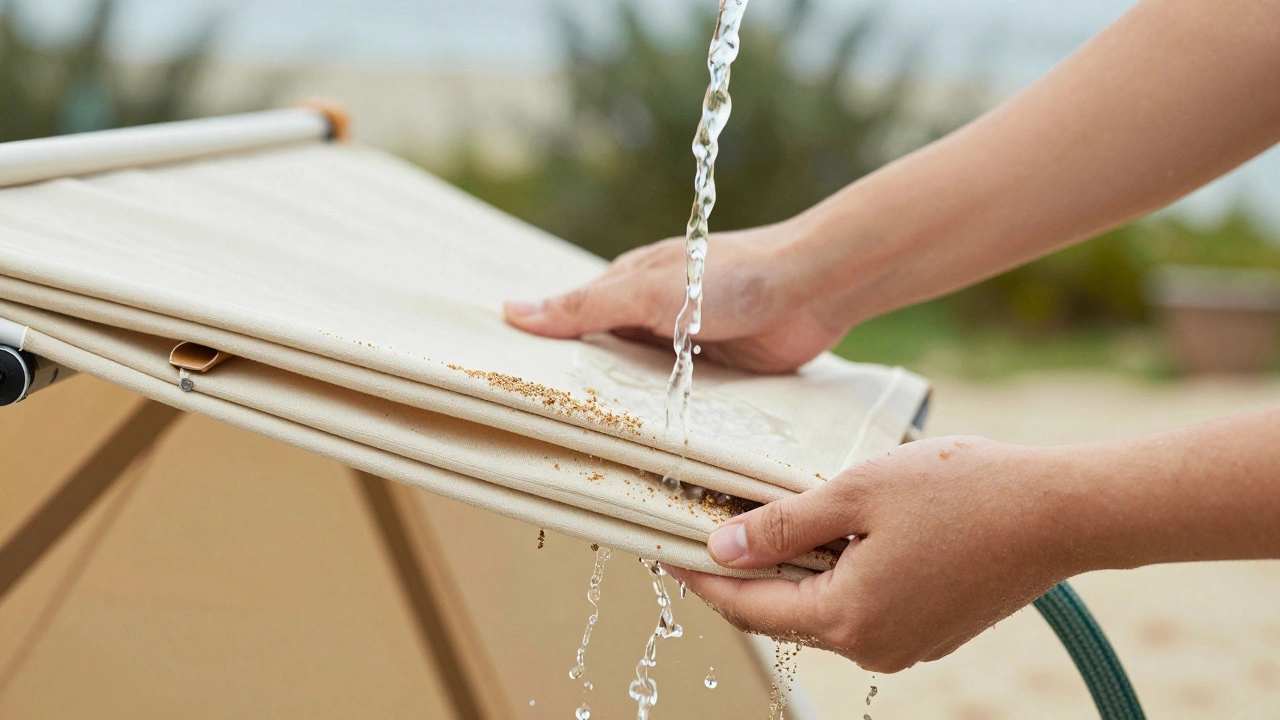
- Rinse with Fresh Water: Hose down the entire structure to remove salt residue. Do not let it dry while salty.
- Brush Off Sand: Shake out pockets and brush fabric gently. Leftover sand grinds against fibers when folded.
- Dry Completely: Never store a damp gazebo. Moisture leads to mold, mildew, and unpleasant odors. Air-dry it in a shaded, well-ventilated area.
- Inspect for Damage: Check for small tears, loose threads, or bent poles. Repair minor issues now to prevent major failures later.
Treat the fabric with a UV protector spray annually. Sun exposure breaks down polymers over time, making fabric brittle and prone to ripping.
| Method | Effectiveness in Sand | Setup Time | Best For |
|---|---|---|---|
| Sandbags | High | Medium | Calm to moderate winds |
| Wide Snow Stakes | Medium | Low | Firm, packed sand |
| Paracord Tensioning | Very High | High | Strong gusts and storms |
| Standard Tent Pegs | Low | Low | Not recommended for beach use |
Alternatives If Gazebos Are Banned
If your chosen beach prohibits gazebos, don’t despair. There are other ways to get shade and shelter.
Consider a sun umbrella is a portable shading device with a central pole and canopy, designed for individual or small group use. Most beaches allow umbrellas because they’re lightweight and easily movable. Pair it with a wind-resistant beach chair for comfort.
Another option is a tarp is a flexible sheet of waterproof material used for temporary cover, often supported by ropes and stakes. Tarps are less bulky than gazebos and often fly under regulatory radar. Use four sturdy poles and guylines to create a simple lean-to shelter. Just ensure it’s taut enough to shed rain and wind.
Some campsites offer rental cabins or caravans with built-in awnings. This eliminates the hassle of setup and teardown while guaranteeing compliance with local rules.
Is it illegal to put up a gazebo on any public beach?
It depends on local regulations. Many public beaches allow temporary structures like gazebos for day use, but overnight camping may require a permit. Always check with the local council or park authority first. Some protected areas ban all non-natural structures to preserve the environment.
What type of gazebo is best for windy beach conditions?
Choose a gazebo with a flexible, ribbed frame and mesh side panels. Avoid solid-wall models as they catch too much wind. Look for products rated for high wind speeds (at least 60 km/h). Heavy-duty camping gazebos perform better than decorative garden ones.
How do I secure a gazebo in loose sand?
Use wide snow stakes driven at a 45-degree angle, combined with sandbags strapped to each leg. For extra security, add paracord tension lines anchored to buried objects. Test all anchors firmly before completing the setup.
Can I leave my gazebo set up overnight on the beach?
Only if permitted by local laws. Many beaches require removal of all structures after dark or at sunset. Overnight stays usually need a camping permit. Leaving unattended gear risks theft, damage, or fines.
What should I do if a storm approaches while my gazebo is up?
Dismantle it immediately. Do not wait. Securely pack the frame and fabric, then move to safer shelter. Attempting to reinforce a gazebo during high winds is dangerous and often ineffective. Safety comes first.