Can You Sleep in an RV Bed While Driving? Safety & Legal Guide
 Mar, 26 2026
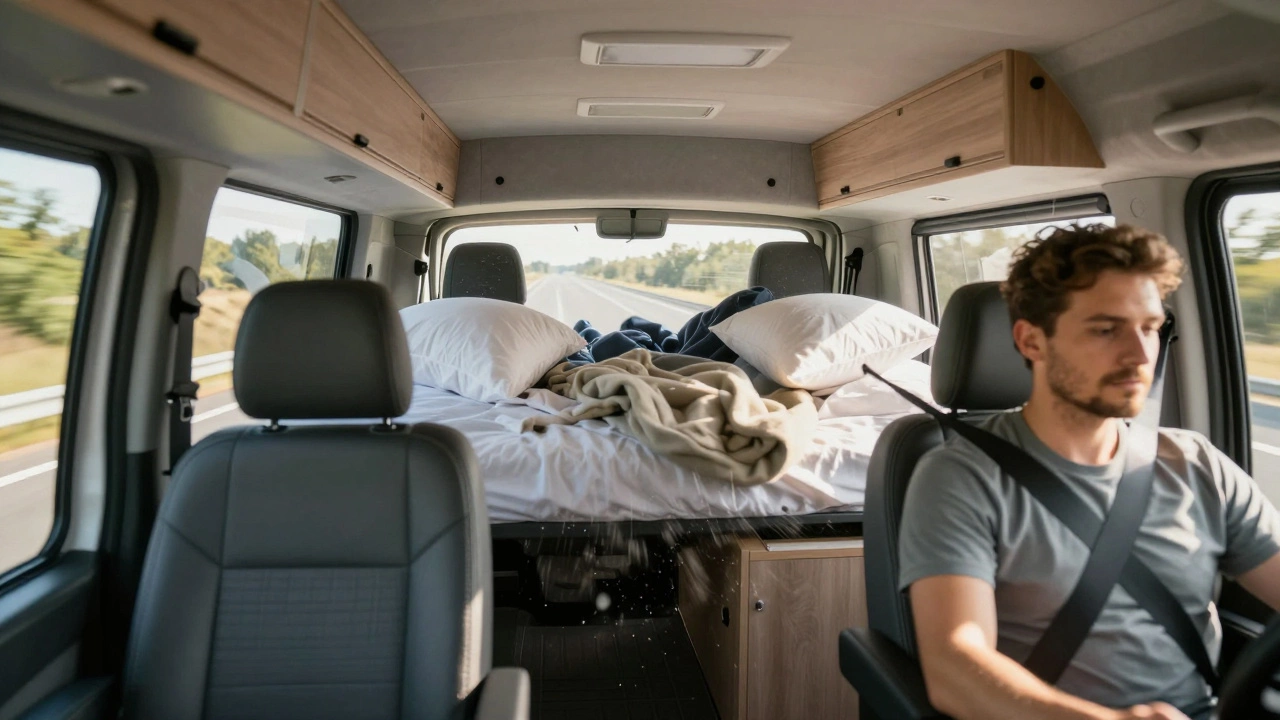
Motorhome is a vehicle designed for both transportation and accommodation, commonly known as an RV or campervan. Many people dream of hitting the open road, cruising along highways while their family relaxes in the back lounge. It sounds peaceful until you consider the physics of a moving vehicle. Here is the straight truth: you cannot safely sleep in an RV bed while the vehicle is in motion. It might seem harmless on a smooth highway at night, but the risks involve far more than just comfort.
The Hard Truth About Vehicle Safety
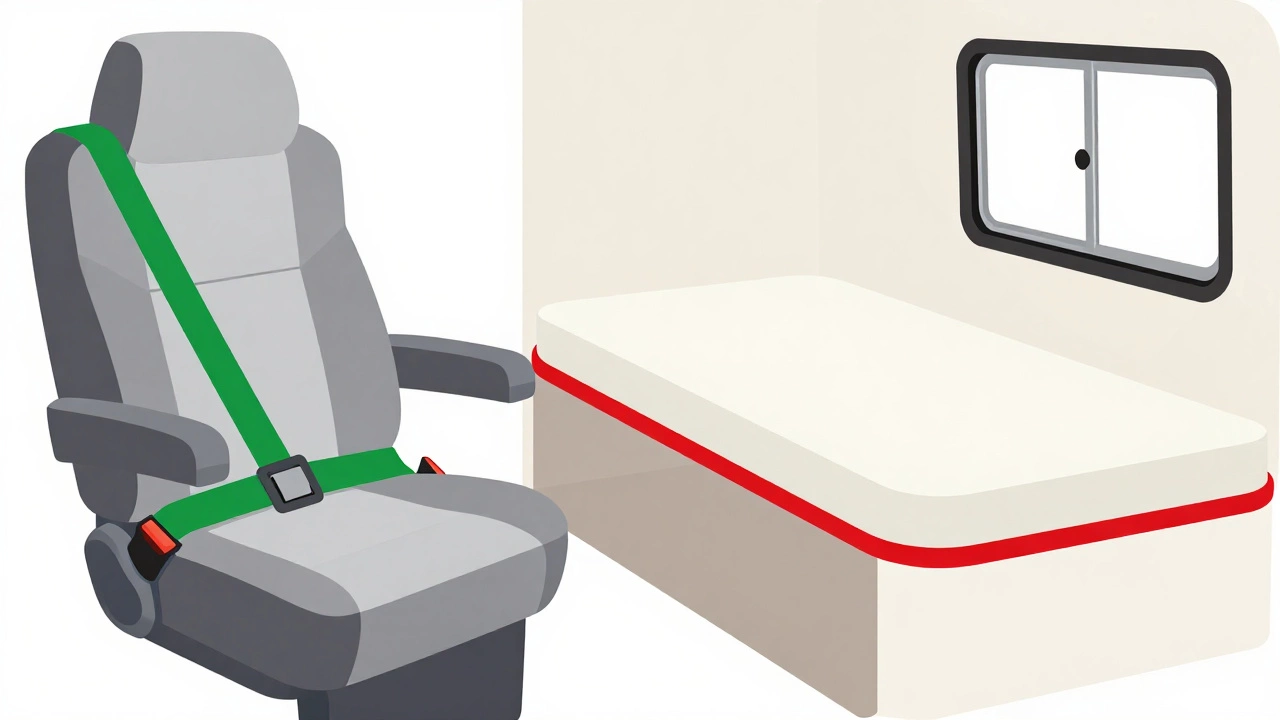
When you drive a car, the most critical safety equipment is the seatbelt. In a standard sedan, every passenger has a designated spot with a three-point restraint system. These systems anchor the occupant to the vehicle frame during sudden stops or collisions. Inside a motorhome, the living area beds, sofas, and tables are not anchored to the chassis like a vehicle seat. They are furniture bolted down loosely enough to fold away, not structural safety points.
If you attempt to sleep in the back while someone else is behind the wheel, you become an unsecured object. Think about what happens during a hard brake. Even a panic stop at a red light can throw an unbelted person forward with significant force. In the event of a rollover, which is a higher risk for top-heavy vehicles like campers, a person in a bed could be crushed or ejected from the vehicle. The physics simply do not support survival in these scenarios without proper restraint.
Legal Restrictions Vary by Region
While common sense says "don't do it," the law also explicitly forbids it in almost every jurisdiction. In many countries, including Australia, the United States, and across Europe, traffic laws define "passengers" strictly. A passenger must occupy a fitted seat with an approved restraint system. The bed in the rear of your CampervanRecreational Vehicle does not qualify as a seat.
Traffic police conduct roadside checks frequently. If pulled over, officers check that everyone in the cabin is seated and belted. If they find an adult or child sleeping on a bench that isn't part of the original seating configuration, they issue fines. Worse, insurance companies often void policies when an accident occurs because passengers were not in a legal seating position. Imagine being involved in a serious crash where your insurer refuses to cover damages because someone was napping in the kitchenette.
| Area | Safety Status | Seatbelt Available? |
|---|---|---|
| Driver and Front Passenger Seats | Safe | Yes |
| Rear Facing Seating Dinette (with belts) | Conditional | Yes |
| Rear Bed / Sleeping Loft | Dangerous | No |
| Kitchen Counter | Dangerous | No |
There are some exceptions. Certain newer models come with rear-facing seats integrated into the bed base, equipped with airbags and lap belts. However, even here, manufacturers often void warranties if those spots are used incorrectly. Always check the vehicle manual specifically for the model year and country of registration. Just because you have a belt buckle doesn't mean the seat meets safety compliance for travel.
The Impact of Motion Sickness
Beyond the danger of crashes, there is the simple biological issue of motion sickness. When you are sitting upright and looking forward, your inner ear and eyes agree on the movement of the vehicle. When you lie flat, especially trying to sleep, your brain receives conflicting signals. Your eyes tell you the room is stationary relative to you, but your inner ear feels the bumps and turns of the road.
This disorientation causes nausea and vomiting very quickly. Imagine dealing with that mess inside a confined space while parked. Cleaning vomit from fabric upholstery in an RV is difficult enough when you are home, but doing it at a rest stop adds stress to the trip. Most experienced travelers avoid having anyone lie down during transit precisely to prevent this health issue. Even if the driver takes every turn smoothly, potholes and suspension shifts are enough to trigger sickness in a reclined passenger.
Managing Long Journeys Safely
Planning a cross-country trip requires managing Driver Fatiguea condition affecting alertness and reaction time after prolonged driving hours.. Instead of trying to multitask resting and traveling, use a proper rotation strategy. This involves stopping at safe intervals, parking the vehicle, and then allowing the driver to rest in the bed while the vehicle is stationary. Parking lots of truck stops, rest areas, or scenic pull-offs provide secure locations to pause the journey.
- Limit continuous driving to four-hour blocks maximum.
- Ensure a second licensed driver is available for relief.
- Park completely before allowing any sleeping arrangements to begin.
- Keep emergency supplies accessible in case breakdowns occur.
This approach ensures everyone stays fresh and legal. For families traveling with children, the stakes are even higher. Child safety laws are stricter regarding booster seats and rear-facing configurations. Some jurisdictions allow children under a certain age to sit in non-buckled beds if accompanied by an adult in a seat, but this is extremely rare and outdated. Never take a gamble on a toddler's safety to save time on the road.
Tips for Converting Rest Areas into Rest Stops
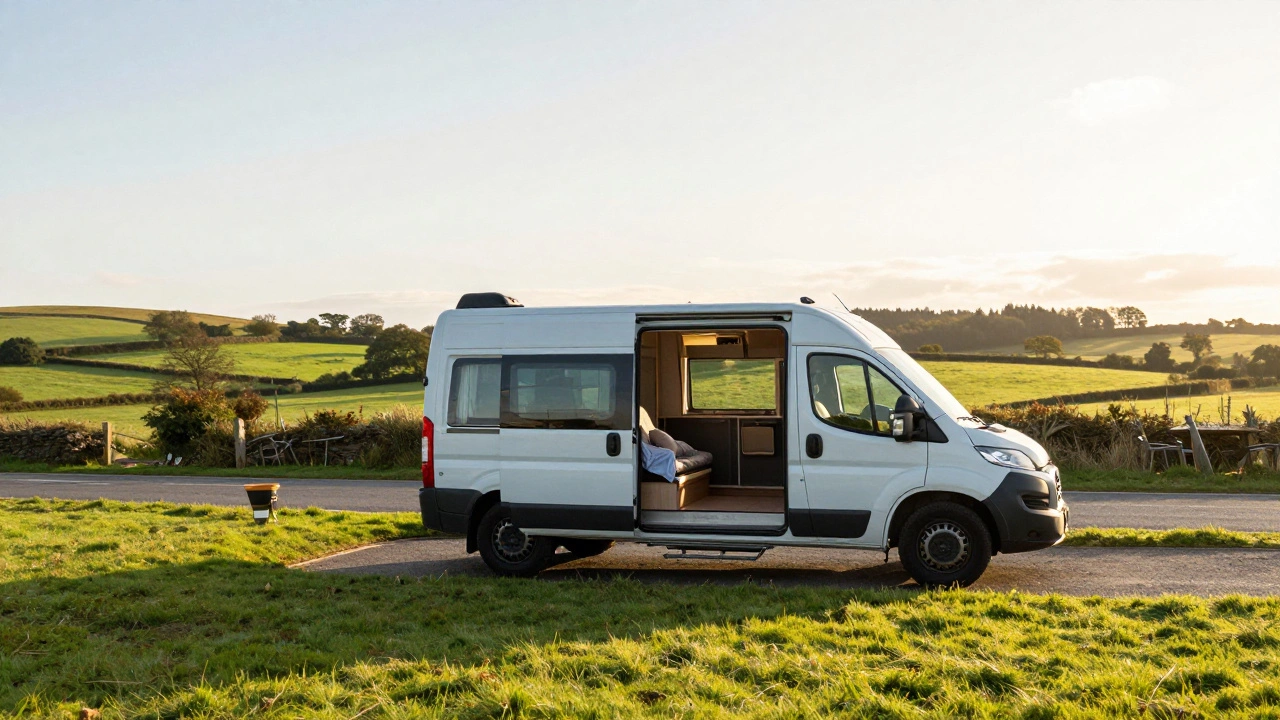
Since you cannot sleep while moving, making the best of your stops is crucial. Look for Rest Area Facilitiesdesignated public spaces for vehicle breaks and personal hygiene needs. along major highways. In places like Western Australia or the Outback, services can be miles apart. Checking a route planner beforehand identifies safe laybys where you can park overnight without fear of harassment or illegal parking tickets. Some national parks have strict rules about overnight parking outside designated campsites.
Set a schedule for breaks. Every 90 minutes, pull over for ten minutes. This keeps circulation flowing and wakes the brain up. Stretching legs helps combat stiffness regardless of whether you plan to nap later. Bring comfortable pillows and blankets for the stopped phase so the transition from awake to sleep is smoother once the engine cuts off.
Frequently Asked Questions
Is it ever okay to nap in the back of the van?
Only when the vehicle is completely parked in a safe location. The engine should be idling off or running safely with ventilation open depending on exhaust fumes risk. Never do this while the vehicle has momentum.
What happens if a kid sleeps on the couch during a trip?
This is illegal in most states. Children must be in a compliant car seat or booster with a functioning seatbelt. Couches and dinettes do not meet these safety standards for moving transport.
Does insurance cover accidents if someone was lying down?
Likely not. Insurance clauses typically state that negligence regarding passenger safety voids coverage. Investigators may determine you were operating the vehicle negligently by transporting unrestrained persons.
Are there special seats for adults in motorhomes?
Some custom conversions include rear-facing captain chairs with 3-point belts. Standard factory dinettes usually only have lap belts which are insufficient for frontal impacts.
How do I manage jet lag or tiredness on long trips?
Schedule regular stops every two hours. Swap drivers mid-journey. Plan overnight camping stops early enough to arrive before exhaustion sets in completely.