Can You Sleep in a Tent in the UK? The Real Rules for Wild Camping
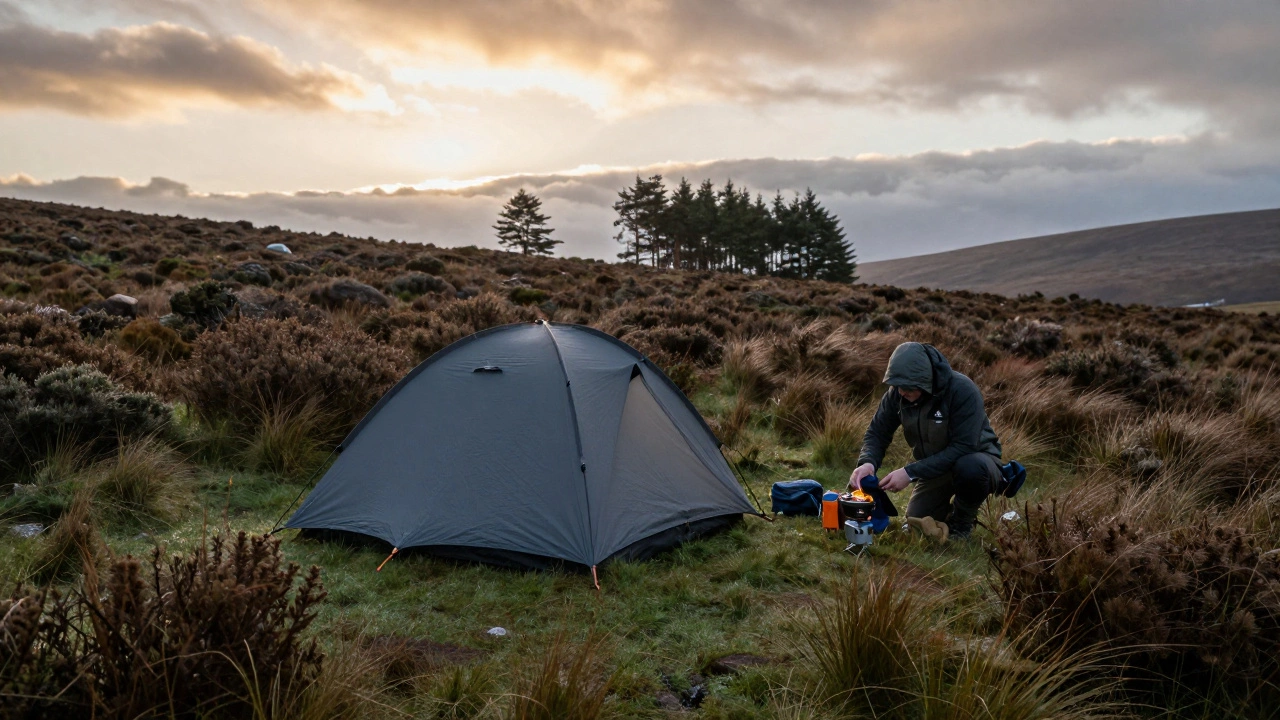 Jan, 18 2026
Wild Camping Legality Checker
Check if your intended wild camping location is legal in the UK. Enter your region and location details below to see if you're allowed to camp there.
Enter your details above to check legality.
You can sleep in a tent in the UK-but only if you know where, when, and how. It’s not as simple as pitching up anywhere with a view. The truth? Most of England and Wales bans wild camping outright. Scotland is different. And even there, it’s not a free-for-all. If you think you can just roll up to a field near Lake Windermere or a hillside in the Peak District and spend the night, you’re risking a fine, a confrontation, or worse-a ruined trip.
Wild Camping Is Legal in Scotland (With Conditions)
Scotland is the only part of the UK where wild camping is broadly legal under the Land Reform (Scotland) Act 2003. That means you can pitch a tent on open land-mountains, moors, forests-even if it’s not a designated campsite. But legality doesn’t mean license to abuse. The Scottish Outdoor Access Code sets clear rules: camp in small groups, stay no more than two or three nights in one spot, move on, and leave no trace.
People camp near Loch Lomond, Glencoe, and the Cairngorms every weekend. You’ll see tents tucked behind trees, away from paths and farms. That’s the model to follow. Don’t camp right next to a house, a public trail, or a livestock field. Don’t light open fires. Don’t leave trash. Don’t bring your whole squad of ten friends. If you do, you’re not camping legally-you’re being a nuisance.
England and Wales: Mostly Illegal, But Some Exceptions
In England and Wales, wild camping without permission is trespassing. That’s a civil offense, not a criminal one, which means landowners can ask you to leave but can’t arrest you. Still, police often side with landowners. You’ll get told to pack up. If you refuse, you could be charged with aggravated trespass.
There are a few places where it’s tolerated-or quietly accepted. The Lake District’s high fells, parts of Dartmoor, and some areas of the Brecon Beacons see overnight tents in summer. But that’s not permission. It’s tolerance. Landowners and rangers turn a blind eye because the campers are quiet, responsible, and gone by morning. Don’t assume it’s safe. One complaint from a farmer or hiker, and the rules tighten overnight.
Dartmoor is the only national park in England with a specific legal exception. The Dartmoor Commons Act 1985 allows camping on open access land, but only if you’re more than 100 meters from any road, building, or scheduled monument. You still can’t camp near Princetown or the popular tors. And you still can’t light fires. Violate this, and you’re out.
What Counts as Wild Camping?
Wild camping means setting up your tent away from designated sites-with no facilities, no fees, no staff. If you’re parked at a layby, on the side of a quiet road, or in a forest clearing you found on Google Maps, that’s wild camping. If you’re at a campsite with toilets, showers, and a shop, that’s regular camping-and it’s always legal if you’ve paid.
Many people confuse wild camping with stealth camping. Stealth camping is when you camp in places you’re not supposed to-like a supermarket parking lot or a rest area-without getting caught. That’s risky. It’s not legal anywhere in the UK. You might get away with it once, but you’ll likely get reported. And once you’re on a ranger’s radar, you’re not just breaking rules-you’re making it harder for everyone else.
What Gear Do You Actually Need?
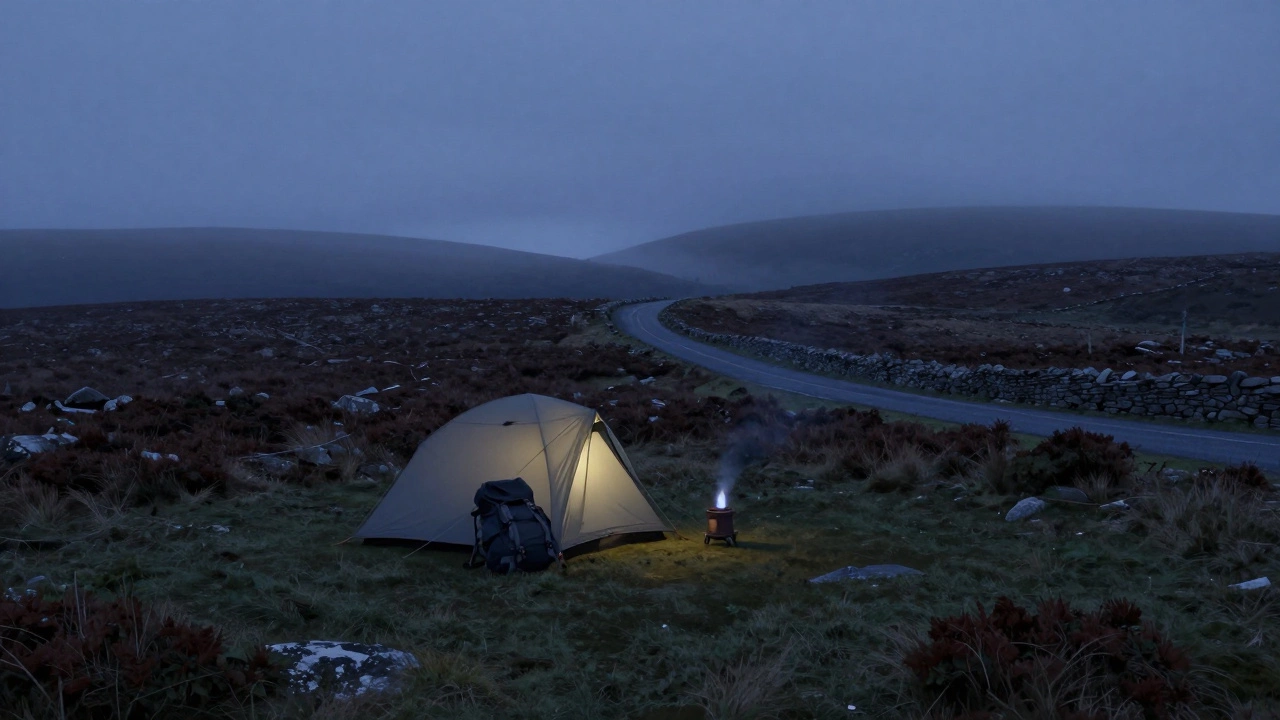
You don’t need a $1,000 tent to camp wild in the UK. But you do need gear that handles rain, wind, and cold. The UK weather doesn’t care if you’re legal or not. Rain comes fast. Wind picks up on ridges. Nights drop below freezing even in summer.
Use a waterproof, wind-resistant tent with a full fly and good groundsheet. A four-season tent isn’t necessary, but a three-season one should be rated for heavy rain. Bring a sleeping bag rated for at least 0°C-even in July. A foam pad or inflatable mattress is non-negotiable. The ground is hard, wet, and cold. You’ll regret skipping it.
Carry a headlamp, a stove (not a fire), and enough food for two days. Don’t rely on finding shops. Bring a small trash bag. Pack out everything-even biodegradable stuff like apple cores. If you leave it, someone else will have to clean it up. And they won’t thank you.
Where to Camp Legally (And Where to Avoid)
Here’s a quick guide to where you can actually sleep in a tent without breaking the law:
- Scotland: Highlands, islands, national parks-just follow the Access Code.
- Dartmoor (England): Only on open access land, 100m+ from roads or buildings.
- Some National Parks (with permission): In the Lake District, some landowners allow camping if you ask in advance. Contact the landowner or local ranger.
- Lowland Scotland and parts of the North Pennines: Quiet, remote areas with no livestock or houses nearby.
Avoid these places at all costs:
- Public parks in cities or towns
- Near farm gates or livestock
- On private driveways or car parks
- Within 100 meters of any building or road in England/Wales
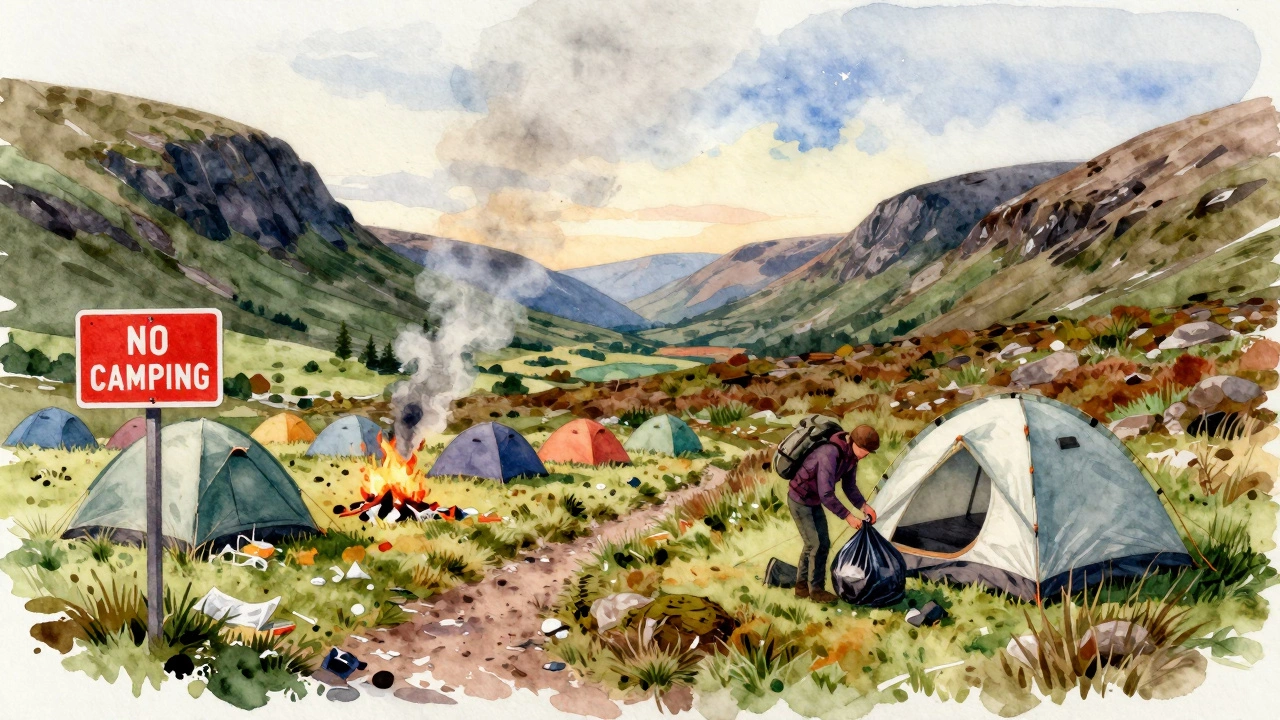
- Anywhere marked "No Camping"-even if it looks empty
What Happens If You Get Caught?
Most of the time, you’ll get asked to leave. A friendly ranger might give you a warning. A frustrated farmer might call the police. If you’re polite, pack up, and leave, it ends there.
If you argue, refuse, or return the next night? That’s when it gets serious. Police can issue a fixed penalty notice for aggravated trespass-£100 or more. In rare cases, you could be taken to court. A conviction means a criminal record. That affects jobs, travel, and insurance.
And it’s not just you. Every time someone ignores the rules, it puts pressure on local councils to ban wild camping everywhere. The access rights you enjoy today could vanish tomorrow if people keep pushing it.
How to Camp Responsibly
Wild camping isn’t about claiming space. It’s about respecting it. Here’s how to do it right:
- Arrive late, leave early. Don’t hang around.
- Camp in small groups. Two people max.
- Never camp near water sources-keep 50 meters away.
- Use a camping stove. No open fires.
- Pack out all trash, including toilet paper and food scraps.
- Use a portable toilet or bury waste 15cm deep, 60 meters from water.
- Don’t cut branches or damage vegetation.
- Keep noise down. No music, no shouting.
- Ask permission if you’re near a farm or private land-even if it looks empty.
Follow these, and you’re not just staying legal. You’re helping keep wild camping alive for everyone else.
Alternatives to Wild Camping
If you’re not sure about the rules-or just don’t want the risk-there are better options. Thousands of affordable, legal campsites exist across the UK. Many cost less than £15 a night. Some have no facilities at all, but they’re on private land with permission. That’s the sweet spot: quiet, legal, and safe.
Try sites like Wildcamping.co.uk or The Camping and Caravanning Club for curated lists. Look for "honesty box" sites-small, family-run spots where you pay by leaving cash in a box. You get a spot, a bit of privacy, and the peace of mind that you’re not breaking the law.
Or consider staying in a campervan. Many areas allow overnight parking in designated spots. It’s not wild camping, but it’s close-and you won’t get kicked out.
Final Advice: Know Before You Go
Don’t guess. Don’t hope. Before you head out, check:
- The local council’s website for bylaws
- Ordnance Survey maps for access land (green areas in Scotland, yellow in Dartmoor)
- Local walking forums or Facebook groups for recent reports
- Weather forecasts-UK conditions change fast
Wild camping in the UK isn’t about rebellion. It’s about responsibility. It’s about knowing the rules so you can enjoy the freedom they allow. Pitch your tent in the right place, leave no trace, and you’ll have one of the most peaceful nights you’ve ever had-under the stars, with no one else around.
But if you ignore the rules? You won’t just be camping illegally. You’ll be taking away the chance for others to do the same.
Is it legal to sleep in a tent anywhere in the UK?
No. Wild camping is only legal in Scotland under the Access Code, and in specific parts of Dartmoor in England. In the rest of England and Wales, it’s trespassing unless you have permission from the landowner.
Can I camp on the beach in the UK?
Only in Scotland or on designated beaches in Dartmoor. Most coastal areas are private land, protected by the Crown Estate or local councils. Camping on beaches without permission risks fines or being asked to leave.
Do I need a permit for wild camping in Scotland?
No permit is required, but you must follow the Scottish Outdoor Access Code. That means camping in small groups, staying no more than two or three nights in one place, and leaving no trace.
Can I use a fire while wild camping?
No. Open fires are banned in most wild camping areas due to fire risk and environmental damage. Always use a camping stove. Even in remote parts of Scotland, fires can destroy peatlands and trigger wildfires.
What if I’m caught wild camping in England?
You’ll likely be asked to leave. If you refuse, police can charge you with aggravated trespass, which can lead to a fine of up to £100 or a court appearance. It’s not common, but it happens-and it can leave a criminal record.
Are there apps or maps for legal wild camping spots?
Yes. Ordnance Survey maps show access land in Scotland and Dartmoor. Apps like Wildcamping UK and CamperMate list legal and tolerated spots with user reviews. Always cross-check with official sources before heading out.