Can You Shower in a Motorhome While Driving? Safety and Practical Tips
 Dec, 21 2025
Motorhome Shower Safety Calculator
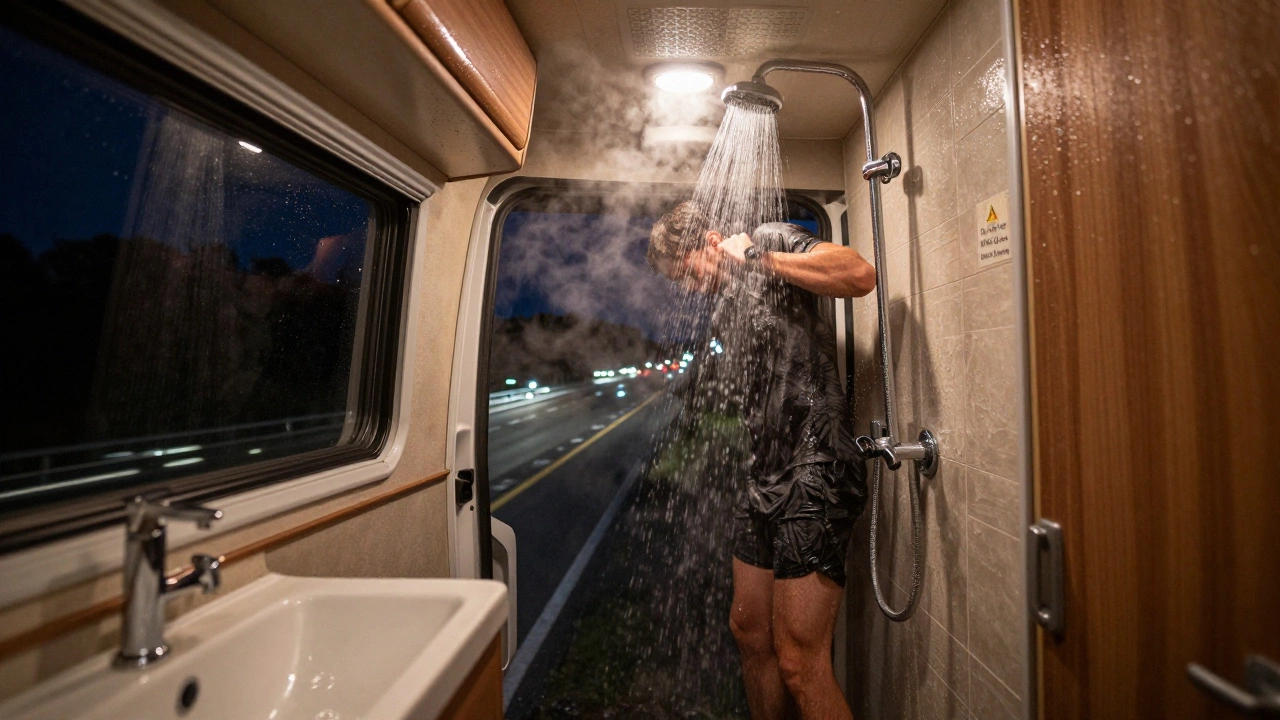
Ever wondered if you can hop in the shower while your motorhome is rolling down the highway? It sounds convenient-finish your morning rinse while the miles tick by. But here’s the truth: showering in a motorhome while driving is not safe, not legal in most places, and not worth the risk.
Why You Shouldn’t Shower While Driving
Motorhomes aren’t designed like submarines. They’re heavy, top-heavy vehicles with a high center of gravity. When you stand up in the shower while the vehicle is moving, you shift your weight unpredictably. Even a small movement can throw off the balance, especially on curves or when swerving to avoid debris. That’s not just uncomfortable-it’s dangerous.
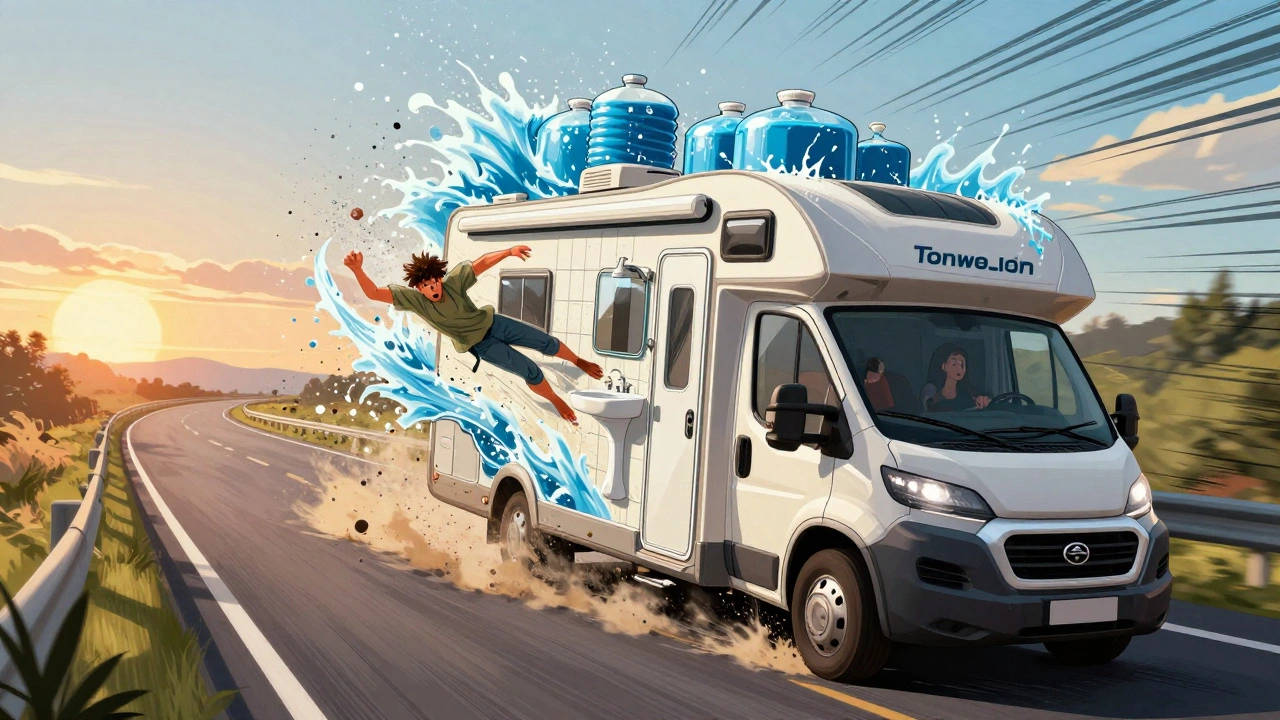
Think about it: you’re holding onto a wet, slippery grab rail, water is sloshing around, and the motorhome is bouncing over bumps. One sudden brake or turn, and you could slip, hit your head on the sink, or get thrown into the shower door. Emergency braking at 60 km/h could turn your shower into a human pinball.
There’s also the issue of water. Motorhome tanks aren’t sealed like a ship’s hold. Water sloshes freely. If the fresh water tank shifts during a turn, it can cause instability. Worse, if the gray water tank overflows or leaks while you’re moving, you’re dealing with a messy, unsanitary situation-and possibly a roadside breakdown.
What the Law Actually Says
In Australia, the United States, Canada, and most of Europe, it’s illegal to be standing or moving around in a moving motorhome unless you’re seated and buckled in. That includes the bathroom. Traffic safety laws require all occupants to be securely fastened during travel. The bathroom isn’t an exemption.
Police in Western Australia have pulled over motorhomes for exactly this reason. One officer in Perth told a group of travelers in 2024 that he’d issued three warnings in a single weekend to families showering while driving. The fines aren’t huge-usually around $300-but the real cost is the risk you’re taking. Insurance companies won’t cover injuries from accidents caused by unsecured passengers in the bathroom.
How Motorhome Showers Actually Work
Most motorhomes have compact, low-flow showers that run on either electric water heaters or gas-powered systems. They’re designed for quick, efficient use when parked. A typical shower uses 10-15 liters of fresh water and drains into a gray water tank that holds 40-80 liters. That’s enough for two or three showers before you need to empty it.
These systems aren’t built for motion. The water pump can’t maintain steady pressure while the vehicle is bouncing. The drain pipe can clog if water flows sideways. Even the showerhead-usually a handheld nozzle-can detach under pressure or vibrate loose. You’ll end up with a wet floor, a flooded bathroom, and a stinky mess you didn’t plan for.
What Happens If You Do It Anyway?
Some people swear they’ve done it-usually in a quiet rural road, late at night, or when they’re desperate after a long drive. But here’s what usually goes wrong:
- Slipping and bruising your hip or head
- Water leaking into electrical panels or underfloor wiring
- Gray water tank overflow during a sharp turn
- Water heater malfunction from sudden movement
- Getting pulled over and fined
One couple from Adelaide shared their story on a motorhome forum: they showered while driving on a straight stretch of the Stuart Highway. The water pump cut out mid-shower, the drain backed up, and water flooded the bedroom floor. They spent three hours drying everything with towels and a hairdryer. The mold took months to clear.
Safe Alternatives
You don’t need to sacrifice hygiene for safety. Here’s what works better:
- Plan your stops. Use rest areas, service stations, or campgrounds with public showers. Many highway rest stops in Australia now have free, clean, coin-operated showers.
- Use wet wipes and dry shampoo. For quick clean-ups between showers, biodegradable wipes and alcohol-free dry shampoo work wonders. Keep a small kit in your glovebox.
- Shower before you drive. Make it part of your morning routine. If you’re staying overnight, shower before hitting the road. It’s easier than trying to squeeze it in while moving.
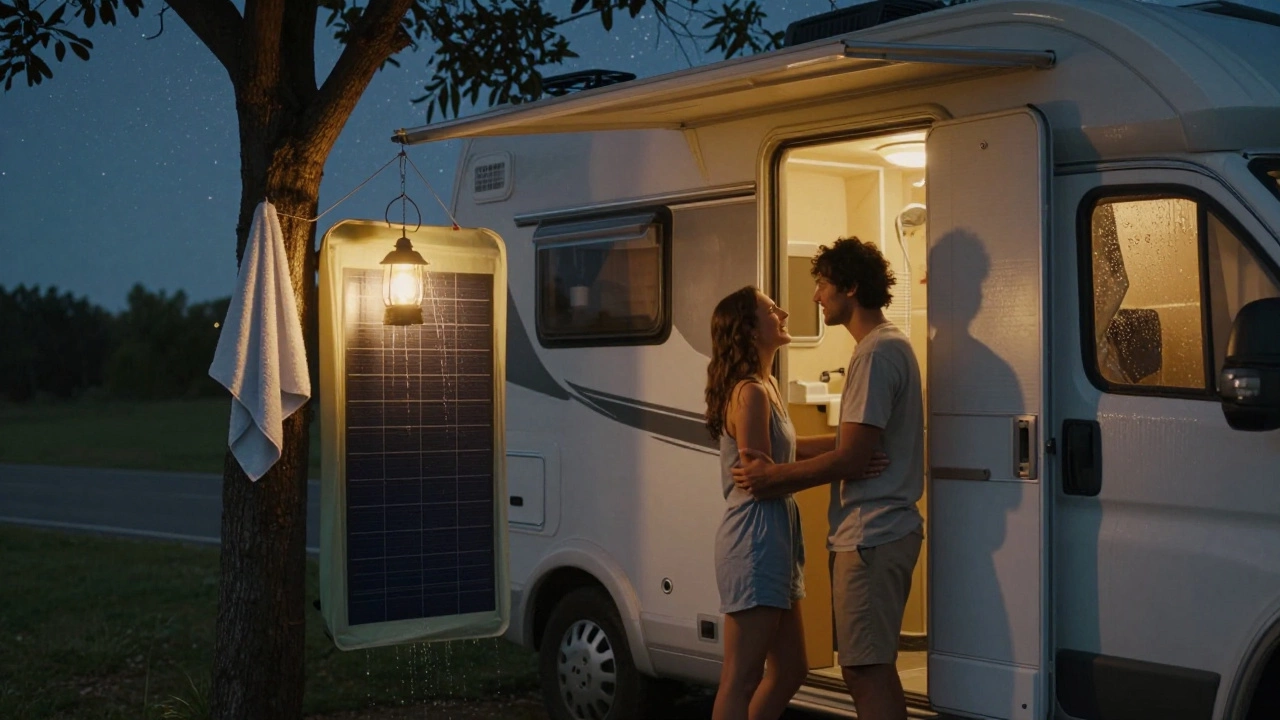
- Use a portable shower. Some campers carry a 5-liter solar shower bag. Hang it on a tree or roof rack and shower outside in privacy. No water waste, no mess, no risk.
What About Kids or Elderly Passengers?
If you’re traveling with young kids or older relatives, the temptation to shower while driving might feel stronger. Maybe they’re tired, or they’ve had a long day. But kids especially are at higher risk. They can’t hold their balance well, and they might panic if they slip.
Instead, bring a small, collapsible basin and a sponge. Wipe them down in their seat with warm water and a towel. Use baby wipes for their face and hands. It’s not a full shower, but it’s clean, safe, and keeps everyone comfortable.
When Is It Okay to Use the Bathroom While Moving?
The toilet? Yes, if it’s designed for use while driving. Many modern motorhomes have chemical toilets that lock securely and don’t require plumbing. These are meant to be used on the move.
But the shower? Never. The toilet is a fixed seat with a flush mechanism. The shower is an open, wet, unstable space. There’s no comparison.
Pro Tips for Motorhome Showering
- Always turn off the water pump before driving. It prevents pressure surges and leaks.
- Use a shower curtain with a weighted bottom to reduce water spray.
- Install a non-slip mat in the shower. Even a simple rubber one makes a big difference.
- Empty your gray water tank before long drives. Less water sloshing = less instability.
- Check your motorhome’s manual. Some models have a ‘drive mode’ that disables the water heater and pump automatically.
Final Thought: Convenience Isn’t Worth the Risk
It’s tempting to multitask. But motorhome travel is about enjoying the journey, not rushing through it. A 10-minute shower after a long drive feels better than a rushed, risky one while speeding down the highway. You’ll sleep better, your motorhome will last longer, and you’ll avoid the stress of an accident or fine.
Plan ahead. Stop when you need to. Use the facilities. Your body-and your insurance-will thank you.
Can you legally shower in a motorhome while driving in Australia?
No, it’s not legal. Australian road rules require all passengers to be seated and buckled in while the vehicle is moving. Using the shower means you’re standing and unsecured, which violates safety regulations. Police can issue fines, and insurance may not cover injuries from accidents caused by unsecured passengers.
Why is showering in a moving motorhome dangerous?
Showering while driving puts you at risk of slipping, falling, or hitting your head due to sudden movements, bumps, or braking. Water sloshing in tanks can affect the vehicle’s balance. Electrical systems can short-circuit if water leaks. Even a minor accident can turn a quick rinse into a serious injury.
Do all motorhomes have showers?
Most mid-range and luxury motorhomes come with built-in showers, but not all. Basic models, especially older or smaller ones, may only have a portable shower setup or no shower at all. Always check the specs when hiring a motorhome.
How much water does a motorhome shower use?
A typical motorhome shower uses 10 to 15 liters per use, depending on how long you run it and whether you use a low-flow showerhead. Most tanks hold 40-80 liters of fresh water, so you can usually get two to three showers before needing to refill.
Can you use the toilet in a motorhome while driving?
Yes, if it’s a fixed chemical toilet designed for use while moving. These toilets don’t rely on water flow or plumbing and are securely mounted. But never use the shower or sink while driving-those systems aren’t built for motion.