Can You Set Up a Canopy Tent on the Beach? Here’s What Actually Works
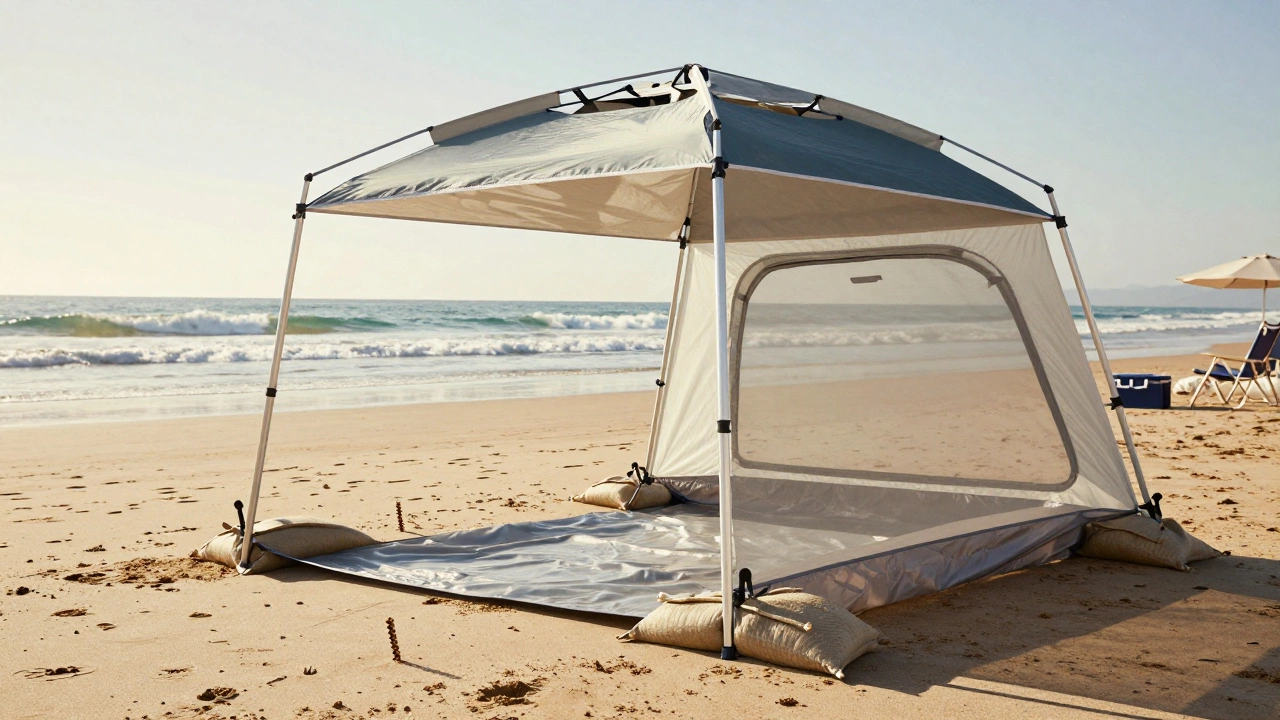 Feb, 1 2026
Beach Canopy Stability Calculator
Canopy Stability Assessment
Enter your beach conditions to determine if your canopy setup will hold safely
Setting up a canopy tent on the beach sounds simple-until the wind picks up and your tent collapses like a deflated balloon. Or worse, it flies away while you’re chasing it down the shore. If you’ve ever tried this, you know it’s not as easy as pitching one in the backyard. But it’s not impossible either. With the right gear, technique, and a little local know-how, you can turn a beach canopy into a reliable shade zone for your family, even in salty, sandy, windy conditions.
Why Beaches Are Tough on Canopy Tents
Beaches aren’t just flat, open spaces. They’re dynamic environments with shifting sand, strong winds, salt spray, and no trees to tie off to. Canopy tents are designed for backyard BBQs or fairgrounds, not coastal zones. The fabric gets sand-gritted over time, the poles bend under sudden gusts, and the stakes? They sink into sand like butter.
Most canopy tents come with basic metal or plastic stakes. Those won’t hold in dry, loose sand. Even if you drive them in deep, a 20-knot breeze will pull them right out. And salt? It corrodes aluminum frames and weakens zippers over just a few uses. If you’ve ever left a tent on the beach overnight and come back to a rusted frame, you know what I mean.
What Type of Canopy Tent Works Best on Sand
Not all canopy tents are created equal. If you’re planning to use one on the beach, avoid lightweight pop-up models meant for one-day events. Instead, look for these features:
- Heavy-duty steel or reinforced aluminum frame - Thicker tubing resists bending under wind pressure.
- UV-resistant, water-repellent fabric - Look for polyester with a 300D or higher rating. Avoid thin nylon.
- Adjustable height settings - Lets you lower the profile when winds pick up.
- Weighted sandbags or anchor points - Built-in loops for sandbags make setup way easier.
Brands like EZ-Up a popular brand of portable canopy tents known for durability and ease of setup, ABCCanopy a manufacturer of heavy-duty outdoor canopies with reinforced frames and sandbag compatibility, and Core a brand offering beach-specific canopy systems with integrated sand anchors make models built for sand. The Core Beach Canopy, for example, comes with 4 heavy-duty sand anchors and a vented roof to reduce wind lift.
How to Anchor a Canopy Tent in Sand
Stakes don’t work on sand. Period. You need weight. Here’s what actually holds:
- Use sandbags - Fill heavy-duty canvas bags with sand (not gravel) and attach them to the tent legs using the built-in loops. Each bag should weigh at least 15 kg. You can buy pre-made beach sandbags or DIY them with old pillowcases and dry sand from the dunes.
- Use tent pegs designed for sand - Spiral sand stakes, like the MDM Sand Anchors a specialized type of stake designed to twist into loose sand for better hold, screw into the sand and grip better than straight stakes. Drive them in at a 45-degree angle away from the tent.
- Anchor with rocks or coolers - If you don’t have sandbags, use your coolers, beach chairs, or even large water jugs filled with sand. Tie them to the legs with thick rope or bungee cords.
- Use a tarp underneath - Lay a heavy-duty tarp under the tent legs. It prevents sand from shifting and gives stakes a firmer base if you use them.
In Perth, where afternoon sea breezes hit hard, I’ve seen people lose three tents in one afternoon because they used regular stakes. The ones who brought sandbags? They stayed shaded all day.
Wind and Sun: Managing the Elements
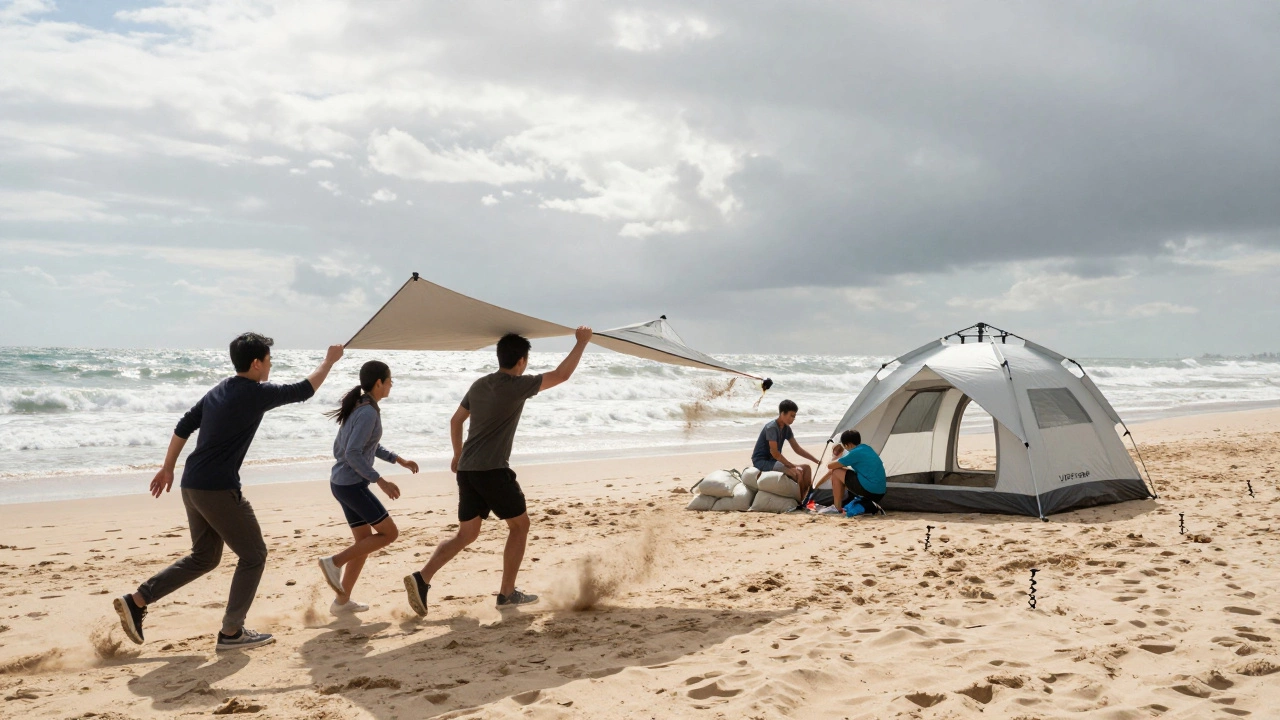
Beach winds aren’t just annoying-they’re dangerous. A sudden gust can turn a canopy into a sail. Here’s how to stay safe:
- Never set up in the dunes - Dunes are unstable, and wind funnels between them. Set up on flat, packed sand near the tide line.
- Lower the height - If your canopy has adjustable legs, drop it to the lowest setting. A 6-foot tent catches less wind than an 8-foot one.
- Use vented roofs - Canopies with mesh vents on the sides or top let wind pass through instead of lifting the fabric. The EZ-Up Sahara a canopy tent model with a vented roof designed for high-wind coastal use is one of the few with this feature.
- Take it down at night - Even if the forecast says calm, beach winds shift fast. Pack it up before sunset. Salt and dew will soak the fabric, and morning winds can be stronger than afternoon ones.
And don’t forget sun protection. Even with a canopy, UV rays bounce off sand and water. Use a tent with a UPF 50+ rating. Most beach-specific canopies now include this. If yours doesn’t, hang a shade cloth on the windward side.
What Not to Do on the Beach
Here are the biggest mistakes people make:
- Using regular lawn stakes - They sink and snap. No exceptions.
- Leaving the tent up overnight - Salt air eats metal. Sand gets into zippers. You’ll ruin it fast.
- Setting up too close to the tide - High tide can come faster than you think. Stay at least 20 meters from the waterline.
- Ignoring local rules - Some beaches, like parts of Cottesloe or Scarborough in Perth, ban large structures. Check with local councils before you pitch.
I once saw a family lose their entire canopy setup because they pitched right where the tide rolled in. The tent floated off like a raft. They spent the rest of the day fishing it out of the surf.
Alternative Options If Canopy Tents Are Too Risky
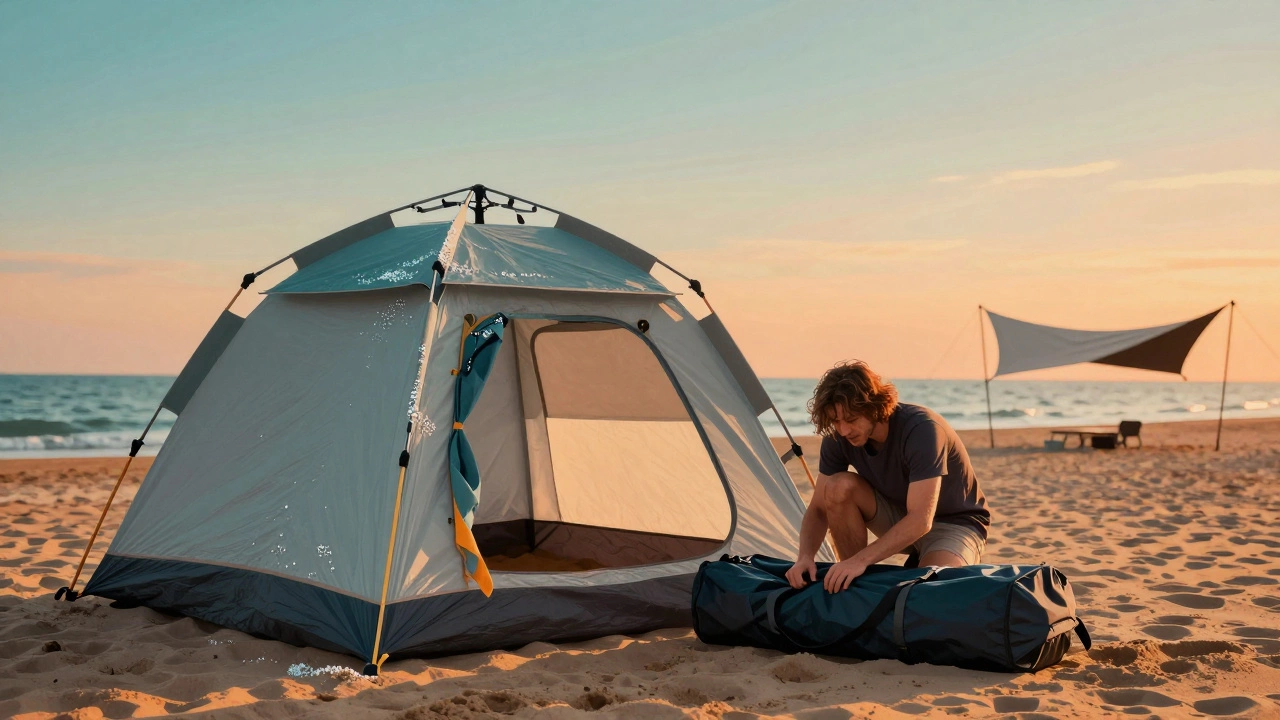
If you’re not sure about a canopy tent, here are better alternatives:
- Beach umbrellas with weighted bases - Easier to set up, cheaper, and less wind-prone. Look for ones with a 10-foot diameter and a 12kg base.
- Pop-up beach shelters - These are low-profile, enclosed tents designed for sand. Brands like KingCamp a brand offering pop-up beach shelters with sand pockets and UV protection make models that zip closed and resist wind better than open canopies.
- Shade sails - If you’re staying longer, install a fixed shade sail between posts driven into the sand. They’re wind-permeable and last years with proper care.
For families with kids, I’ve found pop-up beach shelters work best. They block sand, wind, and sun all at once. Plus, the kids love the privacy.
Final Tips for Beach Canopy Success
- Practice setup at home before you go. You don’t want to fumble with straps on a hot beach.
- Bring extra rope, bungees, and zip ties. Things break. Always.
- Wipe down the frame with fresh water after each use. Salt accelerates corrosion.
- Store your canopy in a dry, cool place. Never leave it damp in the car.
- Check the weather. If wind forecasts are over 25 km/h, skip it. No tent is worth a trip to the ER.
Canopy tents on the beach? Yes, you can do it. But only if you treat it like a serious piece of gear, not a party accessory. The right setup means shade, comfort, and safety. The wrong one? A lost tent, a ruined day, and a pile of sand-covered metal.
Can you use a regular canopy tent on the beach?
A regular canopy tent isn’t built for sand and wind. It’ll collapse, rust quickly, or blow away. Only use beach-specific models with sandbags, reinforced frames, and vented roofs.
What’s the best way to anchor a canopy tent in sand?
Use sandbags filled with dry sand (15kg each) attached to the legs. Spiral sand stakes or heavy coolers tied with rope also work. Regular stakes fail in loose sand.
Is it safe to leave a canopy tent up overnight on the beach?
No. Salt air, dew, and night winds will damage the fabric and frame. Always take it down before sunset. Leaving it up risks corrosion, mold, and loss.
Do beach canopies block UV rays?
Only if they’re rated UPF 50+. Most standard canopies block about 70% of UV. For full protection, choose a beach-specific model with a high UPF rating or add a shade cloth.
Are there beaches where canopy tents are banned?
Yes. Many beaches in Western Australia, including parts of Cottesloe, Scarborough, and Rottnest Island, restrict large structures. Always check local council rules before setting up.
What’s better: a canopy tent or a pop-up beach shelter?
For families and long stays, pop-up beach shelters are better. They’re enclosed, block sand and wind, and are more stable. Canopy tents give more open space but are more vulnerable to wind and don’t keep sand out.