Can You Just Camp in the Forest? What You Need to Know Before You Go
 Dec, 28 2025
Wild Camping Legality Checker
Check Your Camping Legality
Tip: Always check with local ranger stations for specific rules in your area before camping.
People ask if you can just camp in the forest like it’s a free public park. The short answer? Sometimes. But if you show up with a tent, a sleeping bag, and zero research, you could be breaking the law, risking your safety, or ruining someone else’s experience.
It Depends on Where You Are
There’s no single rule for camping in the forest. In the U.S., federal lands like national forests often allow dispersed camping-meaning you can pitch a tent away from designated sites. But in the UK, wild camping is mostly illegal in England and Wales, except in a few places like the Lake District if you follow strict Leave No Trace rules. In Scotland, it’s legal under the Scottish Outdoor Access Code, as long as you camp responsibly.
Canada’s national parks allow backcountry camping, but you need a permit. In Sweden and Norway, the right to roam (allemansrätten) lets you camp almost anywhere for one night, as long as you’re 150 meters from the nearest house. The rules change every state, every country, every forest.
What Counts as “Just Camping”?
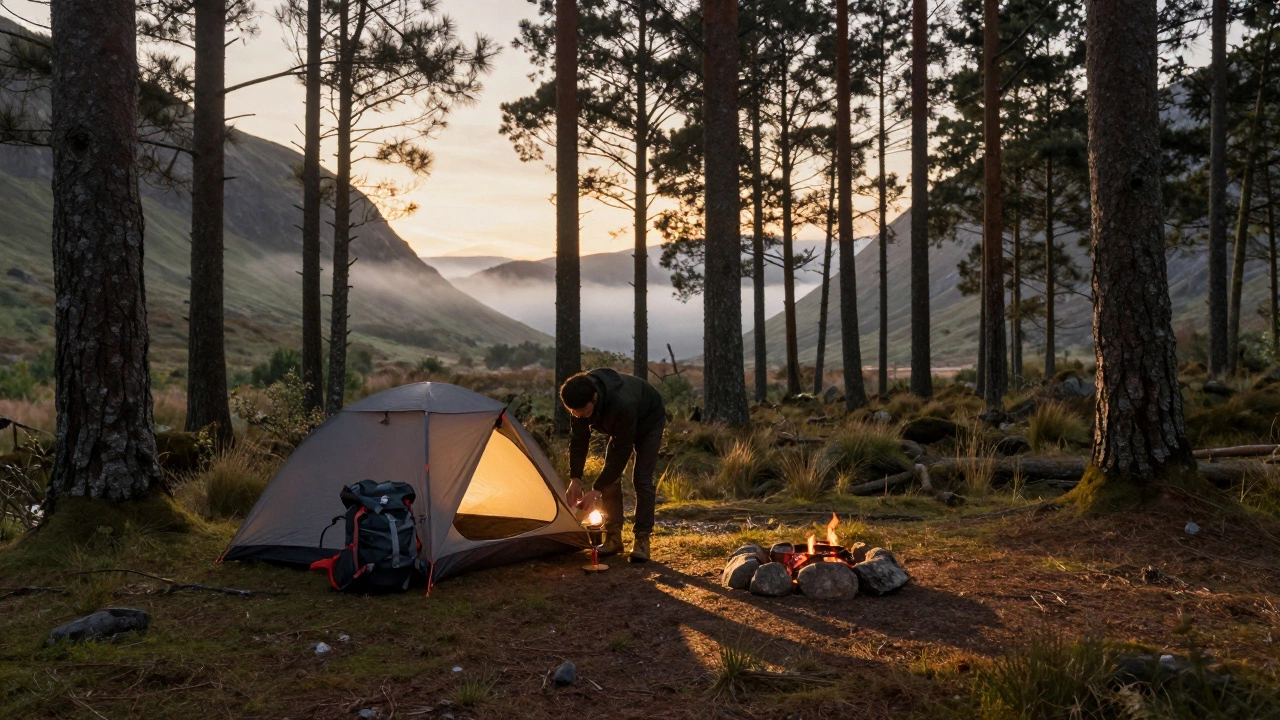
Most people mean wild camping when they ask this question. That’s setting up camp without any facilities-no toilets, no water taps, no dump stations. You’re not at a campsite with electric hookups. You’re deep in the trees, far from roads, with just your gear and nature.
But here’s the catch: “just camping” doesn’t mean “do whatever you want.” Even in places where it’s allowed, there are expectations. You can’t light fires near dry brush. You can’t leave trash. You can’t stay more than one or two nights in the same spot. You can’t camp right next to a stream or trailhead. These aren’t suggestions-they’re rules that keep forests alive and other people safe.
Where It’s Usually Allowed (And Where It’s Not)
Here’s a quick snapshot of where wild camping is commonly accepted:
- Scotland: Legal under the Access Code. Camp high, away from houses, pack out all waste.
- Sweden/Norway: Allemansrätten lets you camp for one night almost anywhere, except protected areas.
- U.S. National Forests: Dispersed camping is free in most, but check local ranger station rules. Some areas require fire permits.
- Canada (backcountry): Permits required in national parks. Some provincial parks allow free backcountry sites.
- England/Wales: Illegal without landowner permission. Only tolerated in remote upland areas if done discreetly.
- Germany/France: Generally illegal. You must use official campsites unless you have explicit permission.
Some places have gray areas. In the U.S., the Forest Service allows dispersed camping in 193 national forests-but not all of them. For example, in the Uinta-Wasatch-Cache National Forest in Utah, you can camp almost anywhere. In the Sierra National Forest in California, you need a permit for certain zones. You can’t assume. You have to check.
How to Find Out If You Can Camp There
You don’t need to be a lawyer to figure this out. Here’s how:
- Go to the official website of the forest or land management agency. For U.S. national forests, that’s usda.gov/forest-service.
- Look for “dispersed camping,” “backcountry camping,” or “wild camping” policies.
- Call the ranger station. They’ll tell you what’s allowed, where fires are banned, and if there are any recent closures due to drought or fire risk.
- Check apps like FreeCampsites.net or The Dyrt-they’re user-updated and often reflect real-time conditions.
- If you’re in Europe, search for “wild camping [country name] legality.” Many countries have clear online guides.
Don’t rely on Instagram posts or YouTube videos. A video might show someone camping in the Adirondacks-but that spot might be closed for the season. Always go to the source.
What Happens If You Get Caught?
If you’re camping illegally and get caught, the consequences vary. In most cases, you’ll get a warning-especially if you’re polite, pack out your trash, and leave immediately. But repeat offenders or those who cause damage can face fines. In the U.S., fines range from $50 to $5,000 depending on the violation and location. In the UK, you could be charged with trespassing.
It’s not just about fines. If you light a fire in a dry area and it sparks a wildfire, you could be held liable for millions in damages. In 2023, a camper in Colorado was fined $12,000 after his campfire escaped and burned 1,200 acres. That’s not a hypothetical risk-it’s happened, and it happens every year.
How to Camp Responsibly (Even If It’s Legal)
Just because you can camp somewhere doesn’t mean you should act like it’s your backyard. Here’s how to do it right:
- Camp at least 200 feet from water sources. This protects fish, plants, and drinking water.
- Use established fire rings if they exist. If not, use a portable stove. Fires leave scars and attract wildlife.
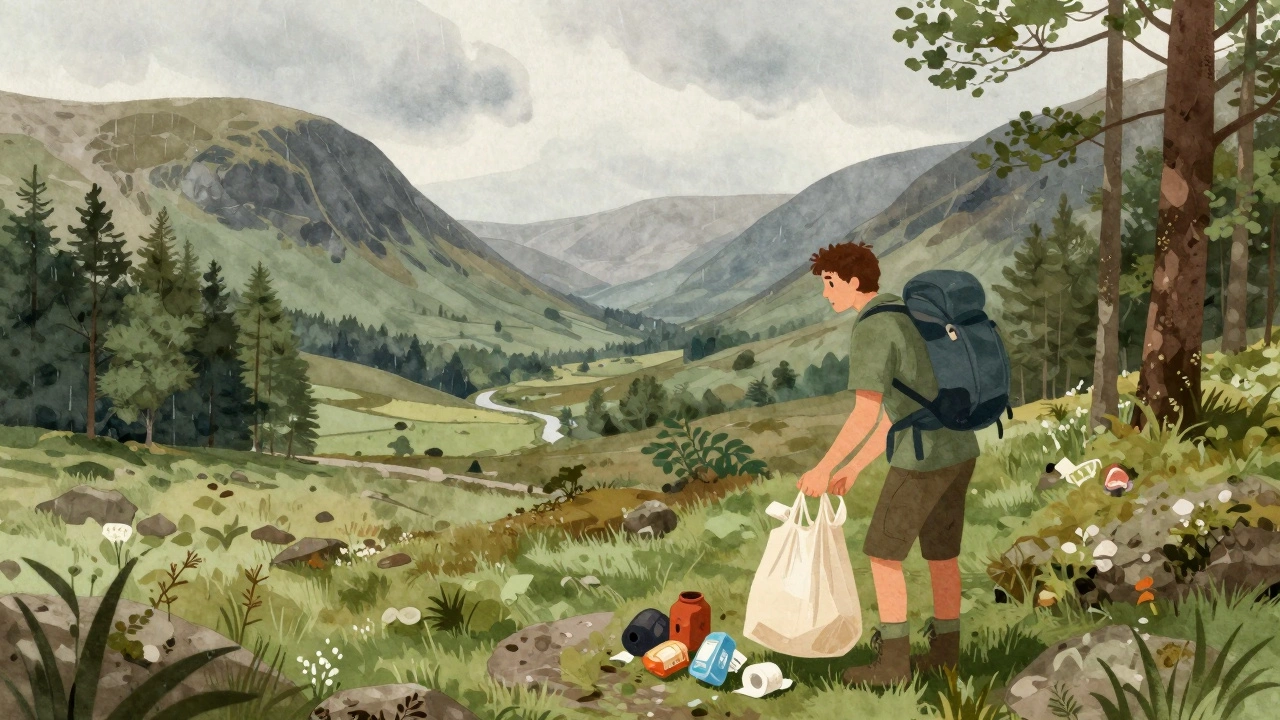
- Pack out everything you bring in. That includes toilet paper, food scraps, and even banana peels. They don’t decompose fast enough.
- Don’t cut branches or dig trenches. You’re a guest, not a developer.
- Leave no trace of your presence. If someone else walks by and doesn’t know you were there, you did it right.
- Don’t camp near trails, picnic areas, or private property. Respect boundaries.
There’s a reason these rules exist. Every year, 80% of forest fires in the U.S. are caused by humans. Every year, bears get killed because they associate campsites with food. Every year, someone gets fined because they didn’t check the rules.
Alternatives If You Can’t Camp in the Forest
If you’re not sure where you can legally camp, here are safer, easier options:
- Public campgrounds in national forests: Often $10-$20 a night. Basic but legal. You get a fire ring, picnic table, and sometimes a vault toilet.
- BLM land in the U.S.: The Bureau of Land Management allows free camping on millions of acres. Check their website for restrictions.
- Private wild camping spots: Sites like Hipcamp or Harvest Hosts let you camp on farms, vineyards, or private land for a small fee.
- Dispersed camping apps: Use apps like iOverlander or Campendium to find verified free spots with user reviews.
These options give you the freedom of wild camping without the legal risk. And they’re often just as quiet, just as beautiful.

What to Pack for Forest Camping
If you’re heading out, here’s what you actually need-not the Instagram checklist, but the real stuff:
- Water filter or purification tablets (even clear streams can have giardia)
- Portable stove (lighter than a fire and always allowed)
- Trash bag (pack out everything)
- Hand sanitizer and biodegradable soap (for washing dishes and hands)
- Small shovel or trowel (for digging catholes 6-8 inches deep, 200 feet from water)
- Headlamp (don’t rely on your phone)
- Map and compass (GPS can die)
- Emergency whistle and first aid kit
Leave the inflatable unicorn pool float at home. You’re not at a resort. You’re in the wild. Gear that’s simple, reliable, and light makes the difference between a great trip and a disaster.
Final Answer: Can You Just Camp in the Forest?
You can-if you do the work. You can’t just show up and hope for the best. But if you know the rules, respect the land, and leave no trace, then yes: you can camp in the forest. It’s not a free-for-all. It’s a privilege. And the best campers aren’t the ones who go the farthest or stay the longest. They’re the ones who make sure the forest stays just as wild for the next person.
Is it legal to camp in the forest in the UK?
In England and Wales, wild camping is illegal without landowner permission. In Scotland, it’s legal under the Scottish Outdoor Access Code as long as you camp responsibly-away from houses, no fires in restricted areas, and pack out all waste. In national parks like the Lake District, it’s often tolerated if done discreetly, but you’re still technically trespassing.
Can I camp anywhere in a U.S. national forest?
No. While dispersed camping is allowed in most U.S. national forests, each forest has its own rules. Some require permits, others ban camping near trails or rivers, and some have seasonal closures due to fire risk. Always check with the local ranger station before you go.
What’s the difference between dispersed camping and wild camping?
They’re basically the same thing. Dispersed camping is the U.S. term for camping outside of designated sites in national forests. Wild camping is the term used in Europe and elsewhere. Both mean no facilities, no reservations, and no fees-just you, your gear, and nature.
Can I bring my dog camping in the forest?
Usually yes, but with rules. Most forests require dogs to be leashed, especially near wildlife areas. You must clean up after them. Some protected areas ban dogs entirely to protect nesting birds or endangered species. Always check the specific forest’s pet policy before you go.
Do I need a permit to camp in the forest?
Sometimes. In U.S. national forests, permits are often required in high-use areas or during fire season. In Canada’s national parks, backcountry permits are mandatory. In Scotland, no permit is needed for wild camping. Always check the official land management website for your specific location.
How long can I stay in one spot?
Most places limit stays to 14 days in a 30-day period. Some, like in Sweden, allow only one night. The goal is to prevent overuse and protect the land. If you want to stay longer, move at least 5 miles away and wait a few days before returning to the same area.
Is it safe to camp alone in the forest?
It can be, if you’re prepared. Tell someone your plans. Carry a satellite communicator if you’re going deep. Know how to navigate without cell service. Avoid camping near animal trails or water sources where bears or moose might pass. Most forest dangers come from weather, getting lost, or poor preparation-not wildlife.
What should I do if I see someone camping illegally?
Don’t confront them. Take a photo if you can safely, note the location, and report it to the local ranger station or park authority. Most agencies have anonymous tip lines. Your report helps protect the forest and ensures future campers can still enjoy it.
Next Steps
If you’re planning a trip, start by picking one forest you want to visit. Go to its official website. Read the camping rules. Call the ranger station. Write down the answers. Pack your gear. Then go. Don’t guess. Don’t hope. Know.
The forest doesn’t care if you’re new to this. It doesn’t care if you meant well. It only responds to what you leave behind. Leave it better than you found it. That’s the only rule that really matters.