Can You Camp in Forests in England? The Real Rules for Wild Camping
 Mar, 23 2026
Wild Camping Permissibility Checker
Check Your Wild Camping Eligibility
Find out if wild camping is permitted in your chosen location and learn key rules for responsible camping in England.
Wild Camping Permissibility
Key Rules to Follow
- Stay for one night only
- Pitch after dark and leave before sunrise
- Choose remote spots away from trails and paths
- Leave no trace: pack out all waste
- Go solo or with one other person
- Check local notices before you go
Legal Alternatives:
Consider these legal options:
- Forestry England campsites
- National Trust designated areas
- Permitted campsites through apps like CampInn
People ask if you can camp in forests in England like you can in Scotland or parts of Wales. The answer isn’t simple. It’s not outright banned, but it’s not allowed everywhere either. And if you get it wrong, you could be asked to leave-or worse, fined. This isn’t about breaking rules for fun. It’s about knowing where you can legally pitch a tent, what to avoid, and how to do it responsibly.
Where Wild Camping Is Actually Legal in England
Most of England is private land. That means if you don’t have permission from the landowner, you’re technically trespassing-even if you’re deep in a forest, far from any house or path. The only real exception is the Peak District and parts of the Lake District, where some landowners tolerate quiet, low-impact camping if you follow strict rules. But even there, it’s not a legal right. It’s a fragile understanding.
There’s no national law that says you can wild camp anywhere in England. Unlike Scotland, where the Land Reform (Scotland) Act 2003 gives you a right to roam, England has no such protection. The Countryside and Rights of Way Act 2000 lets you walk on certain open land, but it doesn’t include camping. So if you see a sign that says "No Camping," it’s not just a suggestion. It’s enforceable.
What Counts as "Wild Camping"?
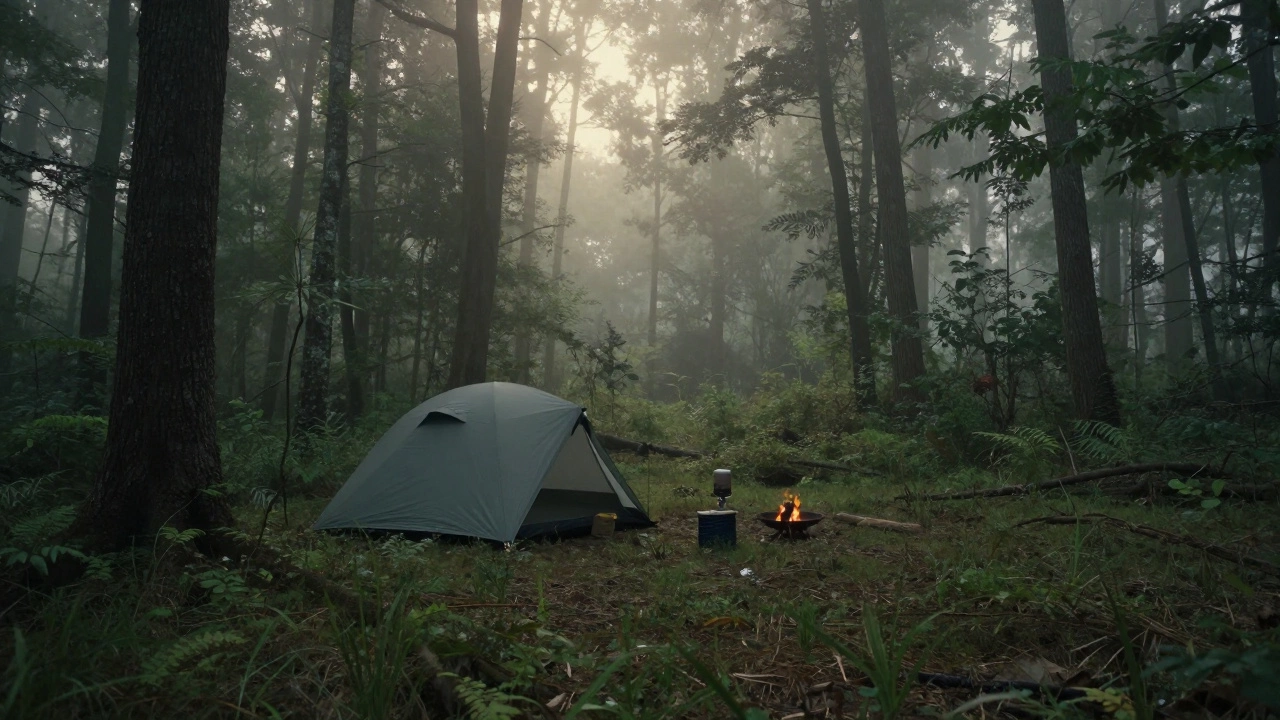
Wild camping means pitching a tent overnight away from official campsites-no facilities, no fees, no staff. It’s not the same as staying in a designated campsite in a forest, which is perfectly legal. Those sites have toilets, water, and rules. Wild camping is about being self-sufficient: carrying all your gear, leaving no trace, and disappearing by morning.
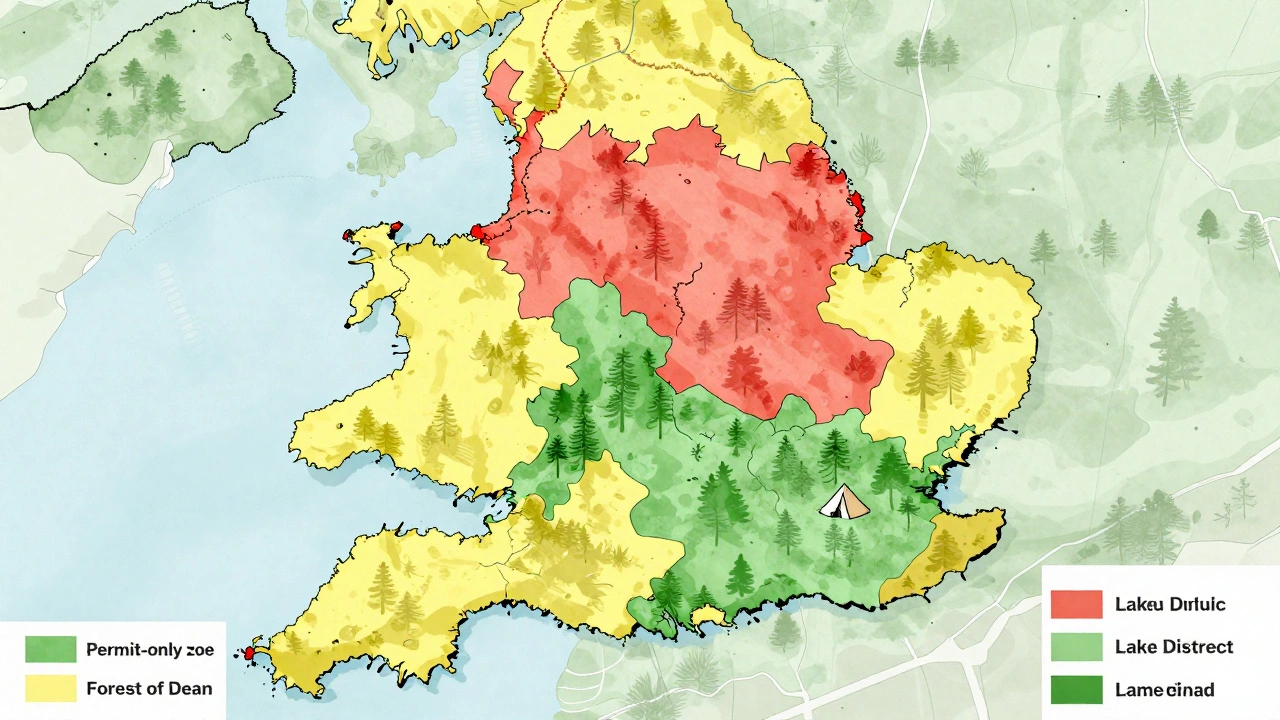
Many people think if you’re in a forest, you’re safe. But forests in England are mostly managed by the Forestry Commission, private owners, or conservation groups. Some allow camping if you apply for a permit. Others don’t. The Forest of Dean, for example, lets you camp in specific areas with a permit. But if you just show up with a tent near a car park, you’re asking for trouble.
How to Avoid Getting in Trouble
If you’re serious about camping in forests, follow these six rules:
- Stay for one night only. Never stay longer.
- Pitch after dark and leave before sunrise. No one sees you. No one complains.
- Choose remote spots. Avoid trails, picnic areas, and signs of wildlife. The further from roads and paths, the better.
- Leave no trace. Pack out every scrap. No toilet paper. No food wrappers. No fire pits. Use a portable stove.
- Go solo or with one other person. Groups draw attention.
- Check local notices. Some forests post rules online. The Forestry Commission website lists where camping is allowed.
These aren’t just tips. They’re survival tactics. Landowners and rangers notice patterns. If three people camp in the same spot every weekend, they’ll start enforcing rules. But if you’re quiet, invisible, and respectful, you might get away with it-for now.
What Happens If You Get Caught?
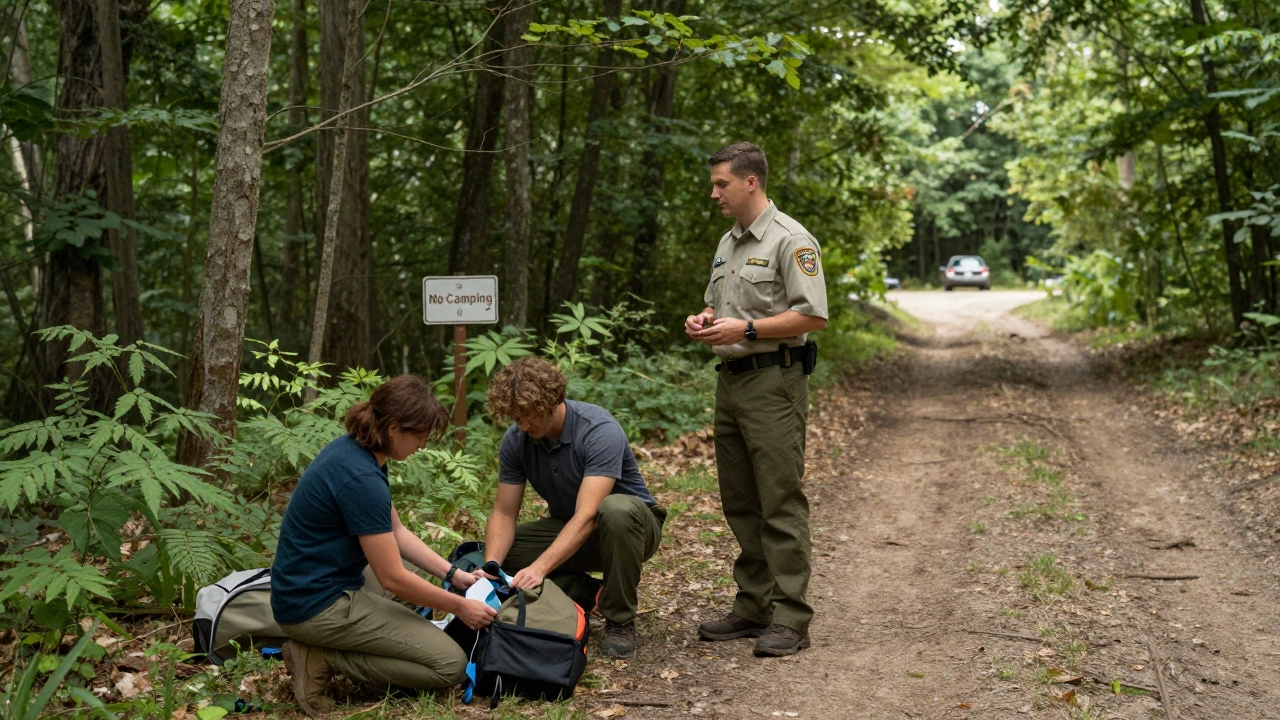
Most of the time, you’ll just be told to leave. A forest warden or landowner might show up, ask you to pack up, and walk away. That’s the usual outcome. But in some cases, especially near protected areas or private estates, you could face a fine. In 2023, a group in the New Forest was fined £150 each for camping without permission. The police don’t usually get involved unless there’s damage, noise, or litter.
Don’t assume you’re safe because you’re not near a house. Many forests are on private land with no public access. The Broads Authority and Northumberland National Park have strict no-camping rules, even in remote woodland. If you’re caught, you don’t get a warning-you get a trespass notice.
Where You CAN Camp Legally in Forests
There are legal options if you want to camp in forests without breaking rules:
- Forestry England Campsites: Places like Forest of Dean, Windsor Forest, and Delamere Forest have official campsites with pitches, toilets, and showers. Book ahead.
- National Trust Sites: Some have designated wild camping areas, like parts of the North York Moors near woodland.
- Permits: The Lake District National Park allows camping permits for groups in remote areas. Apply online.
- Farmer’s Fields: Some farmers rent out fields for camping. Sites like CampInn or Pitchup.com list these. They’re not "wild," but they’re quiet and forest-adjacent.
These aren’t glamorous. But they’re legal. And they keep the door open for everyone else who wants to camp responsibly.
Why This Matters
Wild camping isn’t just about freedom. It’s about access. If everyone ignores the rules, landowners shut down access completely. That’s already happened in places like the South Downs and Exmoor, where once-tolerated spots are now fenced off.
The same thing happened in Wales. When wild camping became too popular, the government had to step in and create strict zones. England is heading the same way. If you care about being able to camp in forests ten years from now, you need to act like a steward-not a trespasser.
Respect the land. Respect the rules. And if you’re not sure? Don’t camp there. Find a legal site. It’s easier than you think.
Is it illegal to camp in forests in England?
It’s not automatically illegal, but it’s only legal if you have permission from the landowner. Most forests in England are privately owned or managed, and camping without permission counts as trespassing. There’s no general right to wild camp in England like there is in Scotland.
Can I camp anywhere in the Lake District?
No. While some areas in the Lake District tolerate wild camping if done quietly and responsibly, it’s not legal without a permit. The National Park Authority allows permits for groups in remote locations, but solo campers must stick to official campsites. Always check their website before going.
What’s the difference between wild camping and staying at a forest campsite?
Wild camping means pitching a tent overnight without facilities, far from roads or campsites. A forest campsite is an official, managed site with toilets, water, and sometimes showers. Forest campsites are legal and bookable. Wild camping is only legal if you have landowner permission.
Are there any forests in England where wild camping is tolerated?
Yes, but with heavy caveats. The Peak District and parts of the North York Moors have historically tolerated quiet, single-night camping if you follow Leave No Trace rules. But this is not guaranteed. Landowners can change their stance at any time. Never assume it’s allowed.
Can I use a fire if I’m wild camping in a forest?
No. Open fires are almost always prohibited in English forests, even if you’re far from buildings. They risk wildfires, damage soil, and leave visible scars. Use a portable stove instead. It’s safer, cleaner, and required by most landowners.
What should I do if a ranger asks me to leave?
Pack up calmly and leave immediately. Arguing or refusing will escalate the situation. Most rangers just want to prevent damage or complaints. If you’re polite and cooperative, they’re unlikely to involve police or issue fines. Your goal is to stay on good terms so others can still camp there.
What’s Next?
If you want to camp in forests without risking fines or access bans, start with official sites. Try the Forestry England campsites-they’re affordable, well-maintained, and often hidden in quiet woodland. Use apps like CampInn or Pitchup.com to find forest-adjacent spots with permits. And if you’re still tempted to go off-grid? Do it once, quietly, and never again. The future of wild camping depends on how you behave today.