Can I Boondock in Florida? Your Complete Guide to Free Camping in the Wild
 Dec, 1 2025
Florida Boondocking Legal Checker
Select a location type and click "Check Legal Status" to see if boondocking is allowed.
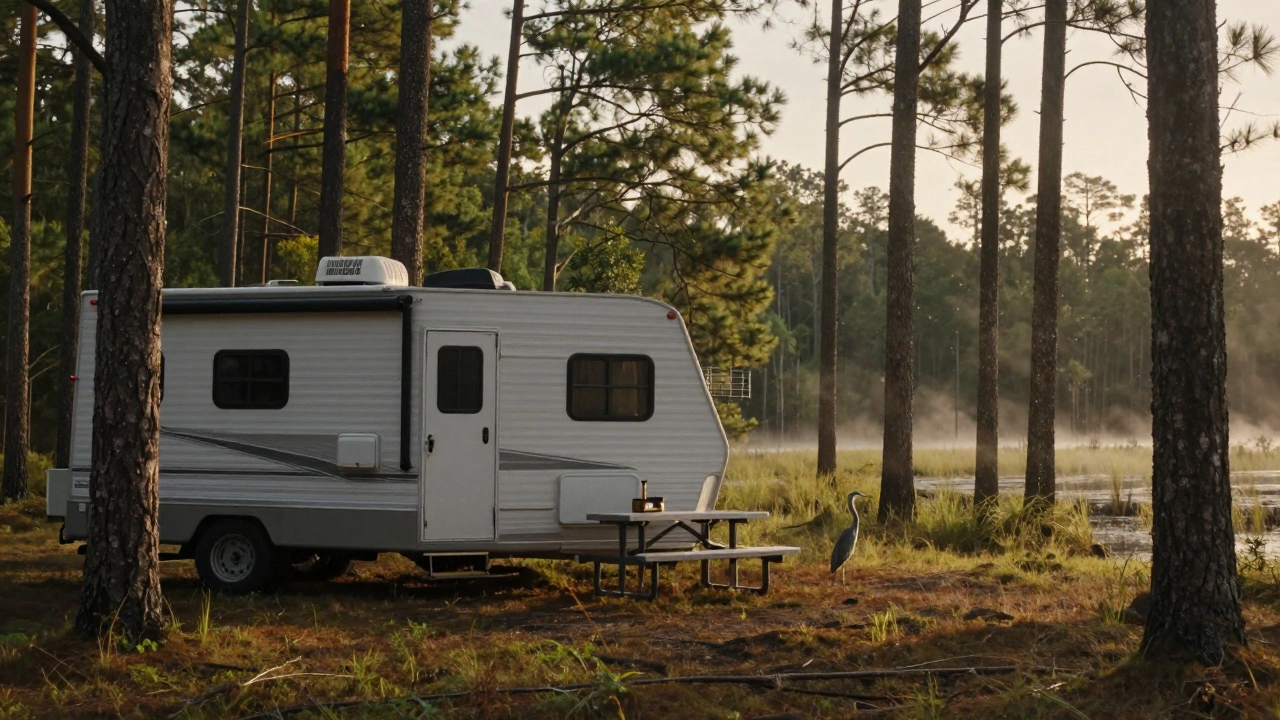
Can you really just pull off the road in Florida, turn off the engine, and sleep under the stars without paying a dime? The short answer: yes-but only if you know where, when, and how. Boondocking in Florida isn’t like in the desert Southwest. It’s not a free-for-all. Rules are tight, land is crowded, and the weather can turn deadly fast. But if you play it smart, you can find quiet corners of the state where the only sound is crickets and the only neighbor is a heron.
What Exactly Is Boondocking in Florida?
Boondocking means camping without hookups-no electricity, no water, no sewage dump. In Florida, that usually means parking your RV, van, or camper on public land and living off your own resources. It’s not the same as staying at a state park campground. Those cost money and require reservations. Boondocking is free, but it’s also unmanaged. You’re on your own. Florida’s public lands include national forests, wildlife management areas, and some state forests. These are the only places where boondocking is legal without a permit. City parks, county lands, and most rest areas? No. You’ll get ticketed or towed.Where You Can Actually Boondock in Florida
Not every patch of woods in Florida lets you camp. The state is packed with people, and much of the land is protected, private, or managed for conservation. Here’s where it’s actually allowed:- Apalachicola National Forest - The most popular spot for boondockers. Over 570,000 acres of pine flatwoods and swamps. Free camping is allowed anywhere outside of designated recreation areas. You must be at least 150 feet from roads and trails. No fires allowed between May and October due to dry conditions.
- Ocala National Forest - Home to the famous Lake George and the largest sandhill ecosystem in the U.S. Dispersed camping is allowed in most areas. Look for signs that say “Dispersed Camping Allowed.” Avoid the popular day-use areas like Juniper Springs. Campsites here are basic: dirt, trees, and mosquitoes.
- Osceola National Forest - Near the Georgia border. Less crowded than Ocala. You can camp for up to 14 days in one spot. No water sources, so bring all you need. Watch out for fire ants-they’re everywhere.
- Florida Wildlife Management Areas (WMAs) - These are state-run lands meant for hunting and wildlife observation. Some allow camping, but only if you have a valid hunting or fishing license. Check the Florida Fish and Wildlife Conservation Commission (FWC) website for each WMA’s rules. Some, like the Big Cypress WMA, allow overnight stays with a permit.
What’s Not Allowed
You can’t just park anywhere. Here are the most common mistakes people make:- Rest areas - Florida law bans overnight parking at rest stops. Signs say “No Overnight Parking.” Violators get fined $50-$150.
- State parks - Even if you don’t use the facilities, you still need a reservation and must pay. Camping without a permit is trespassing.
- Beaches - No overnight camping on public beaches. Even if you’re in a van, you’ll be asked to leave by park rangers or local police.
- Private property - Trespassing is a misdemeanor. Don’t assume “no trespassing” signs are just for show.
- Urban areas - Parking in neighborhoods, Walmart lots, or gas stations overnight is not legal unless explicitly permitted. Some Walmart locations allow it, but it’s rare in Florida and changes often.
Florida’s Weather Makes Boondocking Risky
Florida isn’t just hot-it’s dangerous if you’re unprepared. Between June and November, you’re in hurricane season. Thunderstorms roll in without warning. Flash floods can rise in minutes, especially in low-lying areas like the Everglades or near rivers. In summer, temperatures hit 95°F with 90% humidity. You can’t rely on your RV’s AC to keep you alive if the power fails. A backup battery system and plenty of water are non-negotiable. Winter (December-February) is the best time to boondock. Days are mild, 70-80°F, and bugs are fewer. But nights can dip into the 40s. If you’re in a van without insulation, you’ll need a heater and warm bedding.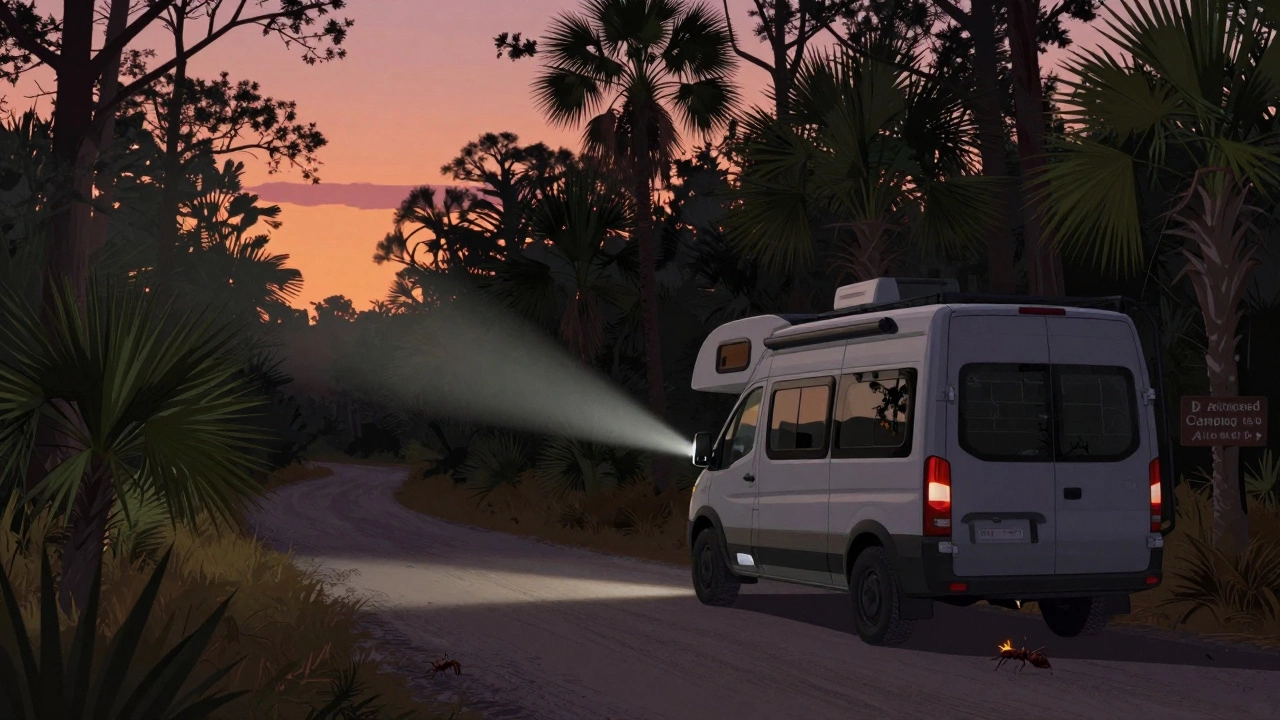
Rules You Can’t Ignore
Florida has strict rules for dispersed camping. Break them, and you’ll get fined-or worse.- Stay limit - You can’t camp in the same spot for more than 14 days in a 30-day period. After that, you must move at least 5 miles away.
- Fire bans - From May 1 to October 31, open fires are banned in all national forests. Use a camp stove only.
- Trash - Pack it out. Leaving food wrappers, toilet paper, or cans can result in a $100 fine. Animals-especially raccoons and bears-will tear through your gear.
- Waste - Human waste must be buried at least 6 inches deep and 200 feet from water sources. Portable toilets are allowed, but you must dispose of waste at designated dump stations.
- Quiet hours - No loud music, generators, or parties after 10 p.m. and before 6 a.m.
What to Bring for Florida Boondocking
You’re not camping in a campground with showers and Wi-Fi. You need to be self-sufficient.- Water - Bring at least 1 gallon per person per day. No natural sources are safe to drink without filtration.
- Power - Solar panels or a large battery bank. Generators are allowed only during daylight hours and must be quiet.
- Food - Non-perishable items. Coolers work, but they attract animals. Hang food in a tree or use bear-proof containers.
- Bug spray - Florida has mosquitoes, ticks, and no-see-ums. DEET or picaridin is essential. A headnet helps at dusk.
- First aid kit - Include antivenom for fire ant bites, antihistamines, and wound cleaner. Snake bites are rare, but copperheads and cottonmouths live in these forests.
- Maps and GPS - Cell service is spotty. Download offline maps on Gaia GPS or AllTrails. Many boondocking spots don’t show up on Google Maps.
Why People Love (and Hate) Boondocking in Florida
People who do it right love the solitude. You can wake up to the sound of woodpeckers, watch deer walk past your rig, and see the Milky Way without light pollution. It’s cheap-free, even. And you avoid the crowds of paid campgrounds. But it’s not for everyone. The bugs are brutal. The heat is oppressive. The roads are rough-many boondocking spots require high-clearance vehicles. You’ll spend hours driving on dirt roads just to find a spot that’s not already taken. And if you’re not careful, you’ll end up stuck in mud after a rainstorm. Florida’s soil turns to clay when wet. One wrong turn and you’re out of luck without a winch.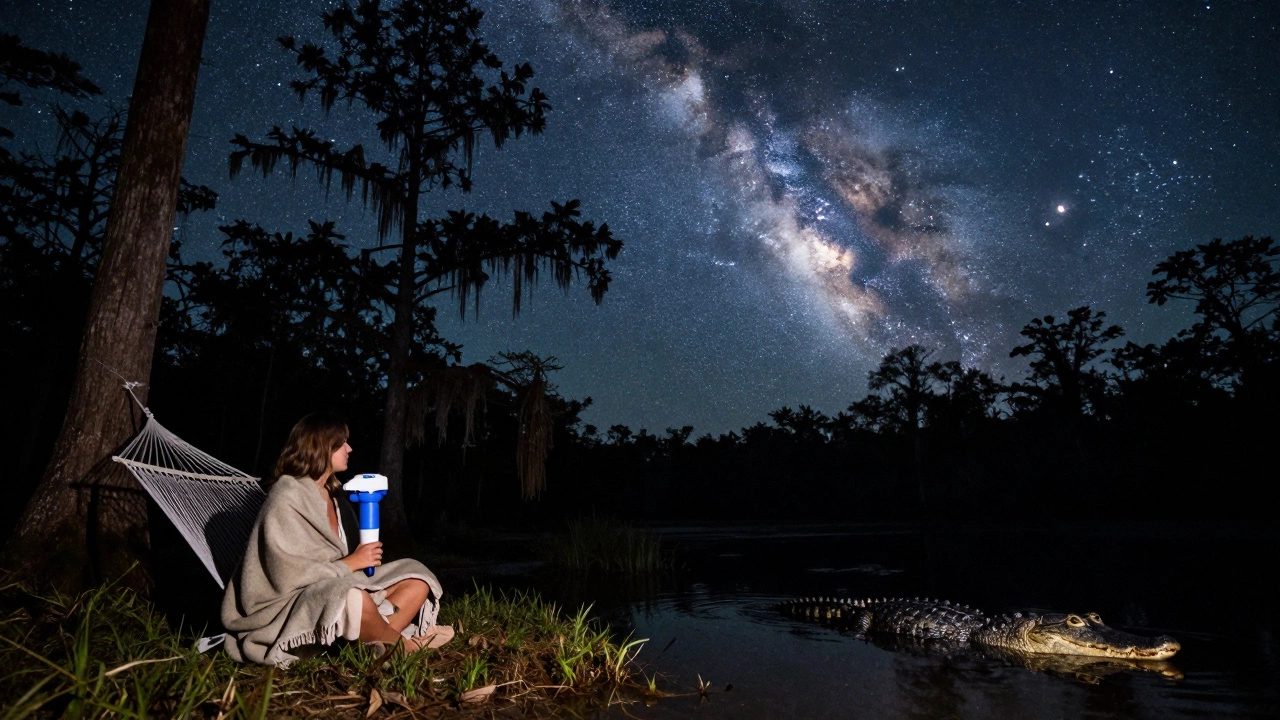
Alternatives to Boondocking
If boondocking sounds too risky or too much work, try these:- State park campgrounds - $20-$40 per night. You get restrooms, showers, and picnic tables. Book early-they fill up fast in winter.
- RV parks with full hookups - $30-$60. More amenities, but you’re surrounded by other campers.
- Boondocking apps - Use FreeRoam or iOverlander to find verified spots. These apps show user reviews, photos, and recent updates on road conditions.
Final Tips for First-Timers
If you’ve never boondocked in Florida before, here’s how to start:- Go in December or January. Weather is best.
- Start with Apalachicola National Forest. It’s the most forgiving for beginners.
- Bring twice as much water as you think you’ll need.
- Tell someone where you’re going-and check in daily.
- Don’t rely on your phone for navigation. Download offline maps.
- Leave no trace. If you wouldn’t want it in your yard, don’t leave it in the woods.
Boondocking in Florida isn’t about luxury. It’s about freedom. But freedom comes with responsibility. Do it right, and you’ll have memories of quiet nights under the stars. Do it wrong, and you’ll be stuck in the mud with a broken generator and a swarm of mosquitoes. Know the rules. Respect the land. And always, always pack out what you pack in.
Is boondocking legal in Florida?
Yes, but only on specific public lands like national forests and some wildlife management areas. It’s illegal at rest areas, state parks, beaches, and private property. Always check official sources like the USDA Forest Service or Florida Fish and Wildlife Conservation Commission before you go.
Can you camp on the beach in Florida for free?
No. Overnight camping on public beaches is banned statewide. Even if you’re in a van or tent, you’ll be asked to leave by rangers or police. Some private beachfront RV parks allow camping, but they charge fees.
How long can you stay boondocking in one spot in Florida?
In Florida’s national forests, you can stay up to 14 days in one location within a 30-day period. After that, you must move at least 5 miles away. Some wildlife management areas have different rules-always check the specific area’s regulations.
Do you need a permit to boondock in Florida?
No permit is needed for dispersed camping in national forests. But if you’re camping in a Wildlife Management Area (WMA), you need a valid hunting or fishing license. Some WMAs require additional permits for overnight stays-check the FWC website before you go.
Are generators allowed while boondocking in Florida?
Generators are allowed during daylight hours (typically 8 a.m. to 8 p.m.) but must be quiet. Many national forests ban generator use entirely during fire season (May-October). Always check current fire restrictions before using one.
Is Florida safe for solo boondockers?
Generally yes, but safety depends on preparation. Most areas are remote and low-population. Wildlife like alligators, snakes, and bears are present but rarely aggressive if you keep distance. The bigger risks are heat exhaustion, dehydration, and getting stuck in mud. Tell someone your plans, carry a satellite messenger, and avoid camping near water edges at night.
What’s the best time of year to boondock in Florida?
December through February is ideal. Temperatures are mild (60-80°F), humidity is lower, and bugs are fewer. Summer is dangerous due to heat, humidity, and hurricanes. Spring and fall bring heavy rain and swarms of mosquitoes. Avoid June through October if you can.
Next Steps for Your Florida Boondocking Trip
If you’re planning to go:- Download the USDA Forest Service app for Apalachicola, Ocala, and Osceola National Forests.
- Check the Florida Fish and Wildlife Conservation Commission website for current fire bans and WMA rules.
- Use iOverlander to find recent user reports on road conditions and campsite availability.
- Fill your water tanks before you leave. There are no reliable sources in most boondocking zones.
- Practice Leave No Trace principles. You’re not just camping-you’re a guest in someone else’s home: the forest.
Florida’s wild places aren’t waiting for you to conquer them. They’re waiting for you to respect them. Go slow. Pack smart. Leave it better than you found it. That’s the only rule that really matters.