Can Dogs Drink Campsite Water? Safety Tips for Pups on the Trail
 Feb, 2 2026
Dog Hydration Calculator for Campers
Recommended Water Intake
Every year, thousands of dog owners hit the trails with their pups, lured by open skies, pine-scented air, and the promise of a quiet night under the stars. But when you’re far from home and your dog’s thirsty, you start wondering: can dogs drink campsite water? The answer isn’t simple. It’s not always safe, but it’s not always dangerous either. It depends on what’s actually in the water-and what you’re willing to do to protect your dog.
Not All Water Is Created Equal
Campsite water comes in many forms: a bubbling stream, a rusty spigot at the campground bathroom, a stagnant puddle near the picnic table, or even a shared water bowl at the dog park. Your dog doesn’t care. They’ll lap up anything that looks wet. But their stomachs aren’t built for the same things yours are.Humans can handle low levels of bacteria, algae, or minerals that would make a dog sick. Dogs have shorter digestive tracts and less tolerance for contaminants. A little giardia that gives you a mild upset might send your pup to the vet with bloody diarrhea and vomiting. That’s not an exaggeration-it’s a common scenario at campgrounds.
A 2023 study from the American Veterinary Medical Association found that nearly 18% of dogs treated for acute gastrointestinal illness after camping tested positive for giardia. Most of those dogs had been drinking from natural water sources. And it’s not just parasites. Blue-green algae blooms, common in warm, slow-moving water, produce toxins that can kill a dog in under an hour. You won’t always see the warning signs. The water might look clear, smell fine, and not look green at all.
What’s Safe? What’s Not?
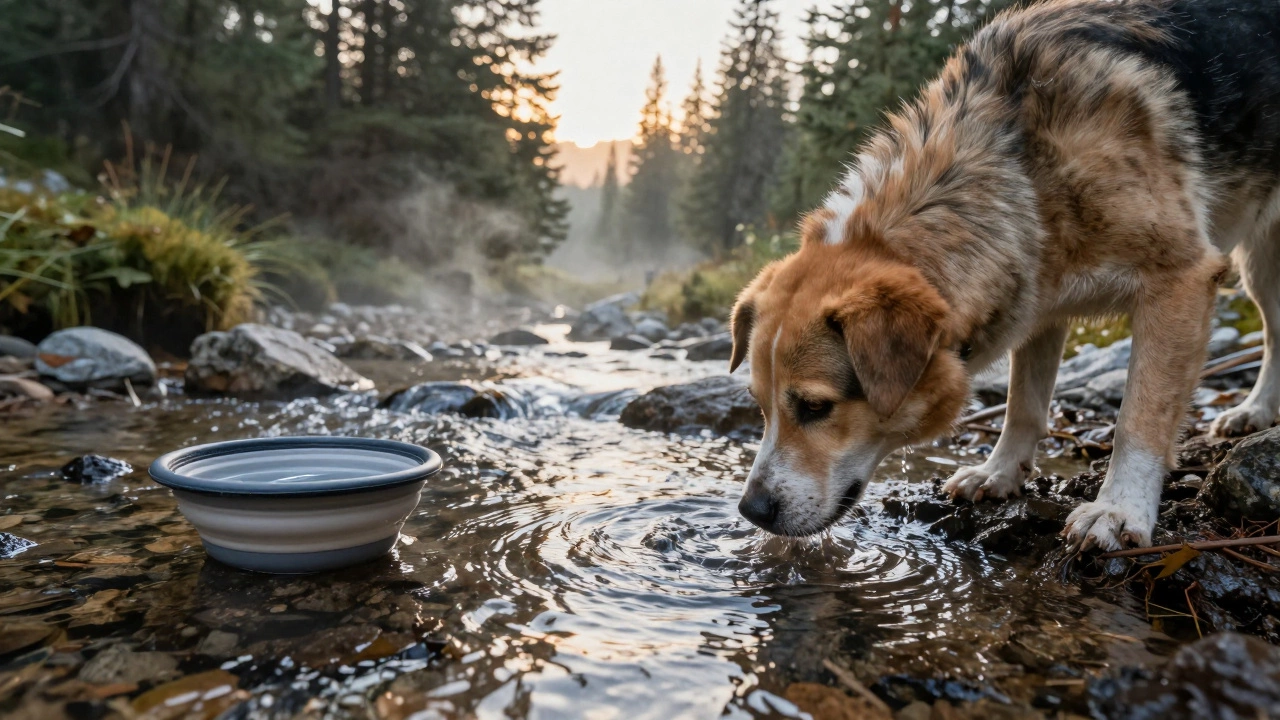
Let’s break it down by water source:- Running streams and rivers: Better than still water, but still risky. Wildlife upstream-deer, raccoons, beavers-leave feces behind. Giardia and cryptosporidium thrive there. Even fast-moving water can carry contamination.
- Still ponds and lakes: High risk. These are breeding grounds for algae, bacteria, and parasites. If the water looks cloudy, has a greenish tint, or smells like rotten eggs, walk away. Even if your dog loves to splash, keep them out.
- Campground spigots: Sometimes safe, sometimes not. Many campgrounds treat their water, but pipes can be old, tanks can be dirty, and pressure can fluctuate. If the water tastes metallic or smells funny, don’t let your dog drink it.
- Shared water bowls: Avoid them. Other dogs may have giardia or parvo. Even if they look healthy, they could be carriers.
- Tap water at your RV or cabin: Usually the safest option if you’re staying in a developed site. But if you’re unsure, filter it anyway.
How to Keep Your Dog Safe
You don’t need to carry a full water jug for your dog everywhere you go. But you do need a plan.- Bring your own water: Pack a collapsible bowl and enough water for your dog’s needs. Most dogs need about half a liter per 10 kg of body weight per day, more if it’s hot or they’re active. That’s 1.5 liters for a 30 kg dog on a long hike. Don’t guess-pack extra.
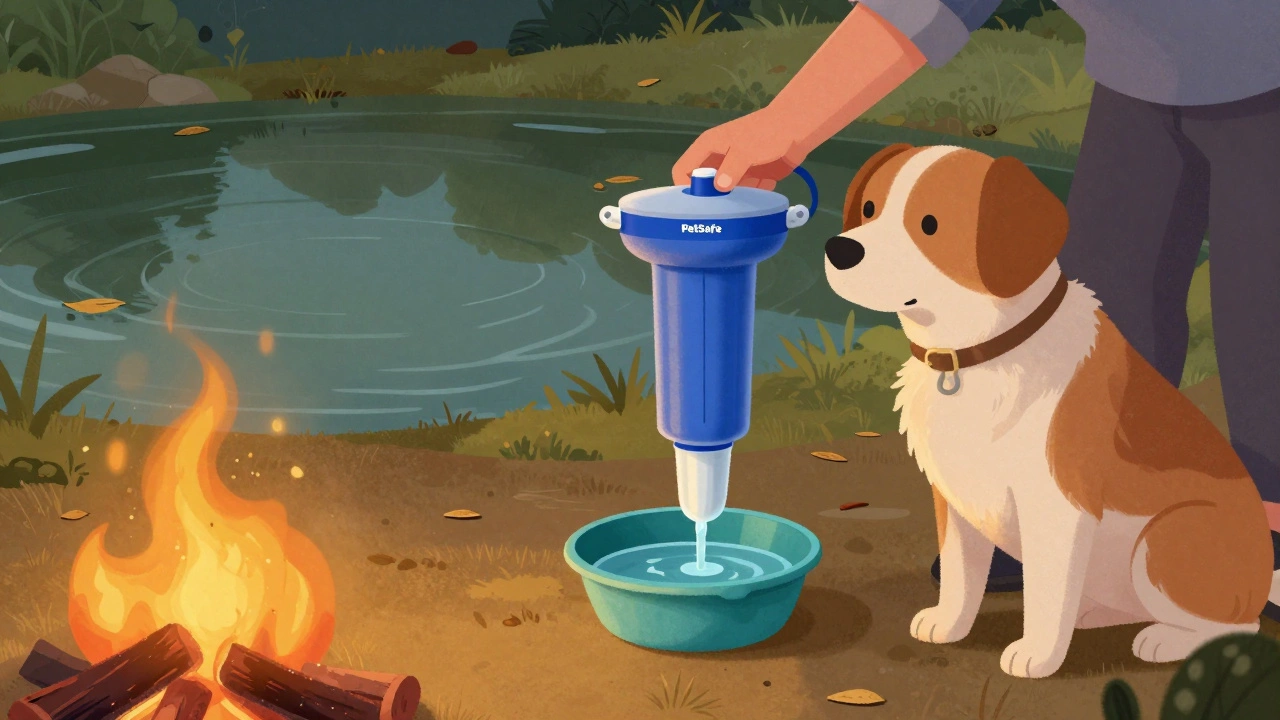
- Use a portable filter: There are lightweight, dog-specific water filters now that remove bacteria, parasites, and even some chemicals. The PetSafe Water Filter is designed for outdoor use, fits in a backpack, and removes 99.9% of giardia and cryptosporidium. It costs under $30 and lasts for 1,000 liters.
- Boil water if you can: If you have a camp stove, boiling water for one minute kills almost everything. Let it cool, then pour it into your dog’s bowl. It’s extra work, but it’s the most reliable method if you’re in the backcountry.
- Never let them drink from puddles: Especially after rain. Puddles collect runoff from roads, fields, and animal trails. They’re loaded with chemicals, fertilizers, and fecal matter.
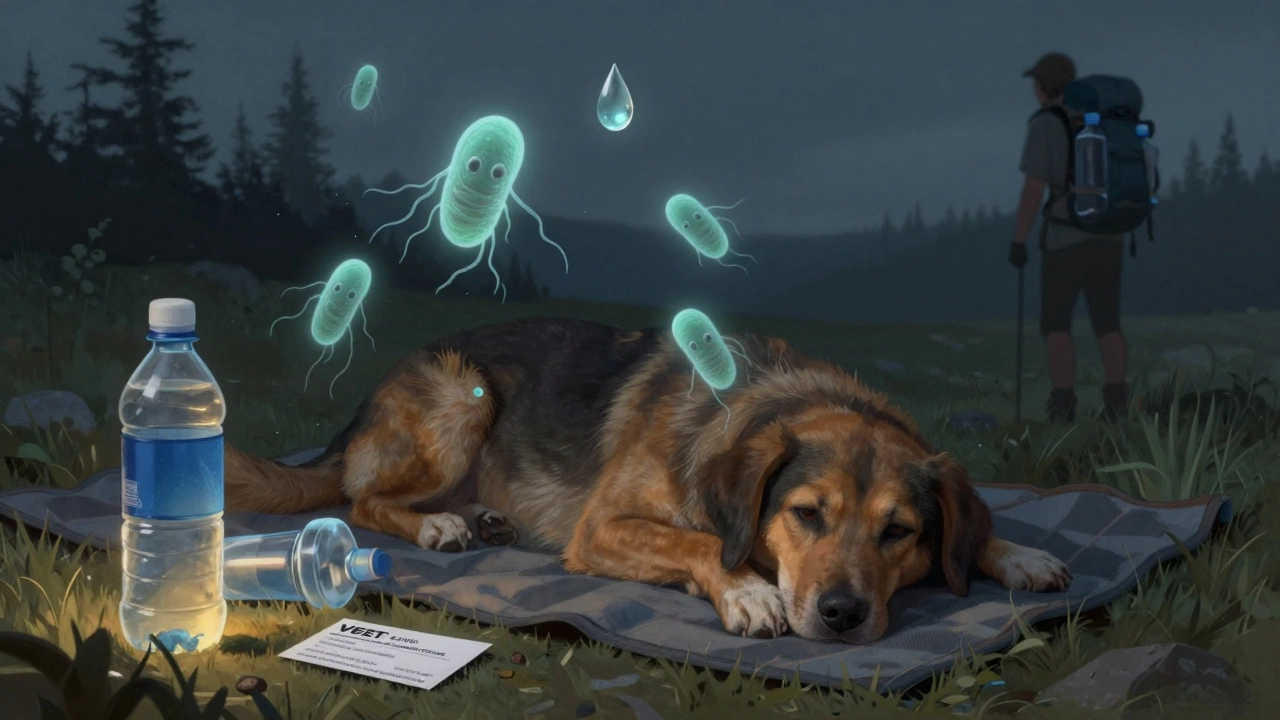
- Watch for signs of illness: If your dog starts vomiting, has diarrhea, seems lethargic, or loses appetite within 24-48 hours of drinking campsite water, call your vet. Don’t wait. Giardia is treatable, but only if caught early.
What About Bottled Water?
Bottled water is fine for your dog. But it’s not practical for long trips. Carrying a case of water for a 40 kg dog on a three-day hike? That’s 12 liters-nearly 27 pounds. Not worth the effort unless you’re in a desert or remote area with zero water sources.Instead, bring a reusable bottle with a built-in bowl. Or fold up a silicone bowl and stash it in your pack. It’s lighter, cheaper, and better for the planet.
What If There’s No Other Option?
Sometimes you’re stuck. You’re miles from your car, your dog’s desperate, and the only water nearby is a stream. What then?Here’s what to do:
- Look upstream. Is there any sign of animals? Dead birds? Green scum? If yes, don’t risk it.
- Let the water run for 30 seconds before letting your dog drink. Moving water is less likely to harbor concentrated toxins.
- Use a bandana or shirt to strain out debris. It won’t remove microbes, but it helps.
- Afterward, monitor your dog closely for the next 48 hours.
- Call your vet and tell them your dog drank from the stream. They may recommend a fecal test just to be safe.
It’s not ideal, but sometimes you have to make a call. Better to be cautious than sorry.
What Do Veterinarians Say?
Dr. Lisa Chen, a board-certified veterinary internal medicine specialist who works with outdoor pet owners, says: “I see more dogs with waterborne illnesses in the summer than any other time. Most owners think, ‘My dog’s tough, they’ve eaten dirt before.’ But campsite water is different. It’s not just dirt-it’s concentrated with organisms your dog’s immune system has never seen. Don’t gamble with it.”She recommends a simple rule: When in doubt, bring it with you. If you’re not 100% sure the water is clean, don’t let your dog drink it. Always have a backup.
Other Things to Watch For
Water isn’t the only hazard. Here are three other risks tied to campsite hydration:- Algae blooms: These can be invisible. Some toxins affect the liver or nervous system. Dogs can die within hours. If you see a greenish film on the water, stay away.
- Chemical runoff: Campgrounds near farmland or roads can have pesticides, herbicides, or antifreeze in runoff. These are deadly in small amounts.
- Dehydration: Don’t assume your dog is drinking enough. If they’re panting heavily, have dry gums, or their skin doesn’t snap back when gently pinched, they need water now. Carry more than you think you’ll need.
Final Rule: When in Doubt, Bring Your Own
There’s no magic formula that says “this water is safe.” Every campsite is different. Every season changes the risks. Your dog’s health isn’t worth the gamble.Bring a water bowl. Pack extra water. Carry a filter. Check the weather. Watch the water. And if you’re unsure? Don’t let them drink it.
It’s not about being overly cautious. It’s about being responsible. Your dog trusts you to keep them safe. Don’t let them down because you didn’t want to carry an extra bottle.
Can dogs drink water from streams while camping?
Dogs can drink from streams, but it’s risky. Streams can carry giardia, cryptosporidium, and other parasites from animal waste. Even clear, fast-moving water isn’t guaranteed safe. Always filter or boil water if you’re unsure.
Is campground tap water safe for dogs?
Sometimes. Many campgrounds treat their water, but pipes and tanks can be old or contaminated. If the water tastes odd, smells bad, or looks cloudy, don’t let your dog drink it. Use a filter or bring your own water to be safe.
What happens if my dog drinks contaminated campsite water?
Symptoms include vomiting, diarrhea (sometimes bloody), lethargy, loss of appetite, and dehydration. Giardia and blue-green algae toxins can be life-threatening. If your dog shows any signs within 48 hours of drinking unknown water, contact your vet immediately.
Do I need to bring water for my dog when camping?
Yes. Always bring enough clean water for your dog. Most dogs need about half a liter per 10 kg of body weight daily. More if it’s hot or they’re active. Don’t rely on campsite water sources.
Are portable water filters safe for dogs?
Yes. Many portable filters, like the PetSafe Water Filter, are designed specifically for dogs and remove harmful bacteria and parasites. They’re lightweight, affordable, and far safer than letting your dog drink from unknown sources.
Can dogs drink from shared water bowls at campsites?
No. Shared bowls can spread giardia, parvovirus, and other illnesses. Even if other dogs look healthy, they might be carriers. Always use your own bowl and water.
Next Steps
Before your next trip, do this:- Check the campground’s website for water quality reports.
- Buy a collapsible bowl and a small water filter.
- Practice filling your dog’s bowl at home so they’re used to it.
- Keep a vet’s number handy-both your regular one and a 24-hour emergency clinic near your destination.
Most importantly-don’t assume. Always ask yourself: Is this water really safe? If the answer isn’t a clear yes, don’t risk it. Your dog’s health is worth the extra effort.